Nepal’s leader, at UN, says recent floods serve as a ‘warning to the world’ about climate change
Por Seth Borenstein and Anton L. Delgado — – World RSS Feed
Nepal’s leader, at UN, says recent floods serve as a ‘warning to the world’ about climate change
A month after deadly floods, Nepal’s prime minister says the climate-connected catastrophe is a warning to the rest of the world
Seth Borenstein & Anton L. Delgado Friday 25 September 2026 03:49 BST
- Bookmark
Bookmark popover
Removed from bookmarks
Close popover
Nepal’s leader, at UN, says recent floods serve as a ‘warning to the world’ about climate change
Show all 4 

Become an Independent member to bookmark this article
Want to bookmark your favourite articles and stories to read or reference later? Start your Independent Membership today.
Already a member?
Log in
Your support helps us to tell the story
Read more Support Now
From reproductive rights to climate change to Big Tech, The Independent is on the ground when the story is developing. Whether it’s investigating the financials of Elon Musk’s pro-Trump PAC or producing our latest documentary, ‘The A Word’, which shines a light on the American women fighting for reproductive rights, we know how important it is to parse out the facts from the messaging.
At such a critical moment in US history, we need reporters on the ground. Your donation allows us to keep sending journalists to speak to both sides of the story.
The Independent is trusted by Americans across the entire political spectrum. And unlike many other quality news outlets, we choose not to lock Americans out of our reporting and analysis with paywalls. We believe quality journalism should be available to everyone, paid for by those who can afford it.
Your support makes all the difference. Read more
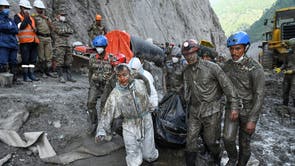
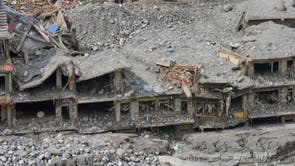
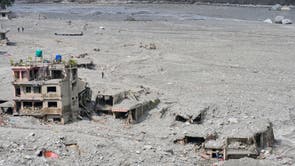
Nepal‘s prime minister scolded fellow world leaders Thursday, saying the nation’s recent deadly flood reminds a warming world that climate change keeps hurting people who didn’t cause the crisis but now need help.
The August disaster “was not just a local tragedy. It was a warning to the world. And I ask you today: Have you really heard that warning?” Nepali Prime Minister Balendra Shah said at the U.N. General Assembly on Thursday night. “Nearly three years ago, standing in the shadow of our Mount Everest, the secretary-general of the United Nations warned about humanity about the madness and impending climate disaster.”
“That cry from the rooftop of the world was not heard enough,” Shah said. “We in Nepal heard it. Our communities heard it. Scientists around the world heard it. They repeated it with evidence. But we, the political leaders, have been negligent to translate those warnings in action at the speed and scale that the vulnerable people require.”
International scientists have connected melting permafrost from climate — caused by burning coal, oil and gas — to the instability of the glacier, which partly collapsed and triggered a massive flood that has killed at least 1,400 people with even more still missing.
Shah said that Nepal contributed less than one-tenth of 1% of the heat-trapping gases behind climate change. About 99% of Nepal’s electricity comes from hydropower, and many workers were trapped in tunnels by the flooding.
“We did not create this crisis, yet we are paying a colossal price for it,” said Shah, 36, a former rapper and engineer who is the youngest head of government to address the General Assembly this year. “Our glaciers are retreating, our mountain slopes are becoming unstable, our rivers are becoming less predictable, and every major disaster threatens to erase years of development.”
He said climate change ‘does not recognize borders’
In a black Dhaka topi, a traditional brimless Nepali hat, Shah spoke while wearing his signature dark sunglasses, which he uses for medical reasons. He said “the tragic consequences of a warming climate” tells the world that “climate change does not recognize borders. Glaciers and floods do not travel with stamps and passports.”
Subeksha Khadka, a humanitarian and former Miss Nepal International, in an online interview, praised Shah’s speech and echoed the warning: “This time Nepal has been on the target, but it could be anyone. This is our story right now, and it can be anybody else’s tomorrow. So it’s time to act.”
Shah didn’t ask for a specific amount in aid, but he called the international financial aid system inadequate and too bureaucratic. This included a loss and damage fund agreed upon a few years ago for poor nations hit by climate disasters not of their own making.
“Climate finance must not become another bureaucratic maze through which vulnerable countries spend years” maneuvering through when they need help. “When the house is burning, we do not ask a family to complete 50 forms. We act. This is what climate justice means.”
He exhorted the General Assembly to act on relief, rehabilitation, reconstruction — which are traditional international help concepts — but also “responsibility, reparation, resilience.” Reparation is a word and an issue that rankles industrial western nations like the United States, which is historically the world’s biggest carbon emitter.
He says it’s ‘not an isolated disaster’
Over the past 75 years, the United States has spewed about 1,500 times more carbon into the air than Nepal has, according to the Global Carbon Project, a group of scientists that track greenhouse gas emissions by countries. Historical emissions matter because carbon dioxide stays in the atmosphere for more than a century trapping heat.
The U.S. this week announced $31 million in aid to Nepal for flood recovery, which bring America’s total financial help up to $36 million. It’s less than 1% of what they need.
“Preliminary assessments indicate that from recent disaster alone, Nepal has suffered loss of over $5 billion, nearly 15% of our GDP and a third of our annual budget,” Shisir Khanal, Nepal’s foreign minister, said Wednesday at the UN climate summit. “Thus for Nepal, this catastrophe is not merely a humanitarian emergency. It is a development emergency dismantling years of progress. It is a justice crisis exposing the inequities of global climate action and it is an existential crisis striking at the very survival of our communities and our future.”
“What happened in Nepal is not an isolated disaster but a preview of what awaits many vulnerable nations,” Khanal said.
Former United States Vice President Al Gore said in an interview that Nepal’s disaster shows that the climate crisis “was getting worse much faster” than people can handle and foreshadows problems with melting glaciers that feed all of the great rivers of Asia, putting the water supply of 2 billion people at risk.
___
Delgado reported from New York. Associated Press writer Jennifer McDermott contributed to this report.
___
The Associated Press’ climate and environmental coverage receives financial support from multiple private foundations. AP is solely responsible for all content. Find AP’s standards for working with philanthropies, a list of supporters and funded coverage areas at AP.org.
More about
NepalScientistsUnited StatesMount EverestGlaciersAl GoreGDPDhakaAssociated PressAsiaNew York
Most popular
Popular videos
Bulletin
Read next
Fonte: – World RSS Feed