U.S.-Greenland deal | The Arctic race
The Hindu – International
You are logged in
Loading…
You don’t have any Active Subscription.
Subscribed with another email? Logout and Login with that one.
Your active subscription(s)
Account subscription benefits alongside Premium Stories, Editorials,
Opinions and more. Unlock these with Subscription
Products you’ve access to
Additional Subscription Benefits
Account Settings
Need help with your subscription?
Weather News September 26, 2026 e-Paper
The View From India
Looking at World Affairs from the Indian perspective.
First Day First Show
News and reviews from the world of cinema and streaming.
Today's Cache
Your download of the top 5 technology stories of the day.
Science For All
The weekly newsletter from science writers takes the jargon out of science and puts the fun in!
Data Point
Decoding the headlines with facts, figures, and numbers
THEdge
At the cutting edge of education and careers
Health Matters
Ramya Kannan writes to you on getting to good health, and staying there
Gender Agenda
Stories from beyond the binary.
The Hindu On Books
Books of the week, reviews, excerpts, new titles and features.
Weather News September 26, 2026 e-Paper
Published – September 27, 2026 01:44 am IST
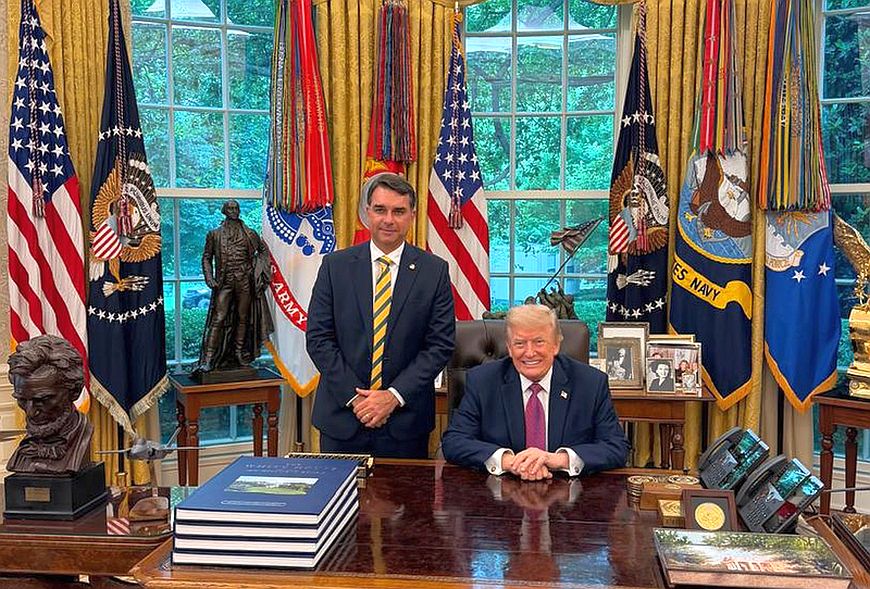
Denmark's Prime Minister Mette Frederiksen, middle, Greenland's Prime Minister Jens-Frederik Nielsen, right, and U.S. President Donald Trump at the signing ceremony of a security deal between the U.S., Denmark and Greenland at United Nations headquarters on September 22, 2026.
| Photo Credit: AP
“Essentially, it’s a large real estate deal. A lot of things can be done,” U.S. President Donald Trump said in August 2019, during his first term, when asked whether the U.S. would be interested in acquiring Greenland. After he returned to office in January 2025, Mr. Trump repeated his threat. “We need Greenland for national security purposes,” he said in January 2025. You look outside. You have Chinese ships all over the place. You have Russian ships all over the place. We’re not letting that happen.”
Greenland, a Danish territory located between the Arctic Ocean and the North Atlantic Ocean, was home for at least 30 American military bases and installations during the Second World War. The island’s strategic profile grew in recent years after Russia and China stepped up their activities in the Arctic region, partly because of ice melting, which opened up previously unpassable regions. Mr. Trump’s threats to take over the island incensed Denmark, a founding member of NATO, and America’s other European allies. The crisis further strained the transatlantic ties. But on September 22, on the sidelines of the UN General Assembly, the leaders of the U.S., Denmark and Greenland signed a new security agreement, which, according to Mr. Trump, would allow the U.S. “to do what is necessary in Greenland”.
The 1951 U.S.-Denmark security agreement provides Washington broad rights to build military bases on the ice-covered island. Most American bases on the island were shut down over the years, particularly after the Cold War. Now the U.S. stations some 150 troops at its Pituffik Space Base in Greenland. U.S. officials wanted to increase this military presence, which they argued was important to monitor and defend the northern approaches of North America and the North Atlantic at a time when the race to control the Arctic is heating up. Russia has extensive Arctic territory and military infrastructure. Greenland also possesses significant mineral resources, including rare earths, a segment that is currently dominated by China. U.S. officials have raised concerns about potential Chinese investments in Greenland. So Washington wants to compete with Russia in the Arctic and build new military infrastructure to monitor movement in the frozen waters and prevent Chinese influence in the region, besides making sure that America has access to the island’s mineral resources.
Denmark, which has already blocked Chinese investments in Greenland, had said it would allow Washington to expand its military presence on the island, but insisted that Danish sovereignty and Greenland’s self-governing rights be respected. The latest security agreement with the U.S. sought to address both America’s demands and Danish concerns.
According to the agreement, even if Greenland, which has a population of around 50,000, becomes independent, it would respect the deal with the U.S. and stay within NATO. In other words, this deal provides the U.S. indefinite access to the island’s military facilities. The deal, which reaffirms “the sovereignty and territorial integrity of the Kingdom of Denmark” and recognises the “self determination of the people of Greenland”, also stipulates that no hostile power (non-NATO countries) can establish military facilities on the island or invest in its sensitive areas (mainly rare earths). The U.S. will be allowed to establish additional defence facilities in Narsarsuaq in the south, where it had an airfield during the Second World War, and in Mestersvig in the east. The Mestersvig facility would allow the U.S. to monitor the waters between the island and the Scandinavian region. Greenland would also be part of the U.S. Golden Dome anti-missile shield, and Danish authorities have pledged to work together with Washington to counter espionage in Greenland, a reference to alleged Chinese activities in the region.
On paper, Greenland would remain a self-governing territory of Denmark. But in practice, the U.S. would have indefinite rights to build military facilities on the island and a say in its economic policies and resource extraction. Mr. Trump may not have secured ownership of the world’s largest island, but he appears to have secured almost everything else.
Published – September 27, 2026 01:44 am IST
The Hindu Profiles
/
NATO
/
Greenland
/
USA
/
Russia
/
China
/
Denmark
Copyright© 2026, THG PUBLISHING PVT LTD. or its affiliated companies. All rights reserved.
BACK TO TOP
Terms & conditions | Institutional Subscriber
Comments have to be in English, and in full sentences. They cannot be abusive or personal. Please abide by our community guidelines for posting your comments.
We have migrated to a new commenting platform. If you are already a registered user of The Hindu and logged in, you may continue to engage with our articles. If you do not have an account please register and login to post comments. Users can access their older comments by logging into their accounts on Vuukle.
Fonte: The Hindu – International