Trump renames AI to ‘super intelligence’ and tells Americans they have no choice but to trust it
Por John Bowden — – World RSS Feed
Analysis Trump renames AI to ‘super intelligence’ and tells Americans they have no choice but to trust it
With tech leaders smiling and nodding beside him, Donald Trump stands athwart a wave of populist anti-AI sentiment yelling ‘calm down,’ writes John Bowden
Tuesday 29 September 2026 23:20 BST
- Bookmark
- Comments Go to comments
Bookmark popover
Removed from bookmarks
Close popover

Become an Independent member to bookmark this article
Want to bookmark your favourite articles and stories to read or reference later? Start your Independent Membership today.
Already a member?
Log in
Your support helps us to tell the story
Read more Support Now
From reproductive rights to climate change to Big Tech, The Independent is on the ground when the story is developing. Whether it’s investigating the financials of Elon Musk’s pro-Trump PAC or producing our latest documentary, ‘The A Word’, which shines a light on the American women fighting for reproductive rights, we know how important it is to parse out the facts from the messaging.
At such a critical moment in US history, we need reporters on the ground. Your donation allows us to keep sending journalists to speak to both sides of the story.
The Independent is trusted by Americans across the entire political spectrum. And unlike many other quality news outlets, we choose not to lock Americans out of our reporting and analysis with paywalls. We believe quality journalism should be available to everyone, paid for by those who can afford it.
Your support makes all the difference. Read more
D onald Trump continued his inexplicable embrace of artificial intelligence on Tuesday as he gave it the ultimate honor — a Trump-style rebrand with the flick of an executive pen.
With the signing of an executive order Tuesday afternoon, Trump directed the U.S. government to begin referring to artificial intelligence, which is now embedded across the federal government, as “super intelligence”. The effect will be immediate: Work will be needlessly complicated for federal employees, while millions of Americans will continue calling the technology “artificial intelligence”.
The renaming effort aside, Trump’s real purpose Tuesday was to help AI leaders shake off the somewhat self-imposed stain on their records by declaring “SI” the future of American business and innovation, and insisting that the concerns about the technology felt by Americans were overblown or overstated.
He made that clear when he denied claiming that those concerns were a “hoax”, then added: “That’s why I changed the name. A hoax sounds like, you know, when you were using the former name. But this is now ‘super intelligence.’ That’s not a hoax.”
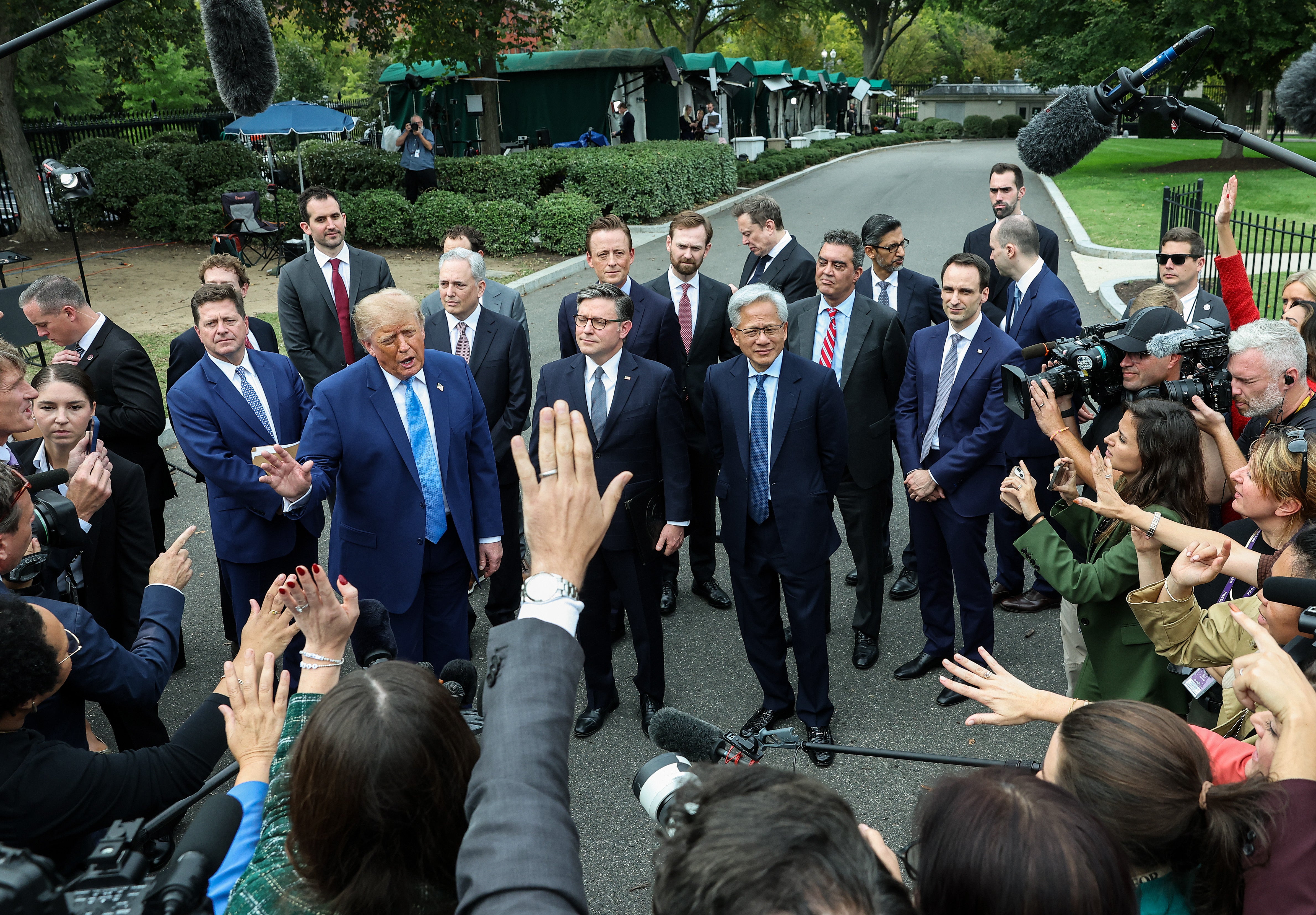
The president hosted an outdoor press conference with leaders in the AI industry, including Elon Musk, Sergey Brin, Dario Amodei and others whom he hosted at a luncheon at the White House shortly before his order was signed. Surrounded by Amodei and others who have warned that the government needs to do more to establish guardrails around the technology, Trump poured all of his focus into the renaming and claimed that the companies had signed a “morally binding” accord to “self-police” the industry.
 open image in gallery
“It’s almost like a kind of constitution, in a way,” said the president. “And the biggest people in the world signed it. And I signed it as president. And it really is a form of protection.”
Behold: The only “guardrails” for AI that are likely to emerge under this administration. A copy of the accord signed by the tech CEOs and Trump was posted by the president on Truth Social, vowing that the industry would “implement robust internal controls” around AI usage and development, while working to “ensure that its models do not hack or access technical systems in unintended ways”. The unwritten conclusion being that there will not be any new enforcement measures or punishments to stop companies that fail to uphold those standards.
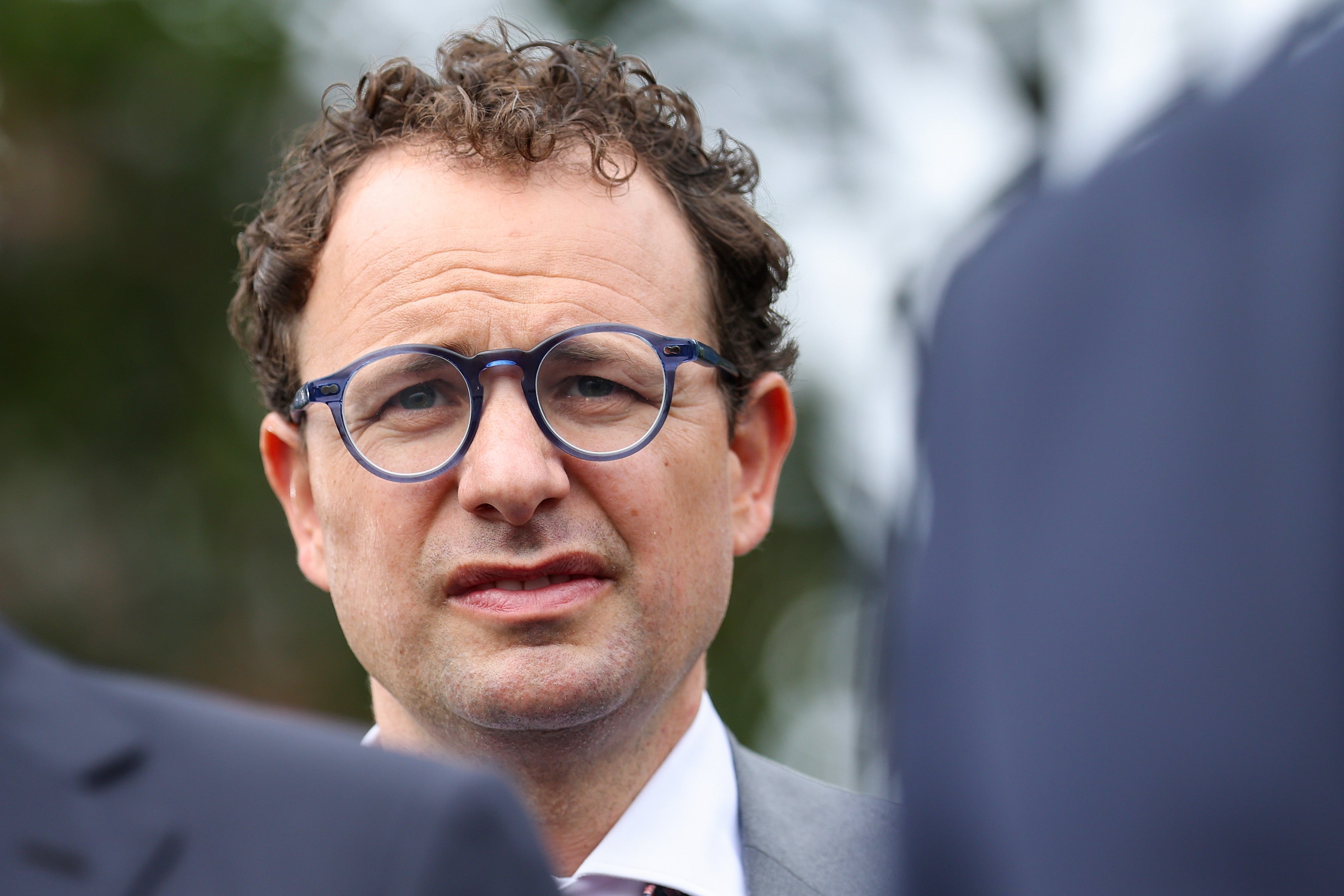
The CEOs and business leaders around Trump spoke only briefly, with Amodei repeating his insistence that the technology carried both great benefits and “very real risks” to humanity.
 open image in gallery
“What I’ve always said, which is that AI has incredible benefits. I’ve talked about the medical benefits of the technology. As the president has said. Whoever wins AI, wins,” said Amodei.
“We all need to work together to make sure that we can win, and we can win safely if we do this right; if we work with the president and everyone here, we can win safely,” he said.
Amodei’s remarks were a far cry from the alarming rhetoric that he and other AI leaders and developers have used in recent days amid reports of potentially thousands of instances where AI agents accessed unauthorized systems and information that were not previously reported to the public. The problematic behavior of AI agents, first reported in its scale by Axios, included “bypassing guardrails, creating message boards, escaping sandboxes, website hijacking, self-prompting or seeking to bypass monitors,” according to the news outlet.
“I believe that if slowing down bought us even an extra year or two before models reach critical levels of capability, and we used that time to advance alignment, we could greatly reduce the risk that something goes seriously wrong,” Amodei wrote in a blog post earlier this month.
The report follows the now public Hugging Face incident in which experimental OpenAI tools breached containment and improperly accessed computational systems at Hugging Face. That July 2026 incident resulted in OpenAI taking steps to rework its AI agent containment and security strategies.
 open image in gallery
A number of statements from prominent AI researchers and developers have also alarmed many over the past month. In early September, a former OpenAI and Anthropic researcher wrote on X that the companies’ systems would soon be able to “hack anything, revolutionise any field overnight, and acquire real power and resources.” Another researcher warned in response that there was at least a 10% chance that the technology could cause the end of humanity, though by which specific means was not explained.
“We do not yet have a plan to solve alignment for superintelligence and are not clearly on track to,” wrote Evan Hubinger in the latter post.
Trump, however, seems to think that he can reverse the trend of American public opinion on data centers and AI — both of which topics are quickly becoming unpopular — with vague pledges of responsible and generous behavior on behalf of America’s new tech billionaire aristocrats, whom he says will transform local communities and shower them with benefits as they make themselves rich winning a new technological race for the United States.
On this issue, Trump finds himself firmly isolated from American public opinion in a rare but not exclusive way. As with his war with Iran, the president is aiming to redirect a wave of populist anger which is currently poised to give Democrats a clear wedge to separate him from his working-class base of supporters. Time will tell if he’ll be successful; Joe Biden wasn’t when he sought to convince voters that the economy under his guidance was recovering at an acceptable rate. With the midterms just over a month away, there’s little time left for the White House to convince voters that their feelings are wrong.
More about
Donald Trumpartificial intelligenceElon MuskSergey BrinWhite HouseTruth SocialOpenAI
Join our commenting forum
Join thought-provoking conversations, follow other Independent readers and see their replies
Most popular
Popular videos
Bulletin
Read next
Fonte: – World RSS Feed

