An Army Study Showed Shock Gloves Caused ‘Intense Pain’ and Terrified Victims—Then ICE Ordered 6,000 Pairs of Them
Por Stephen Prager — Common Dreams
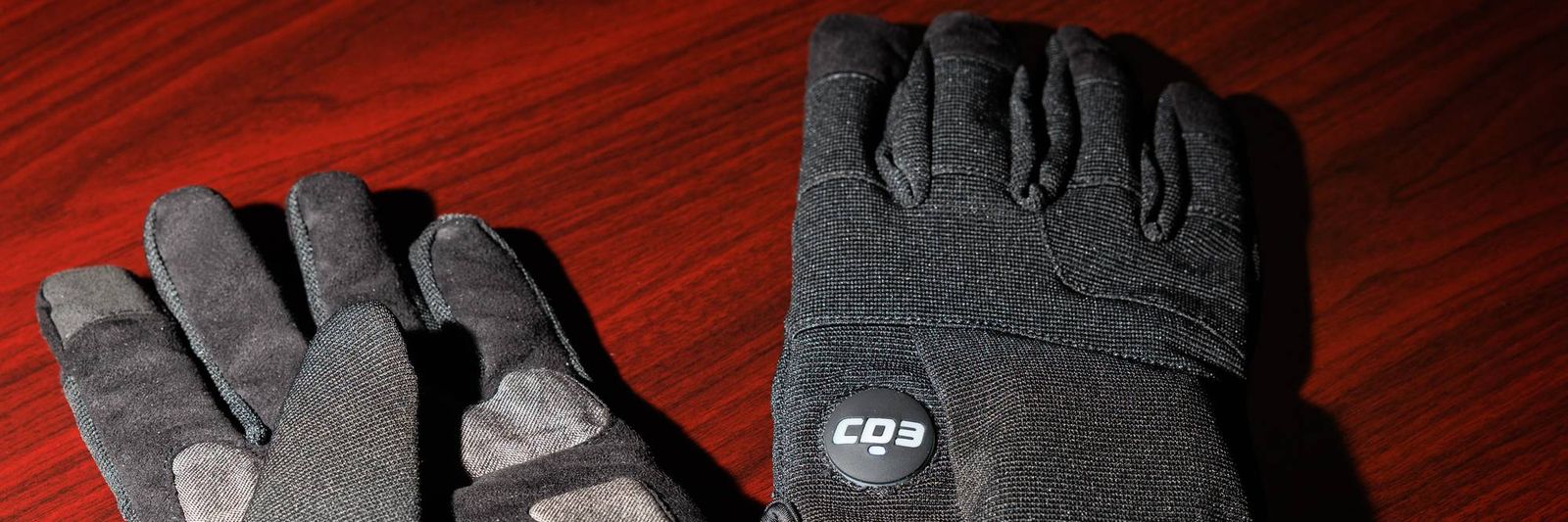
When US Immigration and Customs Enforcement ordered 6,000 pairs of shock gloves this summer, the agency knew that they could cause such “intense pain” that victims stopped fighting immediately and became fearful of more shocks.
That’s according to The Associated Press, which on Tuesday revealed the existence of a US Army study on the gloves. ICE put in a $17 million order for the product, known as the Generated Low Output Voltage Emitter (GLOVE), in August.
In October 2024, the GLOVE was tested on Army employees at the military prison in Fort Leavenworth, Kansas, to see if it could be incorporated into their practices to move noncompliant prisoners between cells.
According to the AP:
The shocks had a profound impact on Army employees who played the role of combative prisoners during the exercise… The participants, several of whom were large-statured men, stopped resisting seconds after officers applied shocks by touching gloves to their skin, and were left with “fatigue, soreness and excessive apprehensiveness to being shocked again,” the study found.
After experiencing the effects of the GLOVE, … [“]participants stated just seeing the GLOVE was enough to make them want to comply,” the authors wrote.
The report later noted that unlike a taser, which is designed to cause the body of a noncompliant person to freeze, the GLOVE is meant to elicit pain. It “works by overloading the peripheral nerve endings,” the study said. It also noted that participants with water or oil on their skin experienced more severe shocks and that one was left in pain for 30 minutes afterward.
The full report has not yet been released to the public; however, a four-page memo from the Department of the Army’s Office of the Project Manager for Close Combat Systems summarizing its findings can be found on the website of the GLOVE’s manufacturer, Compliant Technologies.
ICE has described the shock gloves as a tool to “de-escalate” conflicts in the street with targets of the Trump administration’s mass deportation campaign, as well as protesters against the policy—it has said the gloves would be used to subdue those “actively or passively resisting” agents’ commands.
In the wake of several fatal shootings by agents that lacked clear justification, the agency has described the gloves as a “low-impact tool” that will allow agents to avoid escalating to more extreme uses of force.
When politicians have called to restrict access to the gloves, ICE’s parent agency, the Department of Homeland Security (DHS), accused them of trying to deprive federal officers of “safety equipment.”
The user manual of the GLOVE notes that the “pain stimulus” it delivers can produce psychological changes associated with sudden death, including increased blood pressure, heart rate, and adrenaline, as well as changes in blood chemistry and heart rhythm. It also notes that those shocked with the gloves could face serious injuries from falling after suddenly losing control of their extremities.
The manual recommends that the gloves not be used against older people, small children, people who are pregnant, and people with certain disabilities.
As Reagan Williams, a researcher at Human Rights Watch’s Crisis, Conflict and Arms Division, noted in August, agency operations have regularly targeted these groups.
“Electric shock devices have long been abusively deployed around the globe, including as a method of torture and other ill-treatment. Given these risks, the European Union has implemented trade restrictions on these devices,” Williams said. “The scale of this technology’s potential harm in the hands of ICE, an abusive agency whose recruits are deployed with minimal training, could be considerable.”
Chioma Chukwu, executive director of American Oversight, which provided the report to the AP, noted that while the Army report concluded the gloves were effective, it said little about their safety.
“The military assessment in ICE’s own files shows that these gloves can cause ‘intense pain’ and force compliance. It does not establish that they are safe,” Chukwu said. “Everyone should be alarmed that ICE is preparing to deploy a tool designed to inflict, at best, intense pain, without showing that it is safe for the people who will be subjected to it.”
While tasers can leave severe burns and welts on subjects, the shock gloves being adopted by ICE can deliver a painful shock without leaving a mark, making it much harder to prove their use. For law enforcement agencies, this is one of their most alluring features.
“I highly recommend these gloves to anybody that’s looking for a utility they can use that is conducive to not leading to lawsuits,” said Bob Couey, chief deputy of the Floyd County Sheriff’s Office in Georgia, in a promotional video posted by Compliant Technologies in 2024 and resurfaced in August by Mother Jones.
Even a former ICE acting director, John Sandweg, has warned that because the gloves are so easy to use, agents might feel compelled to deploy them haphazardly.
“It’s too easy for this to get misused, against a population that doesn’t pose a threat,” Sandweg, who led the agency for about six months during the Obama administration, told MS NOW in August.
The gloves have drawn substantial criticism from Democratic members of Congress. In late August, Rep. Delia Ramirez (D-Ill.) led a group of 49 members of the US House of Representatives to demand the contract be canceled.
“Introducing low-visibility electric shock weapons into our immigration enforcement system is an unacceptable escalation that prioritizes physical intimidation and unaccountable force over human safety and administrative accountability,” they said in a letter to DHS Secretary Markwayne Mullin.
ICE, meanwhile, has been less than forthcoming about what guardrails will govern the use of the shock gloves. In late August, Sen. Catherine Cortez Masto (D-Nev.) and 15 other Democratic senators asked the agency to answer questions about how the gloves will be used, who they’ll be used against, and whether it has conducted safety evaluations.
Cortez Masto told the AP that over a month later, the agency has not answered her and her colleagues’ questions.
Fonte: Common Dreams
