A Motion, a Meltdown, and an Andy Burnham-Shaped Opportunity
Por Ash Sarkar — Novara Media
They’re calling it the E motion heard around the world, as the fallout continues from the Green party’s ‘Zionism is Racism’ policy, passed at its conference earlier this month.
The motion has dominated the headlines since making it onto the agenda for autumn conference, eclipsing what the leadership had hoped would be the party’s trademark rent controls policy. It kicked off a briefing war, led by GPEW stalwart and second referendum-enthusiast Caroline Lucas. It also prompted pointed queries from the Equalities and Human Rights Commission.
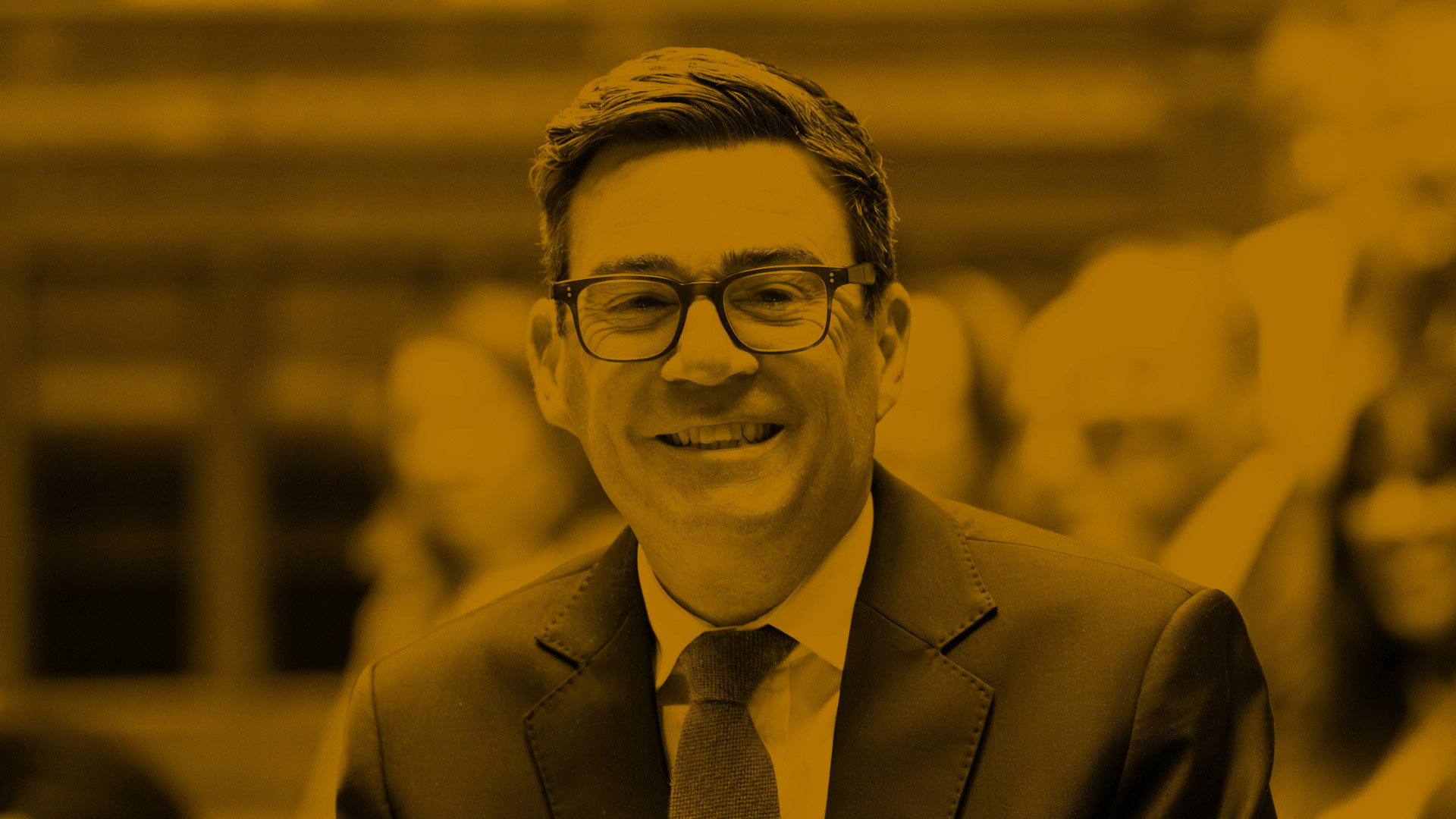
And now, unwilling to let a good crisis pass him by, prime minister Andy Burnham has piled in, ruling out any future coalition with the Greens while the policy remains in place. Supporters of the motion may greet this news as a strategic win – distance from Labour cements the Greens’ status as an insurgent, anti-establishment force. But there are rumblings of discontent amongst parts of the Green party of England and Wales.
It’s no secret that Zack Polanski (while publicly supportive of the argument that Israel’s displacement of, and genocide against, the Palestinians is the result of racist ideology) needed this motion like he needed a hole in the head. He was careful to neither unequivocally back nor deride the motion, and warned that it may “create a distraction” by putting Green members and pro-Palestine activists in a position of being attacked.
Whatever the virtues of the motion were, and still might be, Polanski was proved right on this latter point. The days leading up to his unsuccessful attempt to become the MP for Holborn and St Pancras were a storm of negative media coverage, in which he was forced to defend his party against accusations of being a threat to Jewish people. It would be wrong to characterise the byelection loss as a direct result of the ‘Zionism is Racism’ motion. But it didn’t exactly help his efforts to get elected either.
What followed were the first stirrings of Green infighting. For those steeped in the factional bloodletting of Labour party politics, this is all fairly tame stuff: Lucas, the night of the count, failing to shut down talk of Polanski stepping down, Ellie Chowns calling on her leader to “step up”. But while the Greens might put the ‘civil’ in civil war, this level of publicly-litigated internal division is new for the party.
What’s more, local Green parties and councils have had to manage the reactions of a significant number of Jewish residents and organisations. Haringey council, led by the Greens, found its attempts at overture knocked back by one local synagogue. “We take it from both the tone and the content of your email that you are deeply embarrassed with the decision taken by your party,” wrote Highgate United Synagogue. “[Your] embarrassment is not enough. If you really want us to feel you do not agree with the racist and genocidal implications of your party’s policy, the least we can expect is for you to publicly resile yourself from that policy and commit yourself and your party colleagues to reverse that policy.”
Enter one Andrew Burnham. Though the early months of his premiership have been marked by his attempts to mend fences with voters alienated from Labour by the party’s moral turpitude on Palestine, the temptation to kick his progressive rivals while they’re down was seemingly too much to resist.
Condemning the motion in the House of Commons at this week’s PMQs, Burnham thundered: “It is wrong, it is antisemitic, and this side of the House will have nothing to do with it.” Polanski, in a statement, hit back, pointing out that he’s the only Jewish leader of a political party and himself a victim of antisemitism – while the prime minister “arms a genocide and locks pensioners up for opposing it”.
Westminster grandstanding has since filtered down to local governance. Yesterday, Labour issued an ultimatum, saying it would scrap any power-sharing deals with Greens in local authorities unless local Green electeds reject the ‘Zionism is Racism’ motion passed by members at conference. According to the New Statesman, such agreements prop up more than a dozen local authorities, including in Bristol. Nice gauntlet you’ve got there, shame if anyone threw it.
Perhaps Alanis Morissette might have something to say about a devolution-loving prime minister imposing the will of the Westminster government on local authorities the minute he thinks it’s advantageous to do so. It’s worth pointing out that it has every chance of backfiring on the Labour party – there are few voters who want to see local government dysfunction inflicted in the name of protecting Israel’s state ideology. Labour lost votes over Gaza, and it might prove unwise for Burnham to remind people of that particular issue.
But we’re at a moment where the interests of Green electeds, and some Green activists, are at odds. The May 2026 breakthrough was powered by thousands of Green members – doorknocking, canvassing, leafleting, and getting out the vote. But that very achievement, getting Greens into councils where they might advance the eco-socialist cause by delivering for voters, is easily imperilled by that selfsame membership attempting to remodel the party in their image. That’s a tension: and one that Burnham is determined to exploit.
You can see how this puts Polanski in an invidious position. On the one hand, there’s making and protecting electoral gains, and establishing the Green party’s credibility by governing effectively. On the other, there’s standing with his members when they’re under ferocious attack by the British establishment (even if he’d rather not have picked this particular battle). But perhaps the looming interest of the EHRC, who wrote to the Greens citing the “many Jewish people [feeling] vulnerable” as a result of the motion, might hint at a way out.
Should the Greens face legal challenge, or EHRC investigation, the tactical case for reintroducing the amendments aimed at protecting Jewish members within the party gets stronger. If Polanski backs it wholeheartedly for spring conference, he might just find a way of mitigating the attack lines on antisemitism – and get back to the things he’d much rather talk about.
Fonte: Novara Media