Reporter recounts moment George W Bush was told about 9/11 as aide whispered ‘America is under attack’
Por Steve Holland — – World RSS Feed
Reporter recalls moment George W Bush was told about 9/11 as aide whispered ‘America is under attack’
Bush had been president less than eight months when his chief of staff interrupted a school reading event to inform him of the unfolding tragedy
Steve Holland Wednesday 09 September 2026 21:30 BST
- Bookmark
- Comments Go to comments
Bookmark popover
Removed from bookmarks
Close popover
Your support helps us to tell the story
Read more Support Now
From reproductive rights to climate change to Big Tech, The Independent is on the ground when the story is developing. Whether it’s investigating the financials of Elon Musk’s pro-Trump PAC or producing our latest documentary, ‘The A Word’, which shines a light on the American women fighting for reproductive rights, we know how important it is to parse out the facts from the messaging.
At such a critical moment in US history, we need reporters on the ground. Your donation allows us to keep sending journalists to speak to both sides of the story.
The Independent is trusted by Americans across the entire political spectrum. And unlike many other quality news outlets, we choose not to lock Americans out of our reporting and analysis with paywalls. We believe quality journalism should be available to everyone, paid for by those who can afford it.
Your support makes all the difference. Read more
President George W. Bush was jogging around a Florida golf course before dawn when I first saw him on September 11, 2001.
As one of two Reuters correspondents traveling with Bush that day, I was covering what was expected to be a routine event with schoolchildren to promote his education policies. He had been president of the United States less than eight months.
Within hours, the untested Bush was confronting the worst attack on American soil since Pearl Harbor in 1941.
The tragedy unfolded as Bush visited the Emma E. Booker Elementary School in Sarasota, Florida. As the president was meeting staff and students, I was in a nearby press center set up for reporters. We watched a live television broadcast showing smoke pouring from one of the World Trade Center twin towers in New York. It had been hit by a plane in what we initially assumed was an accident. Then, as we watched, a second plane struck.
 open image in gallery
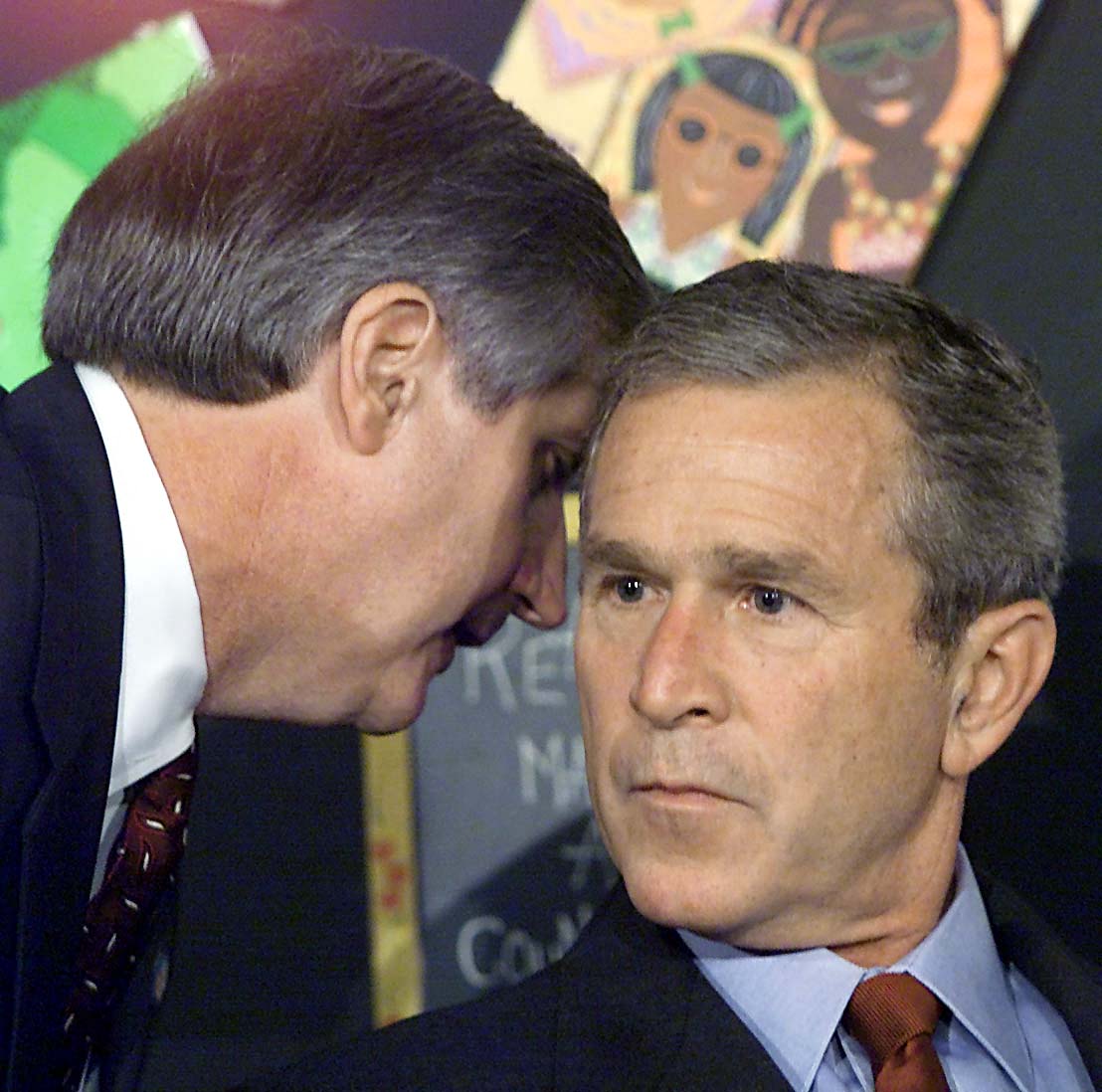
Bush was at the school, reading to children. Cameras captured the shocked look on his face as a White House aide entered the classroom and whispered to him about the second plane, saying “America is under attack.”
By the end of the week, Bush would show a range of emotions as he came to grips with events that marked a turning point in his presidency and in American life — horror and anger at the attacks, grief and tears for the victims, and defiant promises to make those responsible pay.
The former president, now 80, plans to attend a ceremony on Friday to mark the 25th anniversary of the attacks at Ground Zero in New York. On Wednesday evening, he will share his reflections on the anniversary at his presidential library in Dallas, while 16 artworks he has painted reflecting the courage and sacrifice of that day will be on display.
“It became evident … that the world had changed,” Bush would later tell CBS’s 60 Minutes II.
 open image in gallery
Bush spent the rest of his presidency working to prevent another such attack. The hijackings exposed security vulnerabilities, spurring increased safety measures at airports and public buildings. His administration drew fire for the harsh interrogation tactics used on some Islamic militant suspects, and his 2003 invasion of Iraq was seen by many as a costly mistake.
The former president declined an interview request from Reuters for this story.
Scrambling to protect the president
A quarter century later, the memories remain vivid.
In the immediate aftermath of the hijacked plane attacks, there was a scramble to protect the president. As Bush was whisked away to Air Force One to leave Florida, the scale of the crisis was becoming clear.
The World Trade Center towers collapsed, leading to the deaths of about 3,000 people. A third plane plowed into the Pentagon, killing 64 people on the plane and 125 in the building. A fourth plane slammed into a field in Shanksville, Pennsylvania, after passengers fought back against the hijackers, and all 44 people on board died.
 open image in gallery
Panic gripped Washington. Plumes of smoke from the Pentagon prompted fears of car bombs. The White House was evacuated, with the Secret Service telling female staffers to take off their heels and run.
Bush spent the day flying across the country on Air Force One, first to Barksdale Air Force Base in Louisiana and then to Offutt Air Force Base in Nebraska. Later, he was to push for improved communications equipment on Air Force One after he had trouble staying in touch with the White House as he flew around the country.
In Nebraska, he entered an underground bunker to hold a teleconference briefing with top national security aides and Vice President Dick Cheney.
Eager to return to Washington, Bush arrived back at the White House late that afternoon. That night he gave an Oval Office address.
“The pictures of airplanes flying into buildings, fires burning, huge structures collapsing, have filled us with disbelief, terrible sadness, and a quiet, unyielding anger,” Bush said.
 open image in gallery
Meanwhile, along with much of the White House press corps, I was still stranded in Florida, unable to fly anywhere as all air travel had been shut down. As president of the White House Correspondents’ Association at the time, I helped push for our return home, and we finally took a chartered bus back to the capital.
After a 14-hour drive, our first view of Washington was the smoking gash in the Pentagon.
On September 14, I traveled with Bush to Ground Zero. The towers were still burning, the smell evident miles away. As Bush walked around the ravaged site with then-Mayor Rudy Giuliani, there were worries that some surrounding buildings had weakened to the point of collapse.
A thick layer of ash lay everywhere, on sidewalks, streets and on the shoulders of weary firefighters.
 open image in gallery
Standing on the remains of a firetruck, Bush told emergency crews that the United States was now at war with Islamic militants.
“I can hear you! I can hear you! The rest of the world hears you! And the people who knocked these buildings down will hear all of us soon!” he said through a bullhorn.
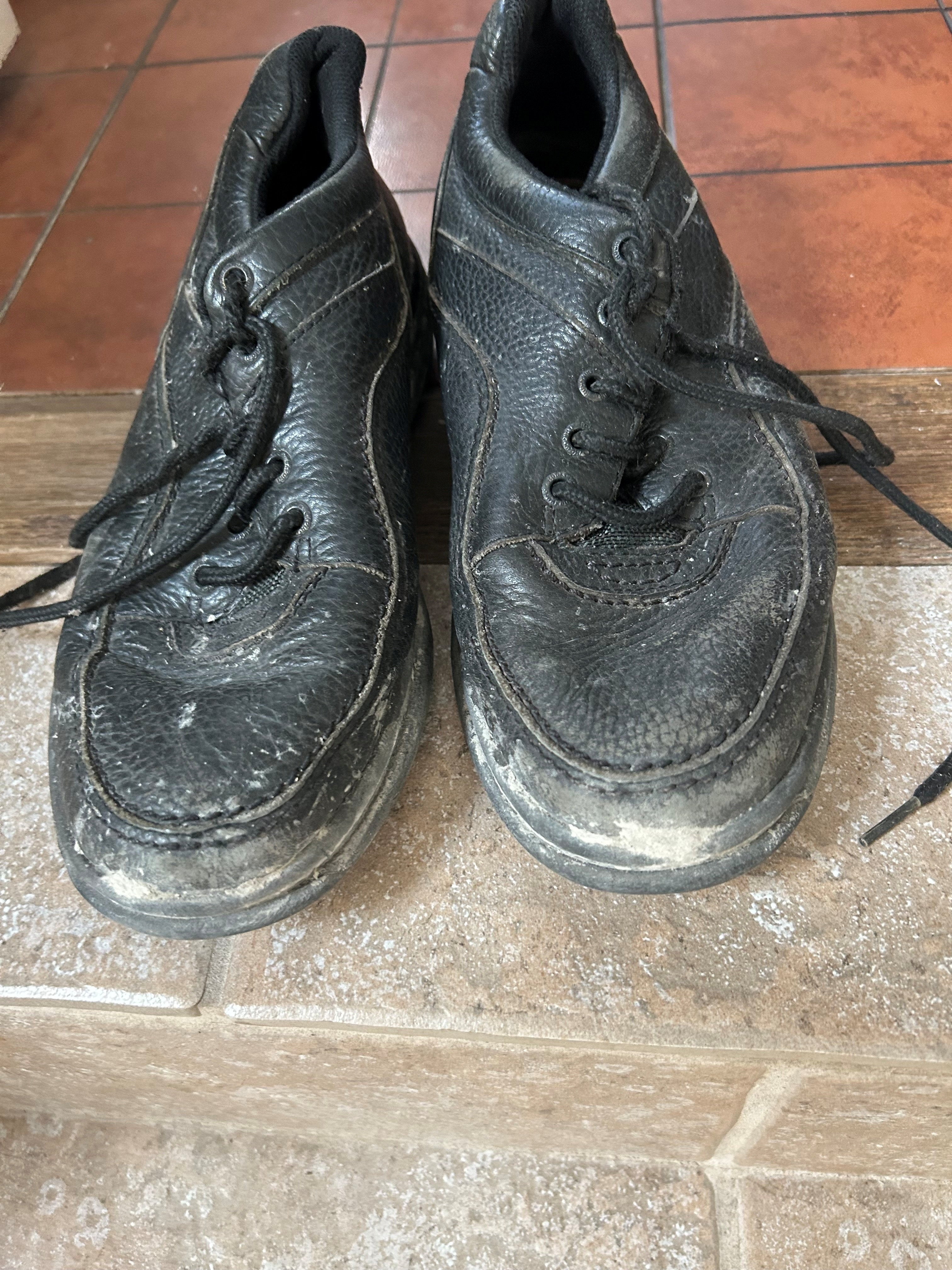
The shoes I wore that day were covered with ash and soot. When I got back home, I put them in a plastic bag and stowed them in a closet.
Twenty-five years later, there they remain. Too ruined to wear, too dear to throw away.
More about
George W BushSeptember 11 attacks
Join our commenting forum
Join thought-provoking conversations, follow other Independent readers and see their replies
Most popular
Popular videos
Bulletin
Read next
Fonte: – World RSS Feed
