‘A Serious and Alarming Threat’: US Bombing, Blockade Deepen Iran Medical Crisis
Por Brett Wilkins — Common Dreams
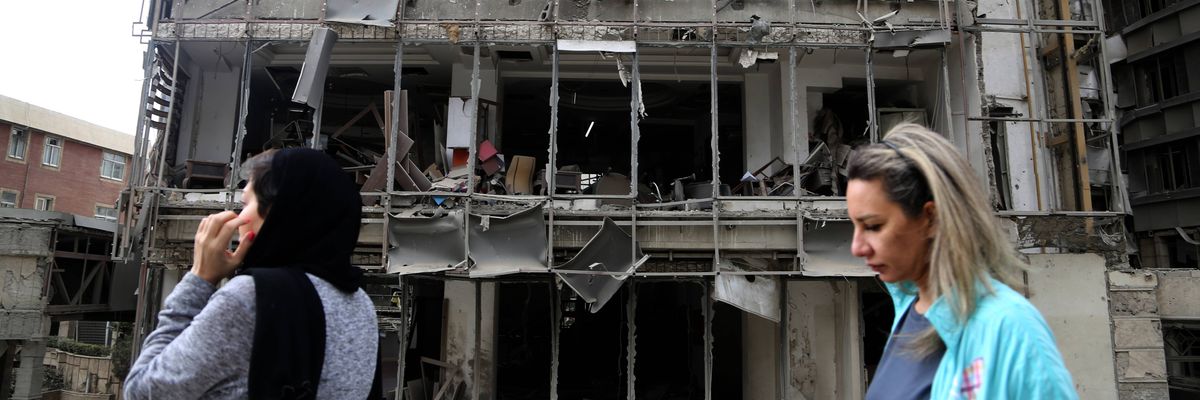
A senior Iranian health official on Tuesday accused the United States of deliberately targeting Iran’s medical infrastructure amid a worsening shortage of critical medicines as President Donald Trump’s illegal US-Israeli war of choice against Iran drags on.
Iran’s pharmaceutical system is straining under US bombing, blockade, and sanctions that have severely disrupted trade and transportation in the Middle East nation of around 90 million people. Iranian officials say shortages of roughly 800 medicines—including dozens of essential drugs—are affecting the treatment of cancer and other serious illnesses.
“The enemy has identified medicine as one of the sensitive areas of the country, and is trying to denigrate and portray Iran’s conditions as unfavorable by releasing content in the press and social media,” Deputy Health Minister Mahdi Pirsalehi, who also heads Iran’s Food and Drug Administration, told Al Jazeera.
Pirsalehi has said that more than 50 factories and pharmacies have been damaged or destroyed by US and Israeli bombing during the six-month war. The attacks have exacerbated existing shortages.
One gastroenterologist and university professor in Tehran, who spoke to Al Jazeera on condition of anonymity, sounded the alarm on what she called a “staggering” rise in drug prices—including for domestically produced generic medications—caused in significant part by the US naval blockade.
“Reports that rotavirus vaccine imports have been halted because of the maritime blockade—and that influenza vaccines may soon face the same problem—represent a serious and alarming threat to nationwide efforts to prevent vaccine-preventable communicable diseases,” she said.
“Runaway inflation, poverty, and inadequate access to essential food groups among vulnerable populations, including infants, children, and pregnant women, signal the onset and spread of malnutrition,” she added, warning of the risk “of both communicable and noncommunicable diseases, creating a vicious cycle in which malnutrition develops and progressively worsens.”
For ordinary Iranians, empty pharmacy shelves, delayed treatments, and prohibitively expensive prescription drugs have become the new normal.
One Iranian pharmaceutical company recently announced price increases for scores of drugs, including a 543% rise in the price of the Alzheimer’s medication donepezil, a 308% higher cost for the antibiotic clarithromycin, and a 135% spike in acetaminophen and diphenhydramine syrups, according to reporting by Tasnim News Agency.
Dr. Hassan Nayeb Hashem told Deutsche Welle last month that “for many specific diseases, there is effectively no substitute” for prescribed drugs.
“If the medicine becomes inaccessible, patients can develop complications much sooner,” he said. “The most serious risk is premature death.”
One patient requiring testing for an abdominal and pelvic mass recently told Iran International that CT and MRI scans now cost over $100, even with Social Security insurance—the equivalent of a month’s pay for many Iranians.
“How are we supposed to pay these costs with such meager incomes?” they asked.
A 33-year-old man said the exorbitant cost of dental treatment has left him without half of his teeth.
“I feel like I’m 60,” he said. “The bitter part is that this humiliating way of life has become normal for me.”
Another Iranian said they feared what would happen if anyone in their family got sick this winter.
“We’re stressed about where we would get the money for treatment,” they said, “if God forbid we or our children even catch a cold.”
Fonte: Common Dreams