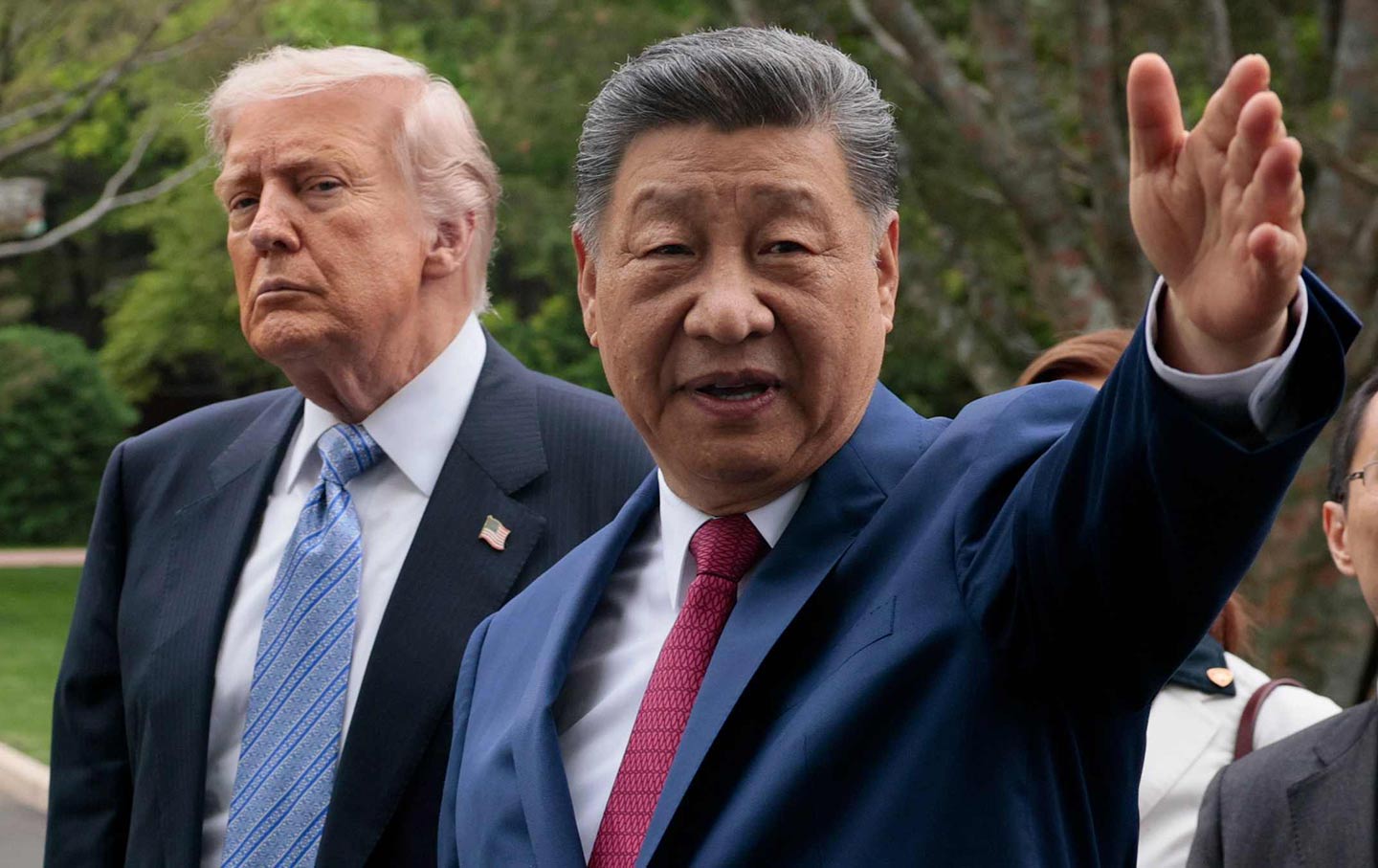
Xi Jinping’s visit to US to stabilize markets, geopolitical situation — expert
TASS
BEIJING, September 23. /TASS/. The upcoming visit by Chinese President Xi Jinping to the United States and his meeting with US President Donald Trump will have a positive impact on global markets and the geopolitical situation, Qian Feng, a researcher and director of the Research Department at Tsinghua University’s National Strategy Research Institute, told TASS.
"Following President Trump’s successful visit to China in May this year, President Xi Jinping’s trip to the United States will have a number of positive and far-reaching consequences for China-US relations," the expert said. "First, the visit will send a positive signal to the international community regarding the stabilization and improvement of China-US relations. It will help stabilize market expectations and the global geopolitical climate, while also setting a constructive tone for interaction between the two countries."
As Qian emphasized, Xi’s scheduled trip to the US will mark his second meeting with Trump in the past six months – an event of "immense strategic importance" for developing constructive relations and maintaining strategic stability.
"Through direct interaction between the two leaders, both sides will be able to more clearly define 'red lines' and key interests, as well as fine-tune crisis-management mechanisms," he said. "History shows that cooperation benefits both sides, while confrontation harms everyone. This visit will help create a 'safety barrier' around differences and prevent them from escalating into open confrontation."
The Chinese political analyst noted that the visit is expected to pave the way for a number of concrete bilateral cooperation agreements. Such engagement between Beijing and Washington, grounded in shared interests, could deepen the two countries’ economic interdependence and "undermine arguments for decoupling and the severing of supply chains."
Qian said Xi’s trip could help China and the US overcome short-term differences and "view the long-term development of bilateral relations from historical and philosophical perspectives."
"Through candid dialogue, the United States will gain a deeper understanding of the PRC’s development path and strategic intentions, while the Chinese side will be able to more accurately assess the direction of US policy. This will enable the shaping of a new, stable model of interaction between major powers," he said.
According to Qian, Xi and Trump are expected to coordinate their positions in several areas during the visit, particularly on global governance.
"As the world’s two largest economies, China and the United States bear a tremendous historical responsibility for addressing global issues," he said. "China hopes to strengthen policy coordination with the United States on global challenges such as public health and the regulation of artificial intelligence, and to jointly provide public goods for global peace and prosperity."
Qian noted that trade and economic cooperation between China and the US has "faced numerous new challenges" in recent years, particularly as a result of unilateral actions by Washington that "politicize trade and economic issues," impose additional tariffs on Chinese goods, erect barriers through stricter export controls and "hinder normal cooperation within industrial supply chains."
These measures, he said, undermine the stability of bilateral trade and the business environment, destabilize markets and dampen business confidence.
According to Qian, Beijing hopes that Xi’s visit will facilitate the resolution of structural issues in China-US trade, strengthen practical cooperation in new areas, reinforce the "stabilizing ballast" of bilateral ties, foster mutually beneficial cooperation and "deliver tangible benefits to the people of both countries."
Qian also pointed to what he described as "numerous real obstacles" facing cultural and people-to-people exchanges between China and the US. He said the US side "places excessive emphasis on security concerns regarding routine academic exchanges and scientific-technical cooperation," while tighter visa policies are creating a "chilling effect."
"This has led to a significant mutual reduction in the number of students studying in the two countries and a sharp decline in inter-university cooperation," Qian said. "Furthermore, long-standing biases against China within the American public exert constant pressure on the social atmosphere surrounding people-to-people exchanges, thereby eroding the foundation of cultural interaction."
China hopes Xi’s visit to the US will help restore and expand cultural exchanges and deepen mutual understanding between the peoples of the two countries, he added.
Qian recalled that, in its dealings with the United States, China "consistently adheres to the principles of mutual respect, peaceful coexistence, and mutually beneficial cooperation." Beijing seeks to foster bilateral ties, "build a constructive relationship of strategic stability," and promote "an expanded scope of cooperation and common ground in areas such as the economy, trade, and global governance," he said.
Qiang added that China seeks to resolve differences with the US through dialogue and consultation in order to prevent further escalation of bilateral tensions.
At the same time, Qian emphasized that while China firmly defends its sovereignty, security and legitimate development interests, it will also "resolutely push back unilateral acts of intimidation" and remain guided by its high-level diplomatic strategy.
China is "prepared to demonstrate goodwill toward the US and pave the way for steering the relationship between the two powers onto the right track," he said.
"In my view, at the political and diplomatic levels, China hopes that head-of-state diplomacy will play an indispensable, strategic and leading role," Qian said.
He believes that in-depth dialogue between Xi and Trump could enable Beijing and Washington to "reach a broader consensus, resolve differences, avoid strategic miscalculations, and reaffirm the principles of mutual respect, peaceful coexistence, and mutually beneficial cooperation."
In doing so, the leaders of the two countries would "infuse new substance into the constructive China-US relationship of strategic stability," Qian said, referring to a framework he said was agreed upon during the US president’s visit to China in May.
On Monday, China’s Foreign Ministry announced that Xi Jinping would visit the United States from September 23 to 25. During the visit, the Chinese leader will discuss "bilateral relations and important issues concerning global peace and development" with Trump.
Fonte: TASS