Report Details How Trump Has Handed Get-Out-of-Jail-Free Card to Wall Street and Big Tech
Por Julia Conley — Common Dreams
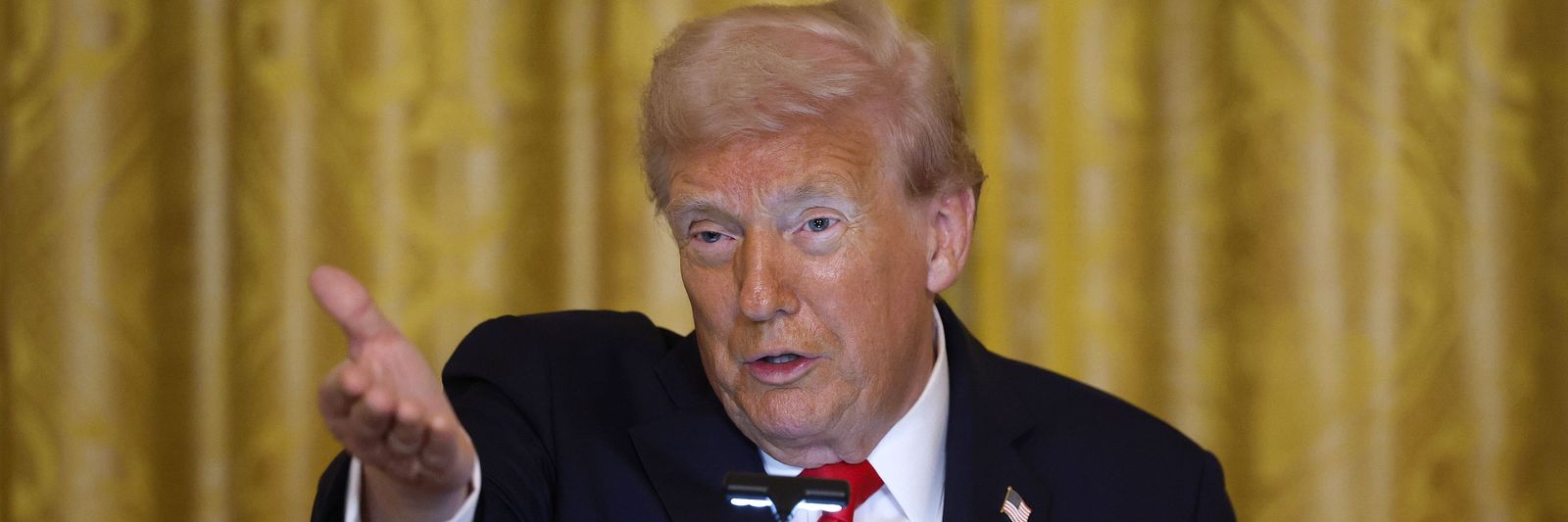
A report released by government watchdog Public Citizen Wednesday reveals how, under the Trump administration, a donation to or partnership with President Donald Trump “could make your legal matters disappear.”
When Trump took office in January 2025, he inherited from the Biden administration hundreds of enforcement actions that were supposed to be carried out against law-breaking corporations.
But as Public Citizen research director Rick Claypool wrote in the report, titled ” Trump’s Cascade of Canceled Corporate Enforcement Against Over 200 Corporations,” the president and his top officials have rolled back 212 enforcement actions against 205 corporations since taking office—closing dozens of federal investigations, dismissing 67 lawsuits that federal agencies were actively litigating, and terminating numerous other consequences for wrongdoing.
Ninety of the companies that have avoided enforcement actions—44%—were ones with ties to Trump, including 53 that contributed to the president’s inaugural committee, super political action committees (PACs) that supported him, or the demolition of the East Wing of the White House to make way for Trump’s ballroom.
“Trump’s retreat from law enforcement against corporate crime is a signal to Big Business that if you’re big enough, rich enough, and connected enough with Trump’s inner circle, there are no consequences for breaking the law,” said Claypool. “The reckless experiments of AI corporations, the proliferation of scammy financial fraudsters, and the outbreaks of tainted food show that the message has clearly been received.”
Elon Musk, the CEO of Tesla and SpaceX, is one of the largest beneficiaries of Trump’s retreat, following his pouring of $400 million into the president’s campaign and those of other Republicans in 2024. He also gave $1 million to the president’s inaugural fund and $5 million to the MAGA, Inc. super PAC.
Tesla has benefited from four canceled enforcement actions, with the National Highway Traffic Safety Administration canceling three investigations and the Department of Labor canceling an inspection into contract compliance. Lawsuits that had been filed against SpaceX by the Department of Justice and the National Labor Relations Board were also closed, as was an Environmental Protection Agency investigation into data center pollution.
Musk himself also avoided a lawsuit over alleged misconduct when he purchased the social media platform X, when the Securities and Exchange Commission suit was dismissed.
Pfizer, which employed former Attorney General Pam Bondi before she joined the Trump administration—only to be fired earlier this year—also had three enforcement actions canceled. The pharmaceutical giant contributed $1 million to Trump’s inaugural fund.
Wall Street giant Wells Fargo has also benefited from the cancellation of five enforcement actions, and Amazon, Bank of America, Meta, and Polymarket are among the corporations that have had at least two canceled.
The report explains how other corporations across the Big Tech, finance, and cryptocurrency sectors have seen investigations and lawsuits vanish after contributing to Trump’s reelection efforts, including:
- Citibank, which donated $100,000 to Trump’s inauguration committee and saw the 2023 consent order issued by the Consumer Financial Protection Bureau (CFPB) terminated, after it had allegedly violated the Equal Credit Opportunity Act;
- Amazon, which gave $5 million to help fund Trump’s ballroom, $1 million toward the inaugural fund, and has other ties to the administration, and avoided a disparate-impact discrimination charge by the Equal Opportunity Commission and audits to prevent workplace discrimination after an executive order halted such enforcement; and
- Meta, which donated to the inaugural fund and the ballroom, and avoided a CFPB investigation into whether it improperly used financial data for its advertising business.
“Americans should expect fair application of the rule of law to ensure even the most powerful and well-connected can be held accountable,” reads the report. “But with 44% (90 out of 205) of corporations with publicly known ties to the administration receiving the benefit of canceled enforcement, the pattern of favoritism toward corporate insiders is clear. ”
Claypool emphasized that by working unilaterally and wielding his executive power instead of collaborating with Congress, Trump has granted the “corporate wish” of canceled enforcement actions “with relative ease.”
“Unlike passing friendly legislation, which requires coordination and cooperation with congressional majorities, or formal deregulation, which can require formal processes including outside input intended to ensure careful and deliberate decision making, agency leaders derelict in their duties claim canceling enforcement is a matter merely of prosecutorial discretion,” reads the report.
The analysis details several executive actions and policies Trump has unilaterally adopted “to reduce enforcement against corporate crime and lawbreaking,” including:
- Pardoning not just individuals but also at least nine corporations that have been convicted of a crime;
- Illegally attempting to defund the CFPB, resulting in the cancellation of at least 44 enforcement actions;
- Signing an executive order claiming that enforcement against disparate-impact liability—cases in which ostensibly neutral policies nonetheless discriminate against protected classes, even if unintentionally—is unconstitutional;
- Signing an executive order discouraging agencies from prosecuting criminal misconduct; and
- Taking a permissive approach to antitrust enforcement, particularly in regard to mergers and acquisitions, that accelerated after the firing of DOJ antitrust leader Gail Slater.
The administration has also been able to cancel enforcement in a “top-down” fashion through its “dismissal of DOJ independence” and the Supreme Court’s ruling in Trump v. Slaughter, which permitted the White House to seize authority from regulators.
” The result,” wrote Claypool, “is that power over federal agencies is more concentrated than ever with the president’s inner circle—and that courting favor with President Trump is a distinctly powerful lever for taking advantage of the enforcement retreat.”
Fonte: Common Dreams