Hungary’s Orbán-era foreign minister grilled over ties to Chinese automaker after joining company
Por Justin Spike — – World RSS Feed
Hungary’s Orbán-era foreign minister grilled over ties to Chinese automaker after joining company
Hungary’s former foreign minister Péter Szijjártó is appearing before a parliamentary committee to address questions about his dealings with Chinese automaker BYD
Justin Spike Monday 05 October 2026 11:33 BST
- Bookmark
Bookmark popover
Removed from bookmarks
Close popover

Become an Independent member to bookmark this article
Want to bookmark your favourite articles and stories to read or reference later? Start your Independent Membership today.
Already a member?
Log in
Your support helps us to tell the story
Read more Support Now
From reproductive rights to climate change to Big Tech, The Independent is on the ground when the story is developing. Whether it’s investigating the financials of Elon Musk’s pro-Trump PAC or producing our latest documentary, ‘The A Word’, which shines a light on the American women fighting for reproductive rights, we know how important it is to parse out the facts from the messaging.
At such a critical moment in US history, we need reporters on the ground. Your donation allows us to keep sending journalists to speak to both sides of the story.
The Independent is trusted by Americans across the entire political spectrum. And unlike many other quality news outlets, we choose not to lock Americans out of our reporting and analysis with paywalls. We believe quality journalism should be available to everyone, paid for by those who can afford it.
Your support makes all the difference. Read more
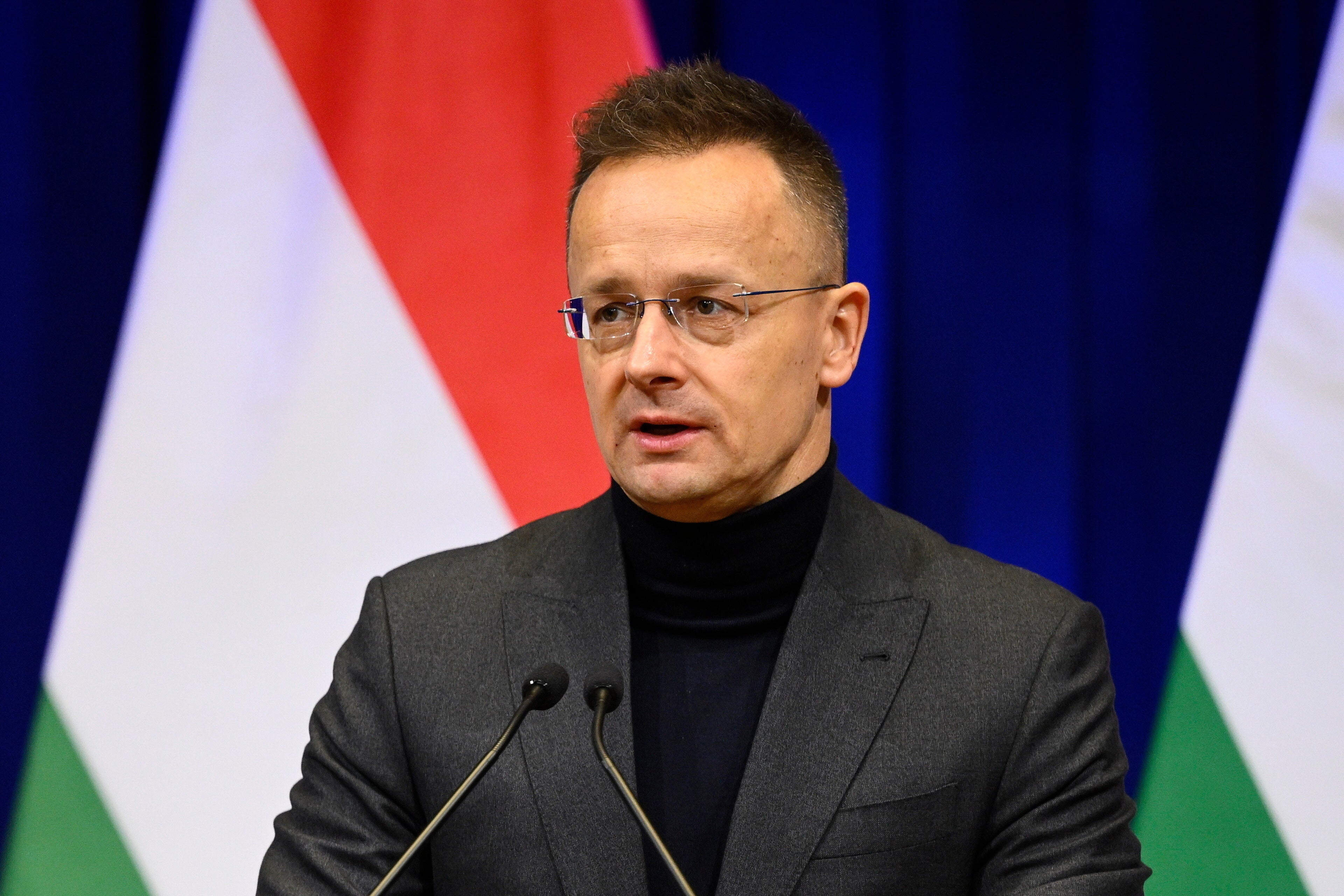
Hungary’s former foreign minister Péter Szijjártó appeared before a parliamentary committee Monday to answer questions about his dealings with Chinese automaker BYD while still in office — before he left politics this summer to take an executive position with the firm.
Szijjártó, who served as Hungary’s foreign minister for 12 years under former Prime Minister Viktor Orbán before an election defeat in April, announced in July that he would resign his seat in Hungary’s parliament to take the job at the world’s top electric carmaker.
The announcement prompted accusations of a conflict of interest, and criticism of his central role in facilitating substantial government subsidies for the company while in office.
In addition to securing the deal allowing BYD to open its first European factory near the southern Hungarian city of Szeged, Szijjártó also announced in 2025 that the company would locate its European headquarters and a research and development center in Budapest, and receive 20 billion forints ($63.7 million) in government assistance.
Upon arriving at the closed-door National Security Committee hearing on Monday, Szijjártó told reporters that there had been “serious misunderstandings” related to BYD’s investment in Hungary. He made no mention of his new position at the company, which he earlier described as an “executive responsible for the group’s external relations and the development of new business lines.”
“I consider it a great success that this factory came to Hungary,” Szijjártó said Monday. “I would also like to point out that the proposed and awarded government subsidies for the construction of the BYD factory in Szeged have remained well within the framework of the usual subsidies for investments of this magnitude.”
Hungary’s new prime minister, Péter Magyar, told lawmakers in July that Szijjártó had helped BYD “with hundreds of billions (of forints) in public money, diplomatic support and state infrastructure,” and that an investigation would be launched to “examine all the decisions, negotiations and state commitments” made by Szijjártó related to the BYD investment.
While in office working under Orbán, Szijjártó concluded numerous foreign investment deals with Chinese companies to open factories in Hungary, largely related to battery production for the electric vehicle industry.
Orbán’s government hoped the investments would make Hungary a global hub of lithium-ion battery manufacturing, yet decreased demand and other market pressures have so far prevented those investments from paying high dividends.
Since taking office in May, Magyar’s government has promised increased regulation and tighter oversight of the battery production sector following some workplace accidents and findings at several plants that showed contamination levels over legal limits.
More about
Péter SzijjártóViktor OrbánHungaryChineseBudapestPéter Magyar
Most popular
Popular videos
Bulletin
Read next
Fonte: – World RSS Feed