Abbas Barred From US by Trump While Netanyahu, Wanted by ICC for War Crimes, Gets Welcome Mat
Por Stephen Prager — Common Dreams
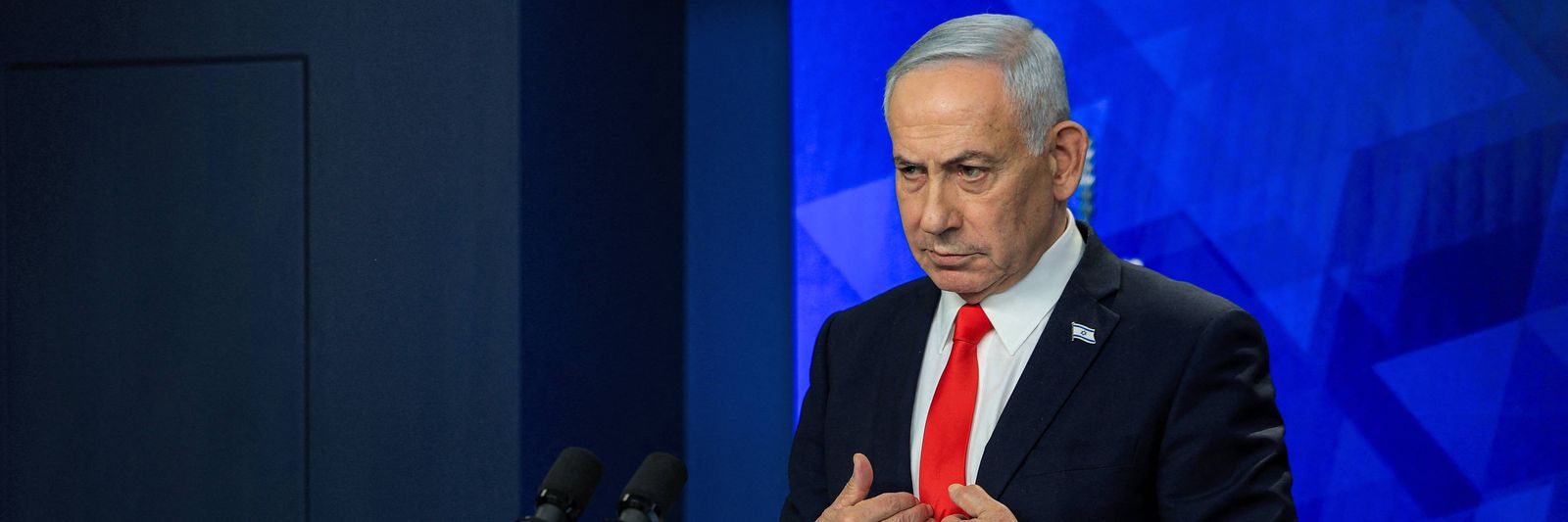
While the Trump administration bars Palestinian Authority President Mahmoud Abbas and his delegation from entering the US to attend the United Nations General Assembly for the second year in a row, it is welcoming Israeli Prime Minister Benjamin Netanyahu, who is accused of war crimes and crimes against humanity in Gaza by the International Criminal Court.
In November 2024, the ICC found “reasonable grounds to believe” that Netanyahu bore criminal responsibility for the use of starvation as a method of warfare and the crimes of murder, persecution, and other inhumane acts, including intentionally targeting civilians.
Since October 2023, Israel’s assault on Gaza has killed at least 73,000 Palestinians, including more than 21,000 children, while reducing much of the landscape to rubble and leaving most of the population displaced. Meanwhile, Israel’s restrictions on food, water, medicine, electricity, and other essentials have created conditions of severe hunger, dehydration, the collapse of medical care, and civilian deaths.
President Donald Trump has previously assured Netanyahu that he would not be arrested while visiting New York on the basis of the ICC warrant. The US and Israel are not parties to the Rome Statute, meaning that they are not obligated to enforce the ICC’s warrant.
New York City Mayor Zohran Mamdani examined whether his administration had the legal authority to detain Netanyahu earlier this year. Officials determined they did not, but Mamdani called on the federal government to execute the ICC warrant and said, “Benjamin Netanyahu is not welcome in New York City, nor is any other war criminal at large.”
As The Jerusalem Post reported earlier this week, there has been “unusual involvement” from the US Secret Service with the prime minister’s visit next week, with more than 60 New York Police Department security officers and detectives expected to participate in his security detail.
Netanyahu is set to take the podium on Thursday, September 24, amid intense international scrutiny and condemnation of the aggressive US-Israeli war against Iran, the expansion of illegal Israeli settlements across the West Bank and the explosion of settler terrorism against Palestinians, and Israel’s occupation of southern Lebanon.
The US State Department has emphasized that it barred Abbas and around 80 other Palestinian officials from attending—forcing Abbas to appear at the UNGA remotely via video call—partially in response to Palestinian leaders bringing evidence of Netanyahu’s crimes before international tribunals including the ICC and the International Court of Justice (ICJ), where Israel has been accused of violating the 1948 Genocide Convention in Gaza.
The State Department described the use by Palestinians of international legal bodies like the ICC and ICJ as part of an effort to “internationalize the Israeli-Palestinian conflict.” Incidentally, around two-thirds of the weapons Israel has imported between 2021-25 have been from the US.
Erika Guevara Rosas, a senior director at Amnesty International, said on Thursday that “the State Department’s statement makes it obvious: This decision is designed to punish the state of Palestine for pursuing international justice and accountability at international institutions, including through the International Criminal Court (ICC) and the International Court of Justice (ICJ).”
“This measure is part of a relentless campaign of reprisals against the very notion of international justice,” Guevara Rosas continued.
The Trump administration has also sanctioned ICC personnel over its case against Netanyahu, as well as Palestinian human rights organizations that provided evidence that assisted in the prosecution of Israeli nationals.
In July, US Secretary of State Marco Rubio said the US was launching a “whole-of-government response” intended to “systematically disable” the ICC’s ability to operate and threatened to dismantle the institution “brick by brick, if necessary.”
Guevara Rosas argued that the ban on Abbas constituted a “clear violation” of the 1947 UN Headquarters Agreement, which states that the US cannot block individuals from entry simply because of poor relations with their home government.
The State Department acknowledged this explicitly on Thursday when it announced that it would allow the president and foreign minister of Iran—a nation with which the US has been at war for more than six months—into the country “consistent with our host country obligations,” though they have faced some shopping and travel restrictions.
Guevara Rosas said the Trump administration was “setting a dangerous precedent in which the US instrumentalizes its privilege as the host country of the UN to impose arbitrary restrictions on attending the UNGA, and other UN meetings.”
On Thursday, the General Assembly voted 152-3 calling on the US to reverse its decision to deny entry to the Palestinian delegation in person and allow them to participate via a pre-recorded message.
Itay Epshtain, an Israeli international humanitarian law expert who works with the Norwegian Refugee Council, argued that the UN could do much more, including voting to move part of the General Assembly to a location where the Palestinians would be allowed to participate.
“The [UNGA] decision to allow President Abbas to speak remotely is welcome,” he wrote on social media. “But precedent is more exacting: In 1988, when the US barred PLO chairperson [Yasser] Arafat, the assembly moved its Palestine debate to Geneva.”
Fonte: Common Dreams