Students in 30 states can apply for scholarships next year under Trump plan that includes federal tax credits
Por Bianca Vázquez Toness — – World RSS Feed
Students in 30 states can apply for scholarships next year under Trump plan that includes federal tax credits
Scheduled to launch on Jan. 1, the Federal Scholarship Tax Credit represents the nation’s first federal school choice program
Bianca Vázquez Toness Thursday 01 October 2026 21:52 BST
- Bookmark
Bookmark popover
Removed from bookmarks
Close popover
 open image in gallery
Become an Independent member to bookmark this article
Want to bookmark your favourite articles and stories to read or reference later? Start your Independent Membership today.
Already a member?
Log in
Your support helps us to tell the story
Read more Support Now
From reproductive rights to climate change to Big Tech, The Independent is on the ground when the story is developing. Whether it’s investigating the financials of Elon Musk’s pro-Trump PAC or producing our latest documentary, ‘The A Word’, which shines a light on the American women fighting for reproductive rights, we know how important it is to parse out the facts from the messaging.
At such a critical moment in US history, we need reporters on the ground. Your donation allows us to keep sending journalists to speak to both sides of the story.
The Independent is trusted by Americans across the entire political spectrum. And unlike many other quality news outlets, we choose not to lock Americans out of our reporting and analysis with paywalls. We believe quality journalism should be available to everyone, paid for by those who can afford it.
Your support makes all the difference. Read more
Under newly proposed Trump administration regulations released Thursday, almost all school-age children across at least 30 states could become eligible for a new federal scholarship initiative next year to cover private schooling, homeschooling and related educational costs.
Scheduled to launch on Jan. 1, the Federal Scholarship Tax Credit represents the nation’s first federal school choice program, establishing a taxpayer-funded incentive for families opting for private or home education in participating states. Taxpayers who donate to approved scholarship-granting organizations will receive a federal tax credit, a financial perk anticipated to further fuel the conservative school choice movement.
The Education Department estimates that roughly 96% of children residing in participating states will qualify for the program. Children who continue attending public schools can also utilize the scholarships to cover extra learning costs.
“Education freedom is the key to unlocking opportunity and success for our next generation of students,” said U.S. Secretary of Education Linda McMahon in a statement issued Thursday. The federal scholarship program, she said, will ensure “every child has access to the education they need, not one limited by ZIP code, family income, or government‑imposed barriers.”
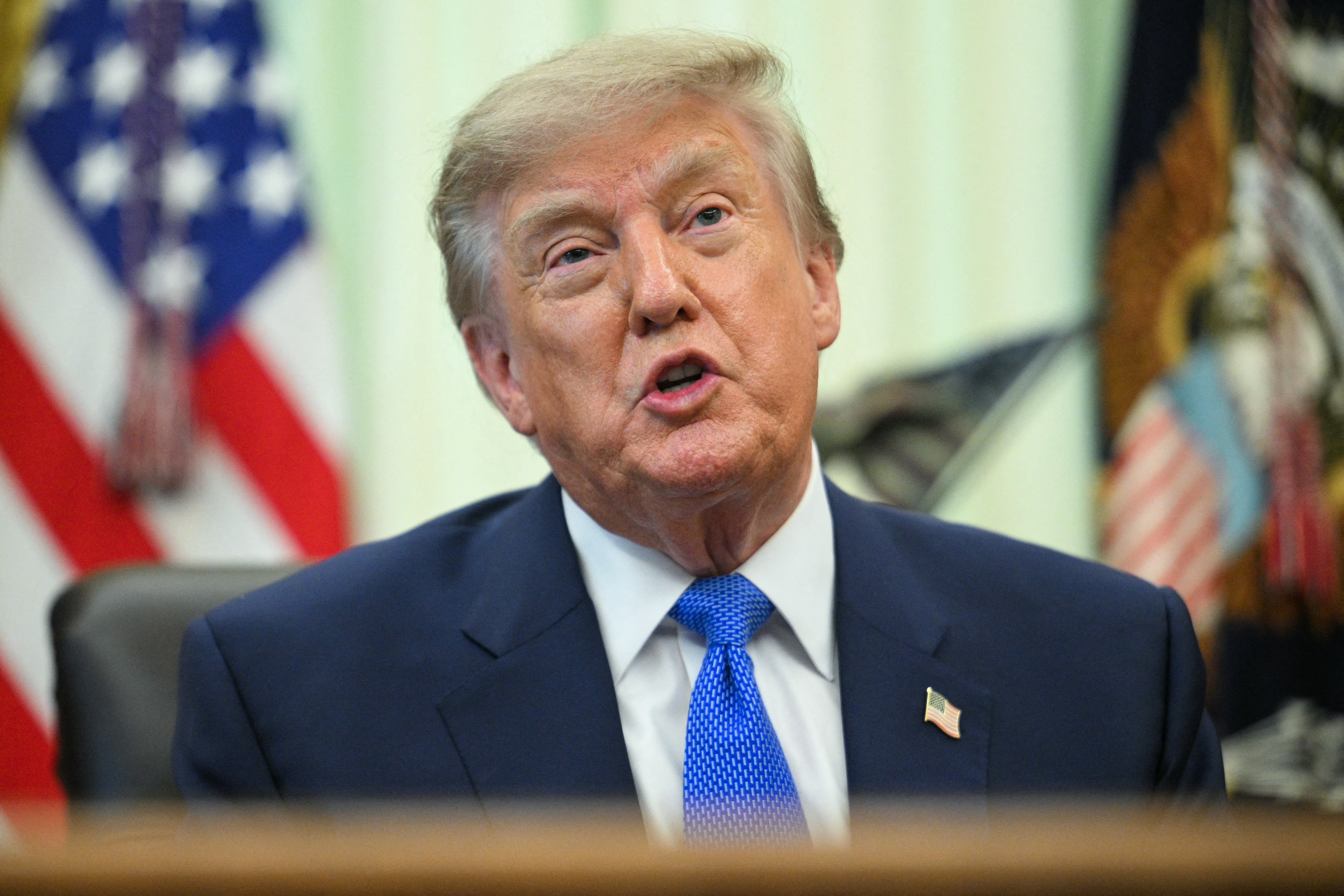 open image in gallery
State-level school choice scholarships have existed for decades across conservative-led states and throughout the South, offering students taxpayer-funded grants that range from a few thousand dollars to upwards of $30,000 annually. However, in states such as Florida and Arizona, where eligibility was expanded to all students regardless of household earnings, an analysis by The Associated Press revealed that the majority of recipients were already enrolled in private or home schools or resided in wealthier communities.
The federal program departs from most state models by allowing public school students to qualify without leaving the public system. These students could direct the scholarship funds toward private tutoring or special education therapies, though the Republican administration has not yet released specific criteria defining eligible expenses.
To simplify the process for lower-income applicants, regulators propose permitting families to demonstrate eligibility through proof of participation in government assistance programs rather than providing detailed income records. Officials added that foster children will not need to provide any income verification when applying.
Experience with similar state initiatives demonstrates that hurdles to utilizing scholarship funds extend beyond paperwork. Many eligible families often remain unaware these programs exist, and federal officials have not yet detailed how they intend to inform taxpayers and families about the new scholarships.
How the scholarship and tax credit will work
Taxpayers will have the chance to donate to a scholarship program in a participating state, even if they do not live there, starting Jan. 1. Individuals can donate up to $1,700 and receive a federal tax credit for the same amount in exchange. Federal officials propose a couple filing jointly could give as much as double that.
Scholarship organizations in each state would decide how much to grant to each child who applies, depending on available funds and student need. Children could qualify if they are in elementary through high school and their families earn up to three times the area’s median income.
Scholarship recipients could use their funding to pay for religious or private school tuition, homeschooling costs, tutoring and special education therapies, books, computers and other expenses connected to enrollment or attendance, according to officials at the Treasury Department.
30-plus states have opted in and more may sign up
States could not turn to laws or regulations to narrow the uses for the scholarships or the type of organization that can grant them, federal officials said.
But states can choose whether to participate in to the program. More than 30 states, mostly in the South and conservative-led, have opted in. Colorado, New York and New Hampshire have signed up, too. Governors from Arizona, Minnesota, Wisconsin, and Oregon have said their states will not join, with some arguing these programs divert resources from public schools.
More than two dozen states, including California, New Mexico and Massachusetts, have yet to say what they will do.
Governors deciding whether to participate face many competing objectives and interests. There is the opportunity to bring significant new education money to students who need extra support, such as tutoring or extra speech therapy that their public school does not provide. At the same time, large scholarship programs in states such as Florida and Arizona have accelerated a growing enrollment crisis in public schools.
Even so, the federal program is expected to bring taxpayer money for private school tuition to several states, including Colorado, Nebraska, New York and North Dakota, that have yet to embrace vouchers or education savings accounts.
In just a few years, after donations from taxpayers pick up, the IRS and the Treasury Department predict the program will direct nearly $26 billion into as many 2.2 million scholarships each year.
The federal tax-credit scholarship program was signed into law last year by President Donald Trump as his signature tax breaks and spending cuts bill. The public has 60 days to comment on the Treasury Department’s proposed regulations.
More about
Most popular
Popular videos
Bulletin
Read next
Fonte: – World RSS Feed