Clues in the Blood: Solving the Mystery of Cancer of Unknown Origin
Por Advertising partner — South China Morning Post – News feed
Advertisement Health & Wellness Hong Kong Clues in the Blood: Solving the Mystery of Cancer of Unknown Origin
Many people are surprised to learn that 3 to 5 percent of cancer patients receive a diagnosis of Cancer of Unknown Primary (CUP) 1 —where the tumor primary origin cannot be found. Liquid biopsy is changing the way we uncover cancer clues, enabling a new way to guide treatment decisions—with a simple blood draw.
Paid Post: Roche Diagnostics HK 4 -MIN READ 4 -MIN Listen
Advertising partner Published: 6:56pm, 15 Sep 2026
[The content of this article has been produced by our advertising partner.]
Imagine a detective who finds clear clues at a crime scene but has no idea where the crime actually took place. Medicine faces this exact mystery: patients can actually be diagnosed with a specific condition called Cancer of Unknown Primary (CUP)—when standard procedures like medical imaging and tissue biopsies fail to identify where a tumor started. Far more common and aggressive than most people realize, CUP accounts for 3 to 5 percent of all cancer cases and ranks as the fourth worldwide leading cause of cancer death 1 , with a median survival of just 8 to 12 months 2 .
Professor Aya El Helali, an oncologist and clinical scientist, explains the diagnostic process for CUP. When a tissue biopsy, typically taken from a lymph node, lung, or brain, reveals no distinctive features under the microscope, pathologists run a battery of tests to rule out the most common cancers, such as lung and breast. “When all of that fails, we start to call it CUP,” she says.

The breakthrough: A Single Blood Test for Cancer at Multiple Sites Liquid biopsy is a blood test that detects signs of cancerous tumors, by detecting circulating tumor DNA in the bloodstream to offer vital clues about effective treatments. A closely related approach is blood-based Comprehensive Genomic Profiling (CGP), which is a single test that examines over 300 genes at once using next-generation sequencing.
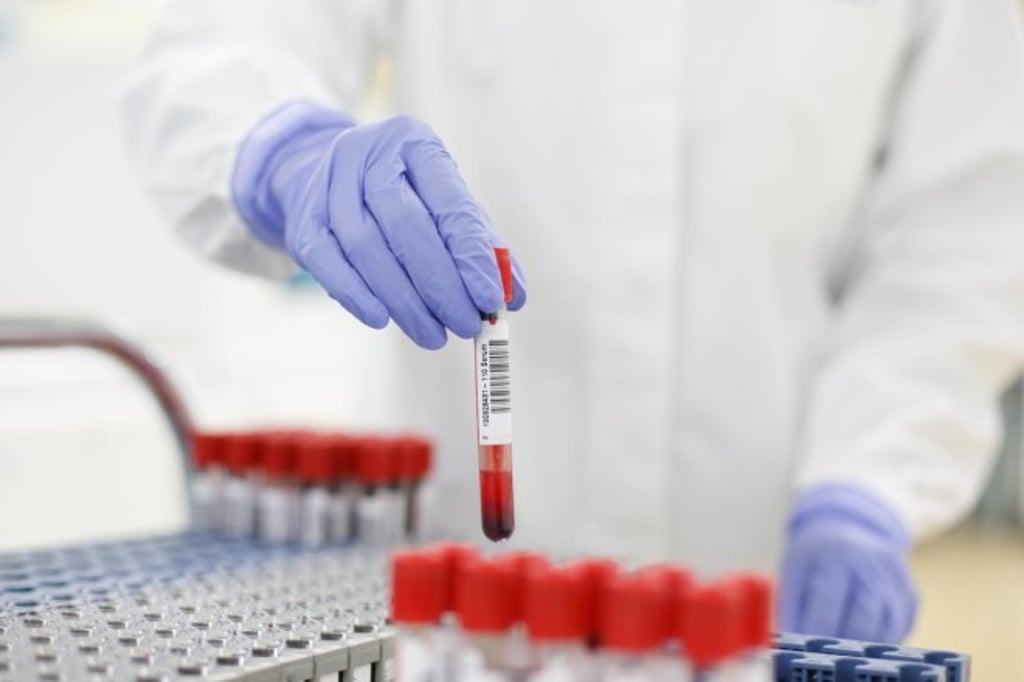
“Taking a blood sample provides a more comprehensive view and reflects the diversity of mutations found in different sites where cancer spreads,” says Professor Helali. Traditional tissue biopsies often examine a single gene from a piece of tissue and repeat it for multiple tests. In contrast, this non-invasive blood test evaluates multiple tumor locations at once, especially valuable when tissue is scarce or a tissue biopsy would be risky for ongoing treatment monitoring.
Speed is another advantage. Blood-based CGP has results often available within two weeks. Timely blood-based CGP can rapidly identify actionable targets and expand treatment options.
Case Study: Cancer Diagnostic Deadlock for a Mother in Her 50s
Professor El Helali describes a case that illustrates the life-changing impact of blood-based CGP. A patient in her 50s with school-age children presented with widespread liver and lymph node involvement. Repeated tissue biopsies showed only differentiated adenocarcinoma (gland cell cancer), extensive immunohistochemistry (tissue staining and imaging tests) and imaging failed to identify the primary site. The tumor was metastatic, not a primary liver cancer, and more than two months of diagnostic work had already passed.
“Because the patient could not tolerate further tissue sampling and there was insufficient remaining tissue, the team decided to perform a liquid biopsy for comprehensive genomic profiling and prioritized the test to avoid further delay.”
The expedited blood-based CGP returned in about ten days and revealed a BRAF mutation, a hint from the molecular tumor board – comprising oncologists, pathologists, biologist, data scientists, pharmacists, and surgeons to start a dual targeted therapy. The genomic panel also identified additional mutations to guide alternative options if the initial therapy failed. Despite an expected median survival of roughly a few months for CUP 2 , the patient is still alive at one and a half years and has recently gone on holiday abroad.
Beyond CUP: Transforming Precision Lung Cancer Care in Hong Kong
The clinical benefits of liquid genomic profiling extend beyond CUP. Recently, the United Kingdom’s National Health Service made headlines by incorporating liquid-based genomic profiling into routine diagnostics to fast-track targeted therapies for patients with non-small cell lung cancer (NSCLC).
In Hong Kong, a territory-wide, multicenter prospective CGP project was conducted across the 7 hospital authority clusters for NSCLC, run by the University of Hong Kong and the Hospital Authority and funded by the Innovation and Technology Commission (ITC)-Hong Kong under the Partnership Research Programme scheme. In this local study of 878 patients, CGP in blood and tissue was interchangeable, only if enough cancer cells were detected in the blood. Furthermore, blood can detect emerging gene changes that could alter how we manage a patient’s tumour. 3,4
Recent advances have extended CGP by adding RNA analysis, which detects gene fusions and actionable treatment targets to guide therapy. These fusions can be highly specific to certain cancers, such as lung cancer, some pancreatic cancers, kidney tumors, and sarcomas.
Bridging the Access Gap: The Future of Liquid-First Diagnostics
Blood-based CGP is typically self-financed, though some insurers cover genomic testing – especially when professional guidelines support it, such as the European Society of Medical Oncology. In Hong Kong, public hospitals currently lack the infrastructure for a liquid-first diagnostic approach for CUP. Clinicians often consider patients’ financial circumstances before recommending blood-based CGP. Ideally, Professor El Helali says, many doctors would start with a liquid biopsy because it is minimally invasive and quickly provides broad molecular information; if the blood test finds nothing actionable, the next step would be tissue biopsy for further testing.
Patients should remember that blood-based CGP has limits. All CGP results must be interpreted carefully. Accurate interpretation is essential to avoid mistakenly concluding that a patient lacks genomic alterations. Tissue biopsy still plays a crucial role when testing for hereditary cancers is needed or when microscopic histological examination is required to evaluate tumor protein expression.

“Introducing liquid biopsy earlier could allow patients to begin treatment much sooner while diagnostic decisions and discussions continue,” says Professor El Helali. “Early use of liquid biopsy can shorten delays and help initiate therapy without waiting for every conventional test to be completed, which may translate into longer survival and better quality of life.”
Reference:
1.Qaseem A, et al. Cancer of unknown primary: a review on clinical guidelines in the development and targeted management of patients with the unknown primary site. Cureus. 2019;2;11(9):e5552.
2.NCCN Clinical Practice Guidelines in Oncology: Occult Primary (Version 3.2023).
3.Cheung, B. M. F., Ko, E. Y., Shih, D. J. H., Wong, J. W. H., Chiu, M. K., Kwok, G. W., Ho, I., Leung, D. K., Lee, A. W., Lee, V. H., & El Helali, A. (2025). Role of Circulating Tumor DNA Tumor Fraction in Advanced Non-Small Cell Lung Cancer and Its Impact on Patient Treatment Outcomes: A Prospective Real-World Study. JCO precision oncology, 9, e2500376. https://doi.org/10.1200/PO-25-00376
4.Ko, E. Y., Wong, J. W. H., Shih, D. J. H., Ho, I., Cheung, B. M. F., Chiu, M. K., Leung, D. K., Lee, A. W., Lee, V. H., & El Helali, A. (2025). The diagnostic accuracy of next-generation sequencing in advanced NSCLC. The journal of liquid biopsy, 9, 100325. https://doi.org/10.1016/j.jlb.2025.100325
The information provided is intended for informational purposes only and does not constitute medical advice. Always seek the advice of your doctor or other qualified healthcare provider with any questions regarding your medical condition.
CSO-NP-2026-SEP-002
Advertisement Select Voice Select Speed 0.8x 0.9x 1.0x 1.1x 1.2x 1.5x 1.75x 00:00 00:00 1x AI-generated voice