Militias in Iraq remain defiant as the last US troops pack up to leave
Por Abby Sewell and Qassim Abdul-Zahra — – World RSS Feed
Militias in Iraq remain defiant as the last US troops pack up to leave
After withdrawing in 2011, U.S. troops returned three years later at Baghdad’s invitation to lead a smaller coalition against Islamic State militants who had seized wide areas of the country
Abby Sewell & Qassim Abdul-Zahra Tuesday 15 September 2026 16:02 BST
- Bookmark
Bookmark popover
Removed from bookmarks
Close popover
 open image in gallery
Your support helps us to tell the story
Read more Support Now
From reproductive rights to climate change to Big Tech, The Independent is on the ground when the story is developing. Whether it’s investigating the financials of Elon Musk’s pro-Trump PAC or producing our latest documentary, ‘The A Word’, which shines a light on the American women fighting for reproductive rights, we know how important it is to parse out the facts from the messaging.
At such a critical moment in US history, we need reporters on the ground. Your donation allows us to keep sending journalists to speak to both sides of the story.
The Independent is trusted by Americans across the entire political spectrum. And unlike many other quality news outlets, we choose not to lock Americans out of our reporting and analysis with paywalls. We believe quality journalism should be available to everyone, paid for by those who can afford it.
Your support makes all the difference. Read more
As the end of the month approaches, Iraq faces two major deadlines: the conclusion of a decades-long U.S. military deployment and the required disarming of non-state paramilitary groups.
With the U.S. draw-down already in progress, officials confirm that the remaining hundreds of troops stationed in northern Iraq will depart prior to the Sept. 30 cutoff.
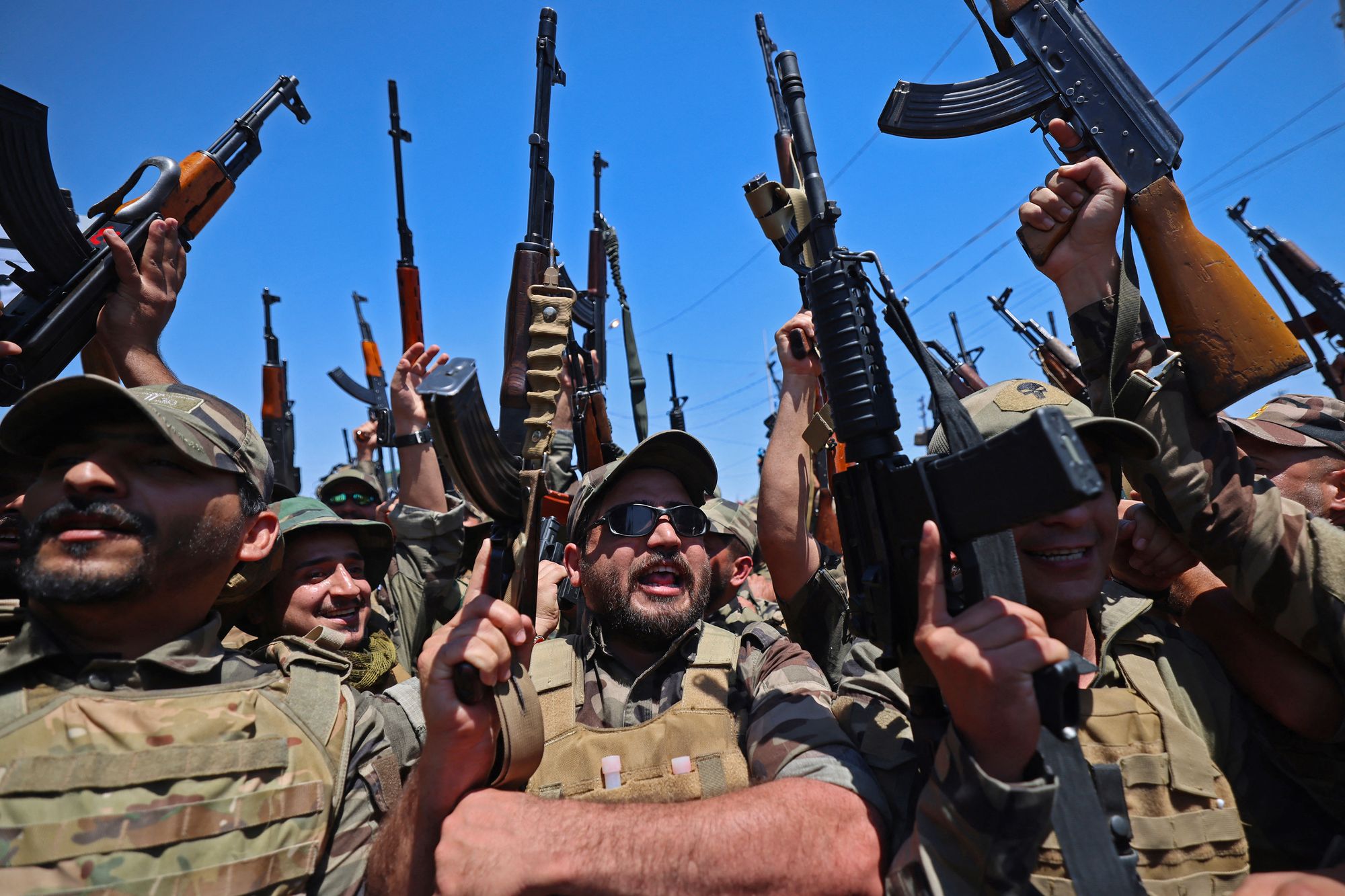
The government in Baghdad tied the U.S. departure to a demand that militias give up their arms, though a majority of these factions have signaled no intention of complying. This defiance raises profound questions regarding the future stability of Iraq once American forces depart.
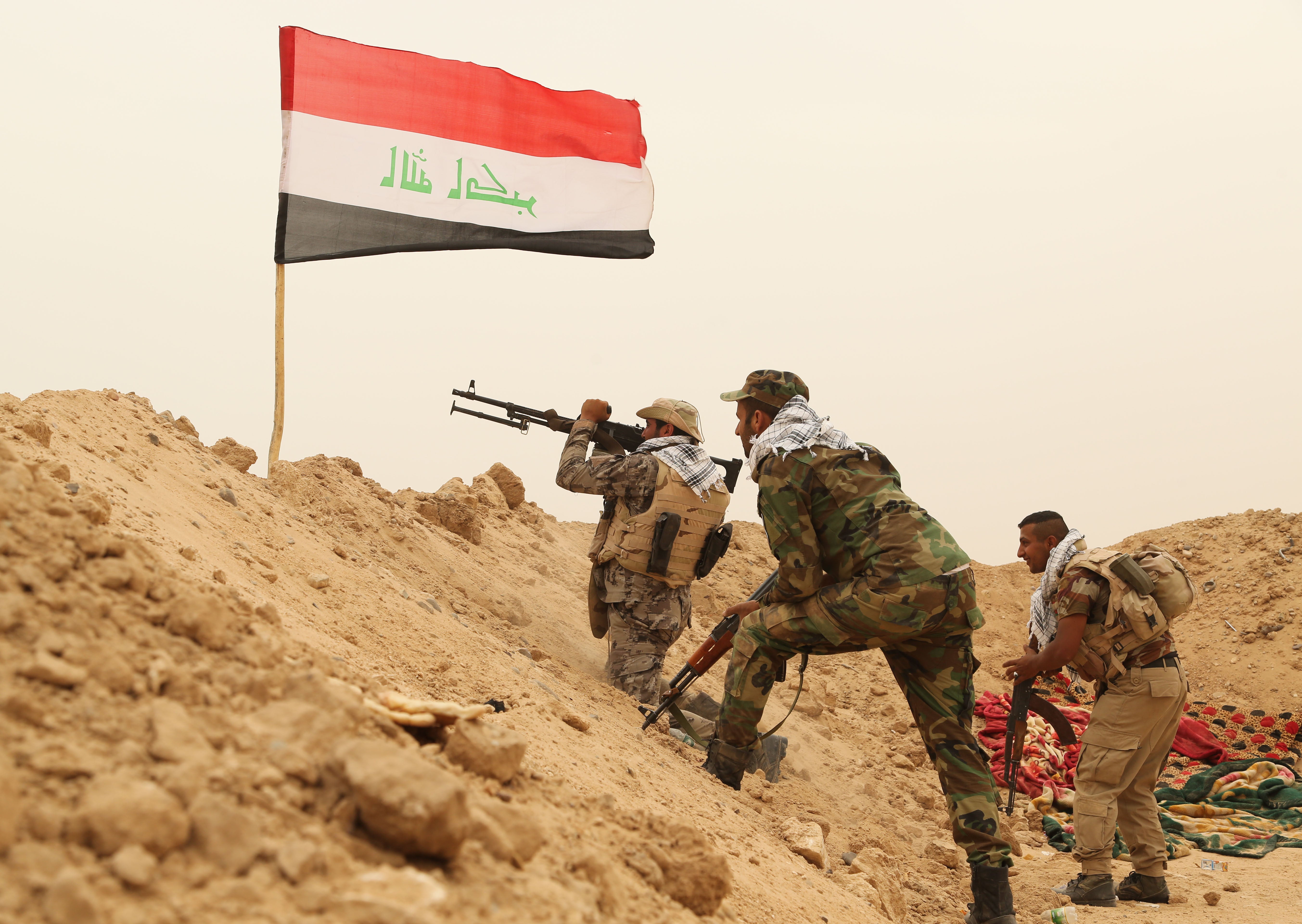
Since U.S. and Israeli forces struck Iran on Feb. 28, Iranian-backed Iraqi militias have launched attacks on U.S.-affiliated targets within Iraq and across its borders, while also collaborating with Yemen’s Houthi movement to hit targets in Saudi Arabia.
 open image in gallery
As active hostilities between Washington and Tehran persist, Iran is unlikely to relinquish its influence over its neighbor. Although U.S. officials express concern over the militias’ ongoing strike capabilities, those worries will not delay the scheduled troop departure.
The end of the US mission
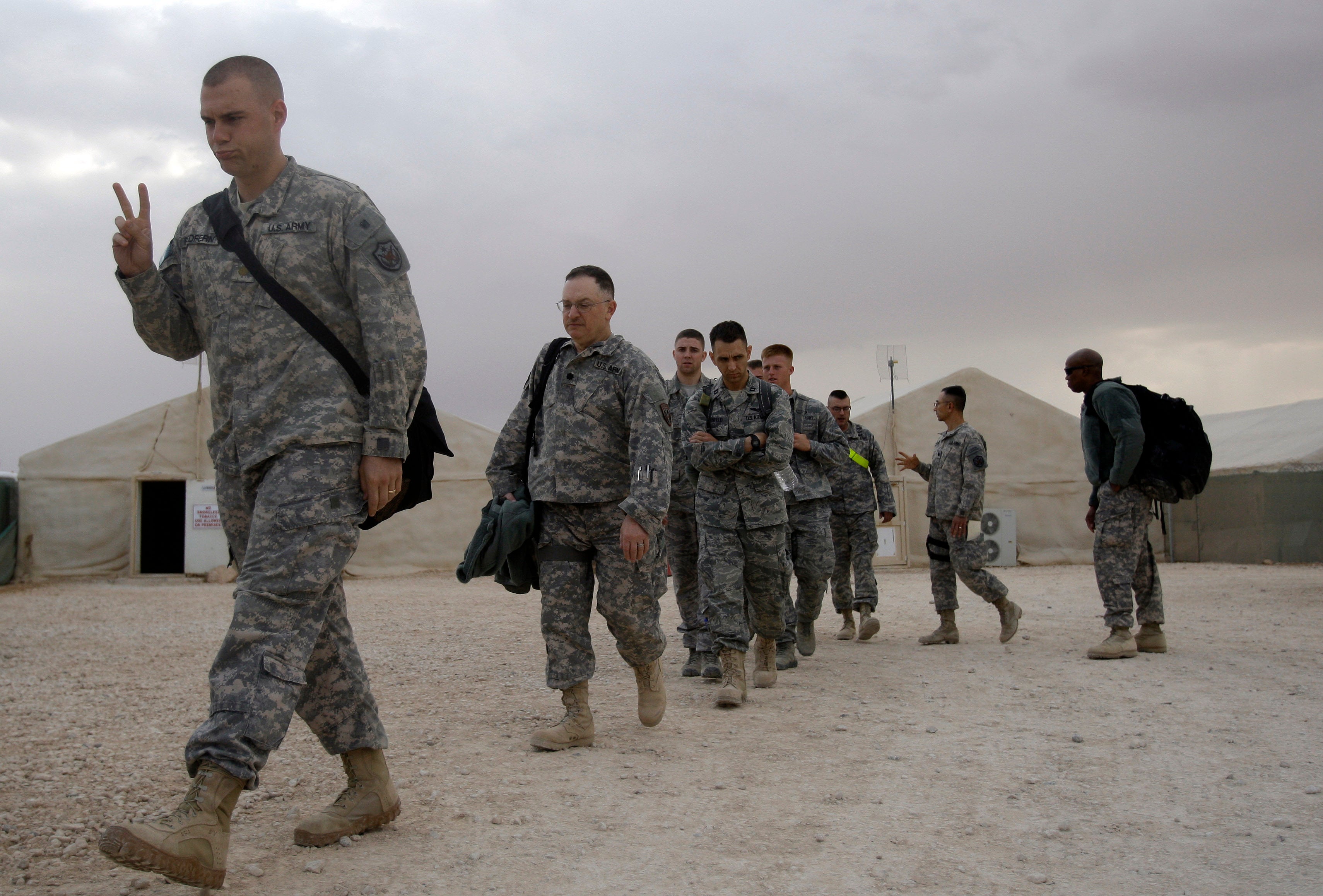
American forces originally entered Iraq in 2003 to remove Saddam Hussein from power. After withdrawing in 2011, U.S. troops returned three years later at Baghdad’s invitation to lead a smaller coalition against Islamic State militants who had seized wide areas of the country.
Now that the extremist movement is reduced to fragmented sleeper cells—following operations by both U.S.-led forces and Iran-backed groups—Washington and Baghdad reached an agreement in 2024 to conclude the coalition’s mission.
While American forces vacated bases across most of Iraq last year, a contingent remained in the semiautonomous northern Kurdistan region, where bases have faced persistent attacks following the outbreak of war between the U.S., Israel, and Iran.
A U.S. military official, speaking anonymously as he was not cleared to talk publicly, stated that the exit would conclude by Sept. 30. The remaining hundreds of troops in northern Iraq will primarily move to Jordan and other regional bases, along with military hardware such as air defense systems.
Following the exit, negotiations may begin regarding a “normal bilateral security cooperation” framework with Baghdad, though the official noted that its structure remains undecided.
He added that the counterterrorism base situated in Irbil lost its primary strategic value for American forces as the threat posed by Islamic State diminished.
Although northern Iraq was not used extensively as an “offensive platform” during the conflict with Iran, U.S. personnel there were targeted repeatedly by Tehran and allied Iraqi fighters, meaning the departure “will reduce our risk,” the official said.
 open image in gallery
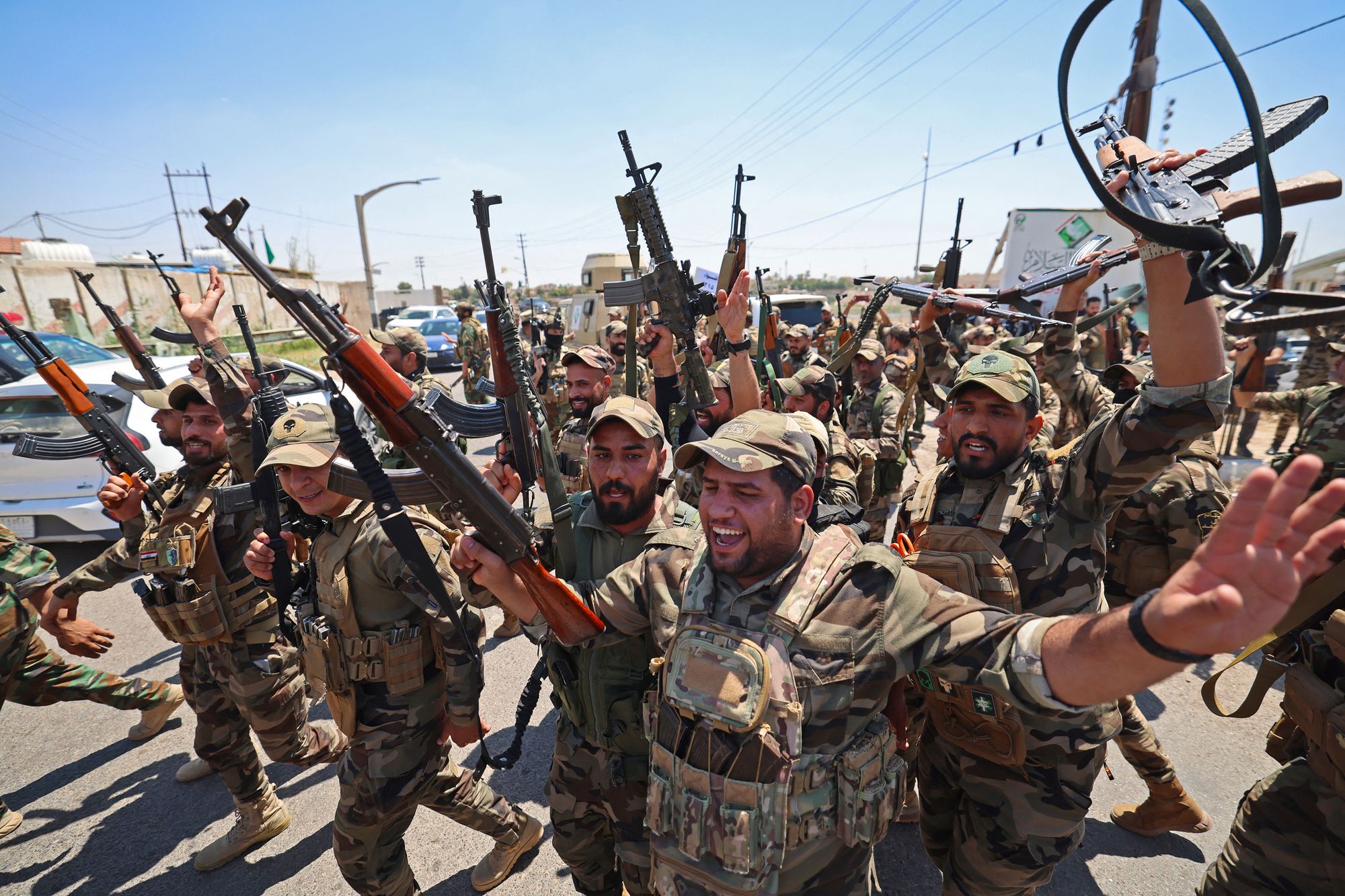
Nevertheless, American military leadership remains concerned over the militias’ capability to strike regional targets in Israel, Jordan, and Saudi Arabia, as well as the continued presence of Houthi forces within Iraq.
Washington has periodically launched retaliatory strikes against Iraqi militia facilities and imposed financial sanctions on select groups, with further sanctions remaining an option.
Militias take a hard line on disarmament
Meanwhile, Iraqi officials have given conflicting signals about whether Sept. 30 represents a firm deadline for disarming groups or merely the start of formal talks.
“There will be no disarming of any groups by the 30th of September,” said Iraqi analyst Sajad Jiyad, speaking at a panel convened by the Atlantic Center think tank last week. “I think that’s probably clear to anybody who watches Iraqi politics.”
While smaller, less prominent groups have agreed to surrender weapons, the most formidable factions closely aligned with Iran—including Kataib Hezbollah, Harakat al-Nujaba, and Kataib Sayyid al-Shuhada—have flatly rejected disarmament or presented conditions they know the central government cannot fulfill anytime soon.
Their demands include placing the northern Kurdish peshmerga security forces under central military command, alongside the expulsion of both the Kurdistan Workers’ Party, or PKK, and Iranian Kurdish opposition factions operating bases in the region.
“After establishing these parameters, discussions will focus on regulating weapons, not surrendering them,” an official with one of the Iran-backed Iraqi militias said. “There is absolutely no decision among the factions to surrender weapons, and we have not surrendered any weapons.”
A government official explained that Baghdad’s current approach centers on integrating armed groups directly under the authority of the Iraqi military. Many militias already belong to the Popular Mobilization Forces (PMF), an umbrella body officially integrated into the state military structure, though individual factions frequently operate independently.
 open image in gallery
The official indicated that the state aims for factions to relinquish “dynamic weapons”—such as long-range drones and missiles—to PMF leadership, while dissolving separate units to incorporate fighters into the regular army and PMF command structure.
These government and militia sources spoke on condition of anonymity because they were not authorized to address the media publicly.
Addressing the situation last week, Iraqi government spokesperson Sabah al-Numan stated that “discussions and dialogues are ongoing, and the file will be resolved after the withdrawal of the international coalition forces.”
Kurds are anxious about the day after Sept. 30
Even though the departure of U.S. forces eliminates one immediate target in the Kurdish region, regional security risks are unlikely to end.
Mohammed A. Salih, a non-resident senior fellow at the U.S.-based Foreign Policy Research Institute and specialist in Kurdish and Iraqi affairs, pointed out that Iran and its proxies “have targeted other locations in the Kurdistan region that have not been related to the U.S. troops’ presence.”
Previous targets have included energy infrastructure, the bases of exiled Iranian Kurdish dissident movements, and the official site of the Kurdish region’s Prime Minister Masrour Barzani.
“The withdrawal will expose the Kurdistan region even further and make it an even easier target,” Salih said.
While regional government representatives declined to comment on the matter, Barzani has publicly voiced concern that the departure of U.S. air defense coverage will leave the region far more exposed.
In response to security concerns, Numan mentioned last week that Baghdad is finalizing agreements to procure advanced air defense hardware from Turkey, South Korea, and the U.S.
Speaking to The Associated Press, he said the upcoming defense assets “will be deployed according to carefully devised military plans to ensure the complete protection of Iraqi airspace, including the Kurdistan region.”
More about
Most popular
Popular videos
Bulletin
Read next
Fonte: – World RSS Feed