‘Deaths Will Continue to Mount,’ Scientist Warns After August and Summer 2026 Set US Heat Records
Por Jessica Corbett — Common Dreams
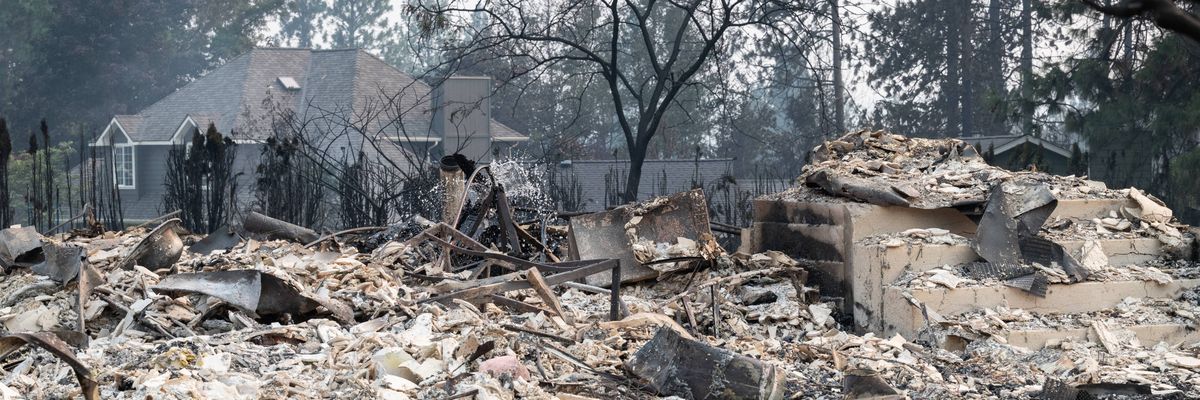
Under US President Donald Trump’s predecessor, government scientists used the release of data about record-breaking temperatures to warn that “we are facing a climate crisis,” but with the Republican climate denier back in the White House, that commentary now comes from outside experts.
The National Oceanic and Atmospheric Administration (NOAA) announced Wednesday that 2026 had the warmest August ever recorded in the contiguous United States. Following a July that broke a Dust Bowl record, August averaged 75.6°F—which was 3.5°F above the 20th-century average—with daytime maximum temperatures averaging 88.6°F.
This year also featured the hottest meteorological summer—June to August—in the 132-year record, with an average temperature of 74.4°F, or 3°F above average, according to NOAA. As CNN reported, “The Dust Bowl summer of 1936 has… long been regarded as the benchmark of hottest summers in the US, but has now been equaled or eclipsed twice in the past five years thanks to the influence of human-caused climate change,” both in 2026 and 2021.
Andrew Dessler, a climate scientist at Texas A&M University, told Agence France-Presse that “it is now time to stop acting surprised that our warming planet keeps getting warmer.”
“This is occurring exactly as forecast by scientists literally decades ago,” he stressed. “The interesting question is not whether we will keep breaking heat records (we will), but whether we’re going to do anything about it or just stand there while the climate train runs us over.”
NOAA said that “record-breaking warmth was widespread across the West, Southwest, southern Rockies, and southwestern Plains, as well as the southern Florida Peninsula. California, Nevada, New Mexico, and Colorado each set records for their warmest August average temperature. California and New Mexico also recorded their warmest average daytime maximum temperatures on record, while average nighttime minimum temperatures were record warm in California, Nevada, Arizona, Utah, New Mexico, and Colorado.”
Beyond the Lower 48, “Alaska’s average temperature during August was 52.4°F, 2.9°F above the 1925-2000 average, ranking in the warmest third of the 102-year record. Alaska’s June-August average temperature was 51.6°F, 1.1°F above average and ranking in the warmest third of the record,” the agency detailed.
“Hawaii’s average temperature during August was 70.8°F, 1.4°F above the 1991-2020 average, ranking as the third-warmest August in the 36-year record,” the agency added. “Hawaii’s June-August average temperature was 69.4°F, 0.8°F above average and ranking in the warmest third of the record. Hawaii’s average temperature during August was 70.8°F, 1.4°F above the 1991-2020 average.”
Marc Alessi, a climate scientist at the Union of Concerned Scientists, said in a statement that “we now live in a completely different climate than the one that existed 50 years ago. Heat records were shattered in all parts of the globe this summer, from the United States to Europe to Asia.”
Alessi pointed to El Niño, the warm phase of a key pattern in the Pacific Ocean. Recent research suggests fossil fuel-driven global heating has intensified El Niños, and experts have said that the currently developing event “may be stronger than anything since our monitoring began” and make 2027 the hottest year humanity has ever endured.
“While the developing super El Niño undoubtedly impacted the summer’s global temperature and heat records, we must recognize that this El Niño is occurring on top of a changed climate from the burning of fossil fuels,” Alessi said. “In other words, we can expect record-breaking summers for generations to come if nations fail to sharply curtail heat-trapping emissions.”
“What’s equally clear is that policymakers—especially in richer, high-emitting countries like the United States—must act urgently to limit climate change impacts and hold the fossil fuel industry accountable for its role in the crisis,” he continued. “Extreme heat and back-to-back heatwaves have taken a deadly toll this summer in the United States and across the world. Without action to reduce global warming emissions and invest in climate resilience measures, heat-related illnesses and deaths will continue to mount.”
Despite the threats currently posed by the global crisis, and expectations that they will only get worse as the world blows past the Paris Agreement’s goal of limiting temperature rise this century to 1.5°C above preindustrial levels, “the Trump administration has attacked and dismantled policies to limit heat-trapping emissions and to prepare for climate disasters,” Alessi noted.
After openly courting Big Oil on the campaign trail, Trump has served fossil fuel industry interests in a range of ways since returning to the White House last year, including by declaring a national energy emergency, waging a war on renewable power projects, and ditching the Paris Agreement, again.
“Failure of the administration and Congress to act has also left workers exposed to killer heat without comprehensive, enforceable heat-health protections,” Alessi said. “It’s unconscionable that the federal government is putting specific industry interests, including fossil fuel companies’ profits, ahead of people’s health and safety.”
NOAA’s new data was released less than two months away from the midterm elections—which which Democrats hope to win back majorities in Congress from Trump’s Republican Party—and as firefighters in Türkiye, host of the next United Nations Climate Change Conference (COP31), battled deadly blazes.
“It is not enough merely to respond to the consequences of the climate crisis. We must eliminate the causes that exacerbate it,” Efe Baysal, Türkiye manager at the global advocacy group 350.org, said Wednesday, calling for a phaseout of fossil fuels. “COP31 is an opportunity for Türkiye to demonstrate true leadership in this direction.”
Fonte: Common Dreams