Trump’s $330 million ballroom donors are revealed — and now we know how much each is giving
Por Jasmine Fernández — – World RSS Feed
Trump’s $330 million ballroom donors are revealed — and now we know how much each is giving
Despite public assertions that he was paying for the project himself, internal records list no financial contributions from Donald Trump
Jasmine Fernández in Portland Thursday 15 October 2026 21:20 BST
- Bookmark
- Comments Go to comments
Bookmark popover
Removed from bookmarks
Close popover


Become an Independent member to bookmark this article
Want to bookmark your favourite articles and stories to read or reference later? Start your Independent Membership today.
Already a member?
Log in
A list from an internal campaign spreadsheet has revealed the major donors backing President Donald Trump’s White House ballroom project — and how much they ponied up.
The documents, obtained by The Washington Post, detail $333 million in private gifts, including previously undisclosed contributions from top corporations, Republican mega-donors and entities regulated by or seeking contracts from federal agencies.
The records track 67 individual commitments above $10,000 as of late last month. The White House publicly named 37 donors last October without disclosing specific sums, yet the internal files show that tech leaders, telecommunications executives and cryptocurrency investors comprise the bulk of the funding.
Nvidia and Apple each pledged $25 million — the maximum single contribution amount recorded on the list — as did the Adelson family and Charles Ergen, chairman of Dish Network. Other major corporate backers committing $5 million or more include Amazon, Comcast, Microsoft, T-Mobile and Caterpillar.
Cabinet members and key political allies also appear on the roster: Small Business Administration head Kelly Loeffler and her husband Jeff Sprecher pledged $5 million, while Brandon Lutnick, son of Commerce Secretary Howard Lutnick, donated more than $2.5 million in stock.
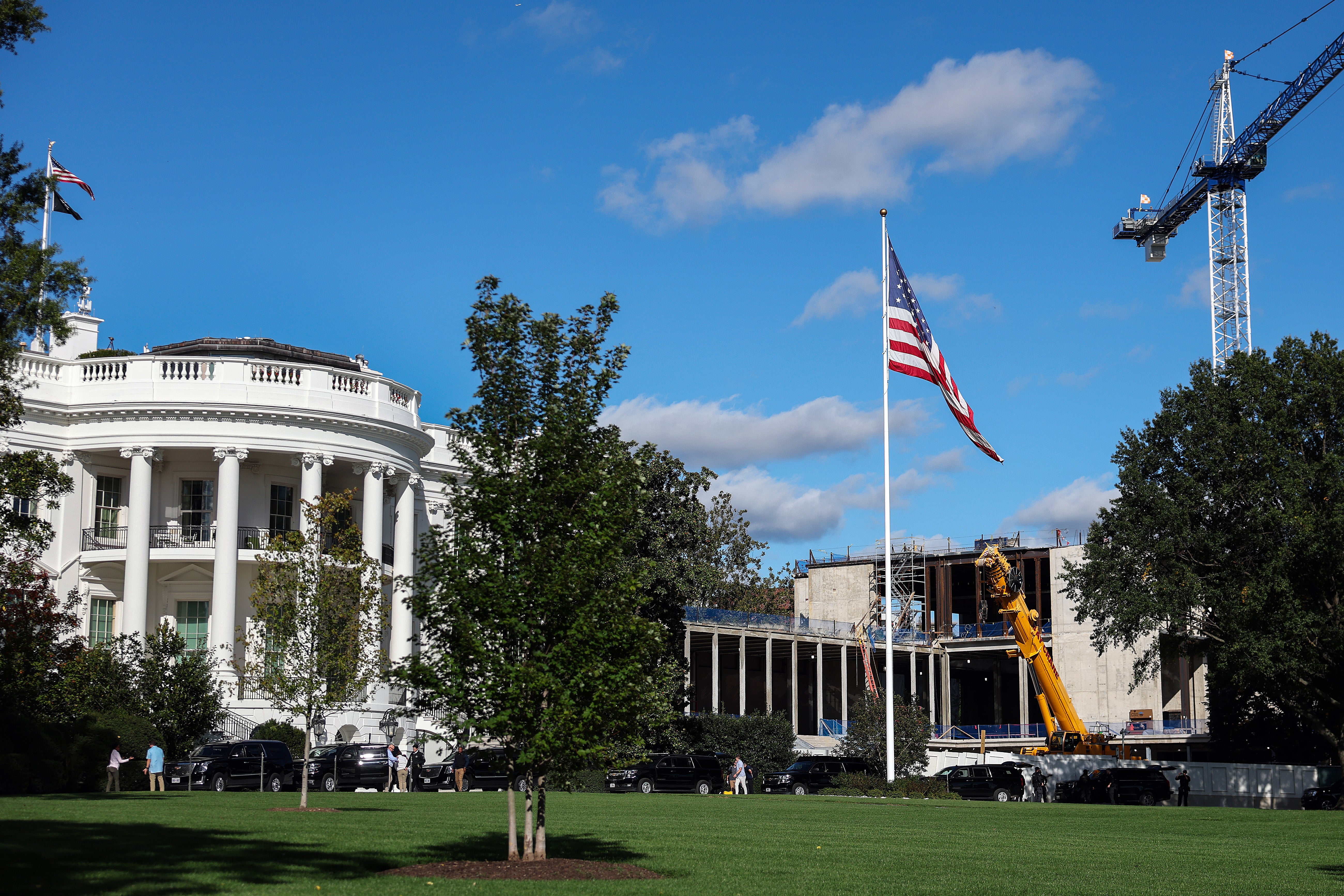 open image in gallery
Notably absent from the roster is the president himself, despite his previous public assertions that he was directly financing the East Wing project.
“It’s being paid for a hundred percent by me and some friends of mine,” Trump said last year following the start of demolition.
Under standard political campaign rules, donations require mandatory public reporting. The ballroom project, however, collects money through the Trust for the National Mall — a D.C.-based non-profit — which then transfers funds into a direct White House account.
Internal records indicate that at least $77 million came from contributors who formally requested anonymity. Ethics scholars and Democratic lawmakers have criticized the structure, arguing it allows unmonitored influence.
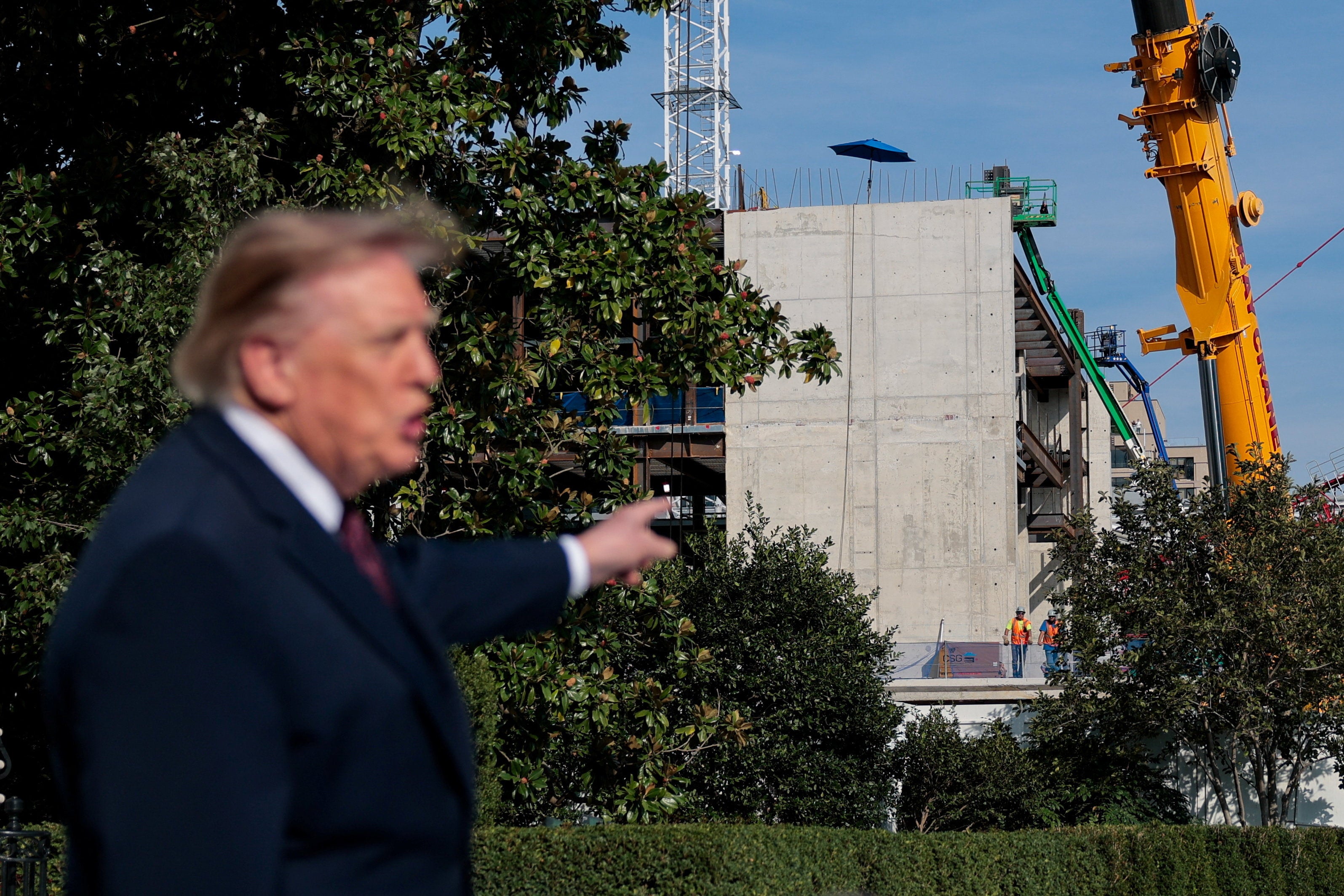 open image in gallery
The White House defended the initiative and criticized the disclosure of the spreadsheet. White House spokesman Davis Ingle declined to address individual gifts, describing the contributors as “a wide array of great American companies and generous individuals, all of whom are contributing to make the People’s House better for generations to come.”
“The same critics who are alleging fake conflicts of interest would also complain if American taxpayers were footing the bill for these long-overdue renovations,” Ingle said, adding that the administration would “relentlessly pursue those responsible for this cowardly leak while continuing to protect all those who give.”
The Trust for the National Mall said undisclosed giving was standard practice in non-profit fundraising.
“In philanthropy, it is not uncommon for donors to request their gifts remain anonymous,” the Trust said in a statement. “The Trust is committed to honoring donors requesting anonymity.”
The reporting does not establish direct quid pro quo arrangements, but the records reveal repeated instances in which major donations overlapped with favorable federal decisions.
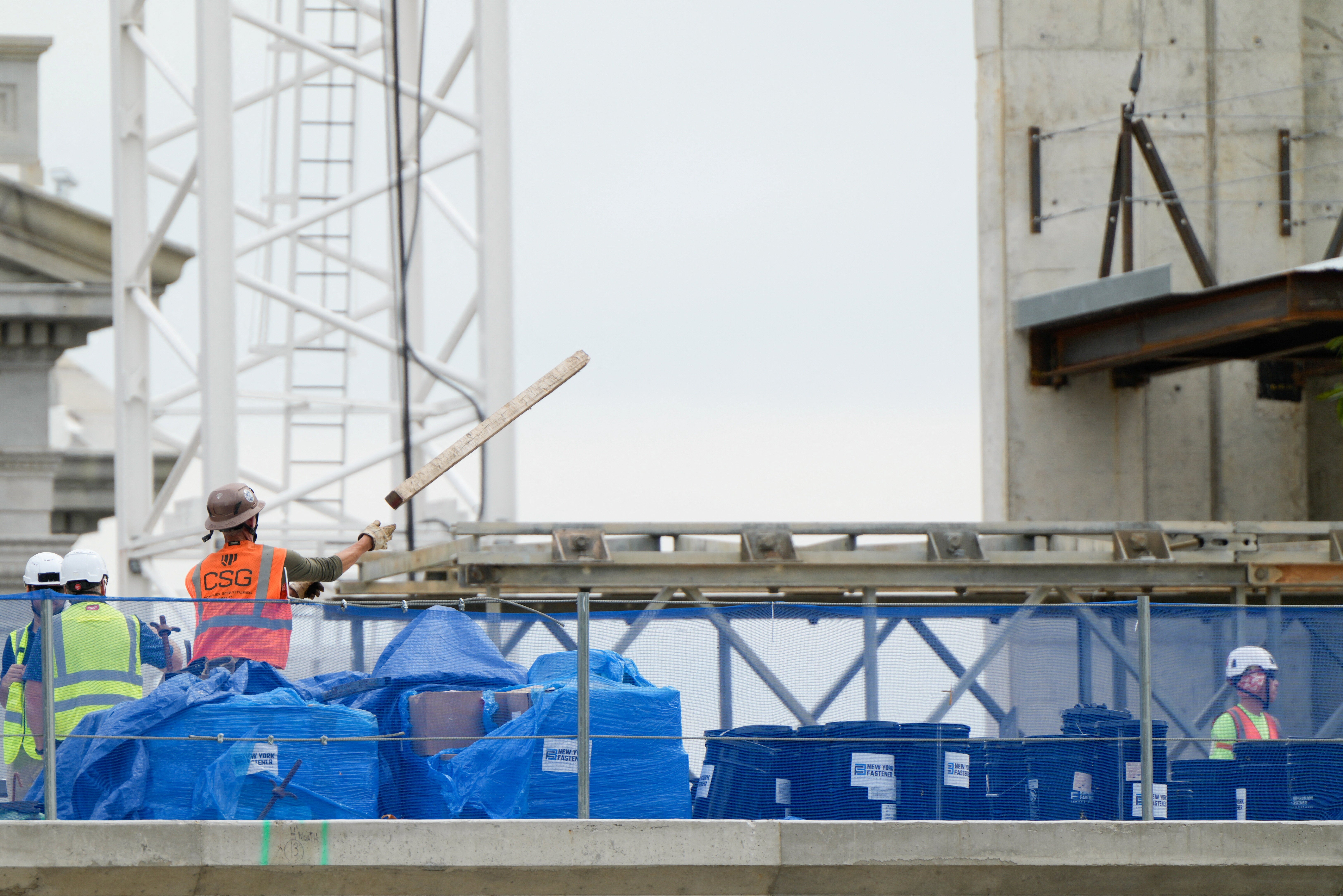 open image in gallery
In January, Trump pardoned Venezuelan-Italian banker Julio Herrera Velutini, who had faced federal bribery charges, months after his daughter committed $2.5 million to the ballroom.
EchoStar chairman Charles Ergen pledged $25 million across two installments in December and February, coming after a June meeting with Trump and Federal Communications Commission Chair Brendan Carr. The FCC later dropped an investigation into Ergen’s company in September and approved a major spectrum sale in May.
Government contractors also made substantial pledges during key dealmaking windows.
Salesforce committed $3 million around the time it secured a U.S. Army contract worth up to $5.6 billion, while competitor ServiceNow pledged $5 million shortly after landing a major federal software agreement.
 open image in gallery
Hedge fund manager Paul Singer pledged $5 million shortly before getting court approval to pursue oil refining firm Citgo, and oil executive Harold Hamm promised nearly $5 million prior to striking a tentative deal with Venezuela’s state oil company. Additionally, a subsidiary of Daniel Gilbert’s Rocket group pledged $10 million three weeks after federal regulators approved its acquisition of mortgage lender Mr. Cooper.
Firms and donors contacted regarding the records rejected any connection between their contributions and government actions. Nvidia, Rocket and ServiceNow statements framed their support as independent philanthropic giving, while a Pentagon official stated that political connections played no role in defense contract decisions.
Discrepancies also appear between the internal document and official accounts. AT&T spokesperson Megan Ketterer denied contributing or planning to give to the project, despite a $5 million pledge listed on the spreadsheet.
Total construction costs for the East Wing expansion are projected at $600 million, leaving the project dependent on both taxpayer funding and further private gifts.
More about
White HouseDonald TrumpNvidiaApple
Join our commenting forum
Join thought-provoking conversations, follow other Independent readers and see their replies
Most popular
Popular videos
Bulletin
Read next
Fonte: – World RSS Feed