The mysterious Spanish cave becoming one of the world’s most culturally significant places
Por David Keys — – World RSS Feed
The mysterious Spanish cave becoming one of the world’s most culturally significant places
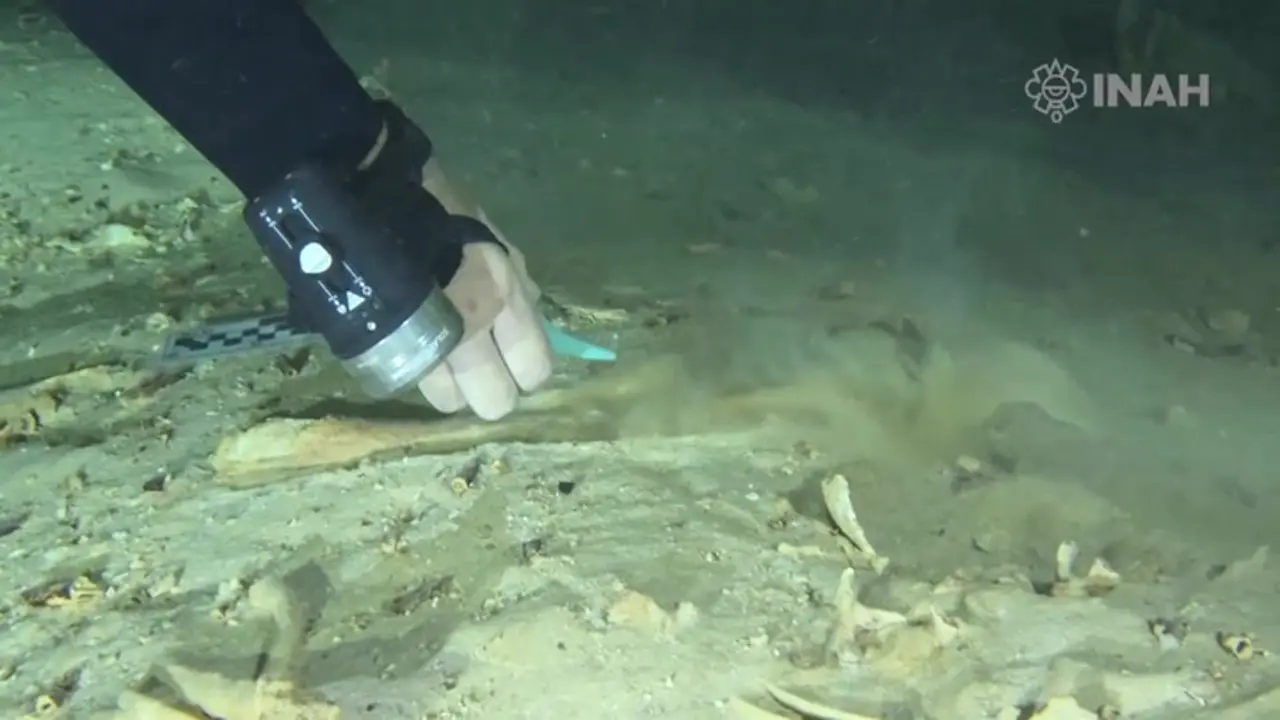
The cave has been ritually or religiously important for at least 24,000 years
David Keys Monday 19 October 2026 15:15 BST
- Bookmark
- Comments Go to comments
Bookmark popover
Removed from bookmarks
Close popover

Become an Independent member to bookmark this article
Want to bookmark your favourite articles and stories to read or reference later? Start your Independent Membership today.
Already a member?
Log in
Archaeologists are investigating a mysterious and remote Spanish cave – an extraordinary site which is now fast emerging as one of the most culturally significant places on earth.
Intermittently and repeatedly, the cave – which has its own subterranean lake (almost certainly regarded as sacred in ancient times) – has been ritually or religiously important for at least 24,000 years, thus making it one of the longest-used sacred sites in the world.
Back then (and again approximately 16000 years ago) it was used by Stone Age people to produce ritual cave art. Then, between 7500 and 3500 years ago, it was used for unknown purposes by Neolithic and Bronze Age people, while in parts of the Iron Age (especially in the 5th to 3rd centuries BC) evidence from the site (especially the discovery of 200 ceramic chalices) suggests that it was used for religious purposes.
By Roman times (around 2000 years ago) – or possibly much earlier – it seems to have been used for rituals and activities specifically associated with women – potentially to ensure human female reproductive health and success. Archaeologists have found numerous female-associated religious votive inscriptions – and last year discovered a number of probable female-associated votive offerings in a Roman period ritual sanctuary in the cave – including a bracelet, two finger rings and a number of spindle whorls (used, in ancient times mainly by women, to spin raw fibres into textile yarn).
By at least the 18th century and almost certainly much earlier – research has revealed that local people were actually calling the cavern ‘Cova de les Dones’ – the Women’s Cave – and, up until the early 20th century, it appears to have been used as a ritualised setting in which marriages were consummated.
 open image in gallery
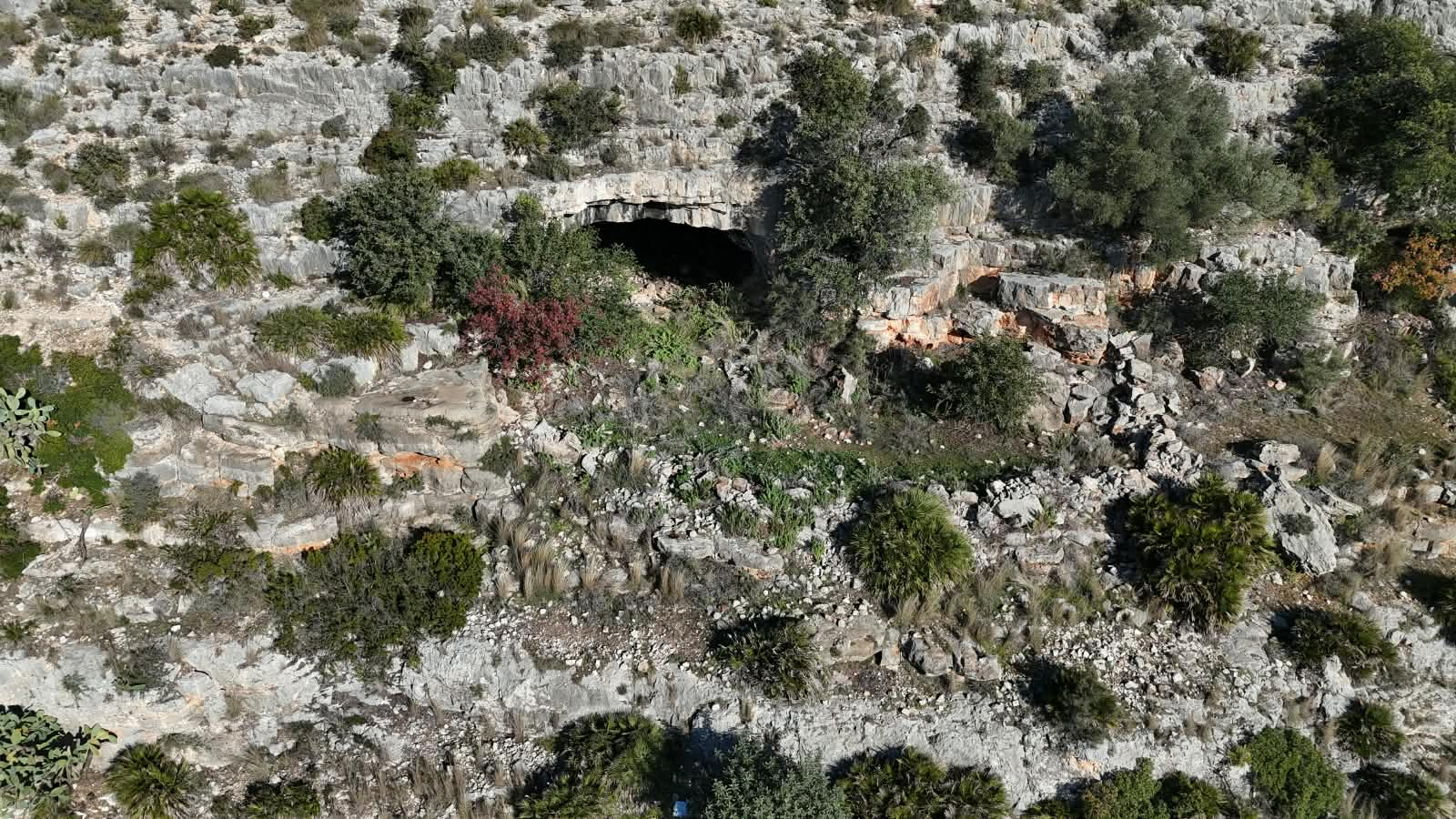
The fact that the cave (located high up in the rugged limestone cliffs of a remote canyon, some 40 miles southwest of Valencia) was ritually associated with women by Roman times (and probably even by the preceding Iron Age) as well as in more modern times, strongly suggests that the tradition must have continued throughout the post-Roman, medieval and early modern eras.
What’s more, the cave’s Stone Age art (some dating from 24,000 years ago) demonstrates that the cavern had had an important ritual or religious role in an even earlier era. The oldest paintings include eleven horses, five female red deer, four male red deer, four giant wild cattle, one ibex and two other animals of indeterminate type, as well as more than 80 abstract signs (rectangles, straight lines and wavy lines) all of currently unknown meaning.
What’s more, archaeologists have found a piece of Palaeolithic jewellery (a pierced stone pendant) deliberately placed in front of a painted panel, almost certainly deposited there as some sort of votive offering, potentially to an earth or animal or ancestor spirit.
But infinitely rarer than even the paintings are a series of remarkable structures in the cave, built of deliberately broken stalactites and stalagmites – including circles, platforms, paths and even simple stairways. They are probably roughly the same age as the paintings – but could potentially be even more ancient.
 open image in gallery
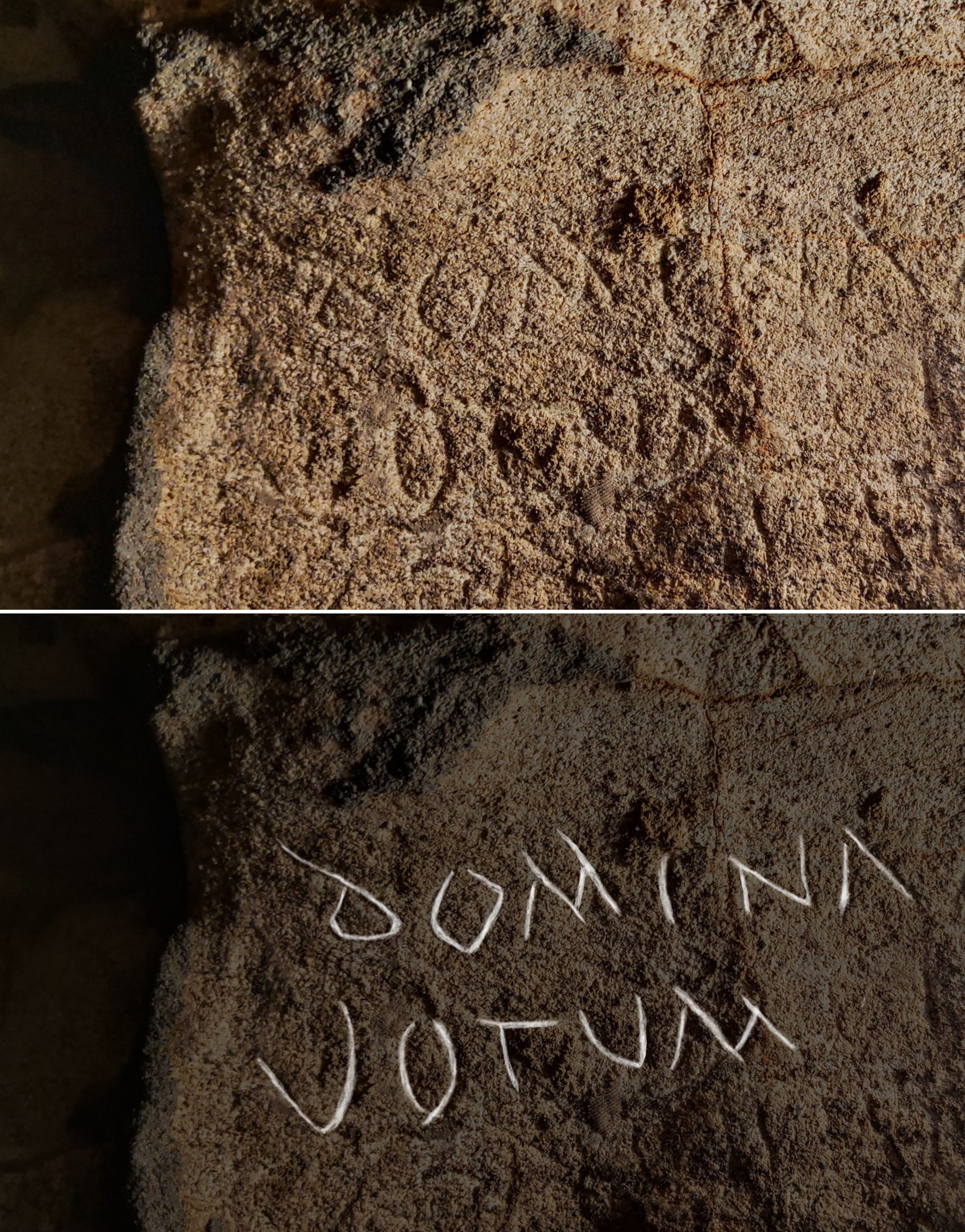
The largest amount of archaeological evidence for the cave’s potential human fertility role comes from the Roman period. Current ongoing investigations there have identified at least 120 inscriptions. Of the few that have been translated so far, most are from women and addressed to a Roman goddess known as Domina (our lady) or ‘Malaci’ (the likely name or title etc of the goddess).
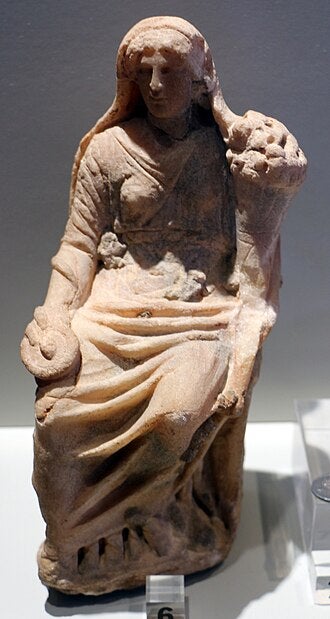
In Roman times, the honorific title ‘domina’ was often applied to a fertility and women’s health deity known as the Bona Dea (litterally ‘the good goddess’). Significantly, like the Spanish cave, her main shrine (in Rome) was indeed in a cave with sacred water – and one of her titles was ‘Feminea Dea’, ie., “the women’s goddess”.
The meaning of the word ‘Malaci’ is not yet fully understood. It could be the goddess’s personal name (ie., ‘ the Lady Malaci’) – or it could merely indicate the original name of the cave in a local now predominantly lost language (ie., the Lady of Malaci). Alternatively, the word could be a title or an attribute. For many centuries, the area had been influenced by settlers from the Middle East – a Semitic speaking people called the Phoenicians who sometimes referred to divine messengers (or potentially to the emissarial or mediating manifestations of a deity) as m’lakh (probably pronounced malak).
 open image in gallery
Another possibility is that Malaci is somehow indirectly related to another ancient western Mediterranean word, mlaka, potentially pronounced malaka (used by the Etruscans to describe sacred vows or votive offerings).
But, irrespective of the precise meaning or origin of the name or title Malaci, by far the most important aspect of the Spanish cave and it’s history is its almost unparalleled potential ritual and religious time depth.
For apart from an ancient Australian Aboriginal site (with a 25,000 year-old ritual tradition), Spain’s Women’s Cave may well turn out to be the world‘s oldest repeatedly-used sacred place. For Cova Dones has more than ten times greater length of repeated use as a sacred or ritual space than the world’s oldest churches or synagogues or Hindu temples.
“It is the repeated use of the cave for ritual or ceremonial purposes over a period of at least 24,000 years that makes Cova Dones so unusual.It’s archaeological remains from the Palaeolithic era, from later prehistory and from the Roman period are each, in their own right, very significant. But combined, they constitute a truly remarkable assemblage of global importance, preserving evidence of a unique series of events,” said the co-director of the Cova Dones investigation, Dr Aitor Ruiz Redondo of the universities of Zaragoza and Southampton.
More about
SpainIron AgeBronze AgeValenciastone ageRomeneolithiccave
Join our commenting forum
Join thought-provoking conversations, follow other Independent readers and see their replies
Most popular
Popular videos
Bulletin
Read next
Fonte: – World RSS Feed