Republican states label abortion drugs as ‘public nuisance’ in effort to block access
Por Daniel Wiessner — – World RSS Feed
Republican states label abortion drugs as ‘public nuisance’ in effort to block access
Nearly half of US states have banned or severely restricted abortion access since the US Supreme Court overturned Roe v. Wade in 2022
Daniel Wiessner Thursday 08 October 2026 17:41 BST
- Bookmark
- Comments Go to comments
Bookmark popover
Removed from bookmarks
Close popover

Become an Independent member to bookmark this article
Want to bookmark your favourite articles and stories to read or reference later? Start your Independent Membership today.
Already a member?
Log in
Three Republican-led states are testing an innovative legal strategy to stop the flow of abortion pills to their residents from out-of-state medical providers despite local abortion bans.
Louisiana, Alabama, and Arkansas submitted two lawsuits last week arguing that healthcare providers are creating a “public nuisance” by mailing abortion medications across state lines.
The complaints also allege that New York, California, and Massachusetts have facilitated this activity by passing shield laws intended to protect clinicians from out-of-state prosecution and civil liability.
Legal experts say the actions represent an unprecedented attempt to apply public nuisance law, historically used in cases involving environmental pollution and broad societal harm, to limit access to abortion medication.
They also mark the first direct legal challenge brought by states with abortion bans against state-level shield protections.
These novel filings come as anti-abortion officials and advocacy groups seek ways to counter the rapid growth of telehealth prescriptions delivered under shield law protections.
According to data from the Guttmacher Institute, an abortion rights research group, approximately 91,000 abortions were provided via telehealth in 2025 to patients residing in states with total bans, up from 74,000 in 2024.
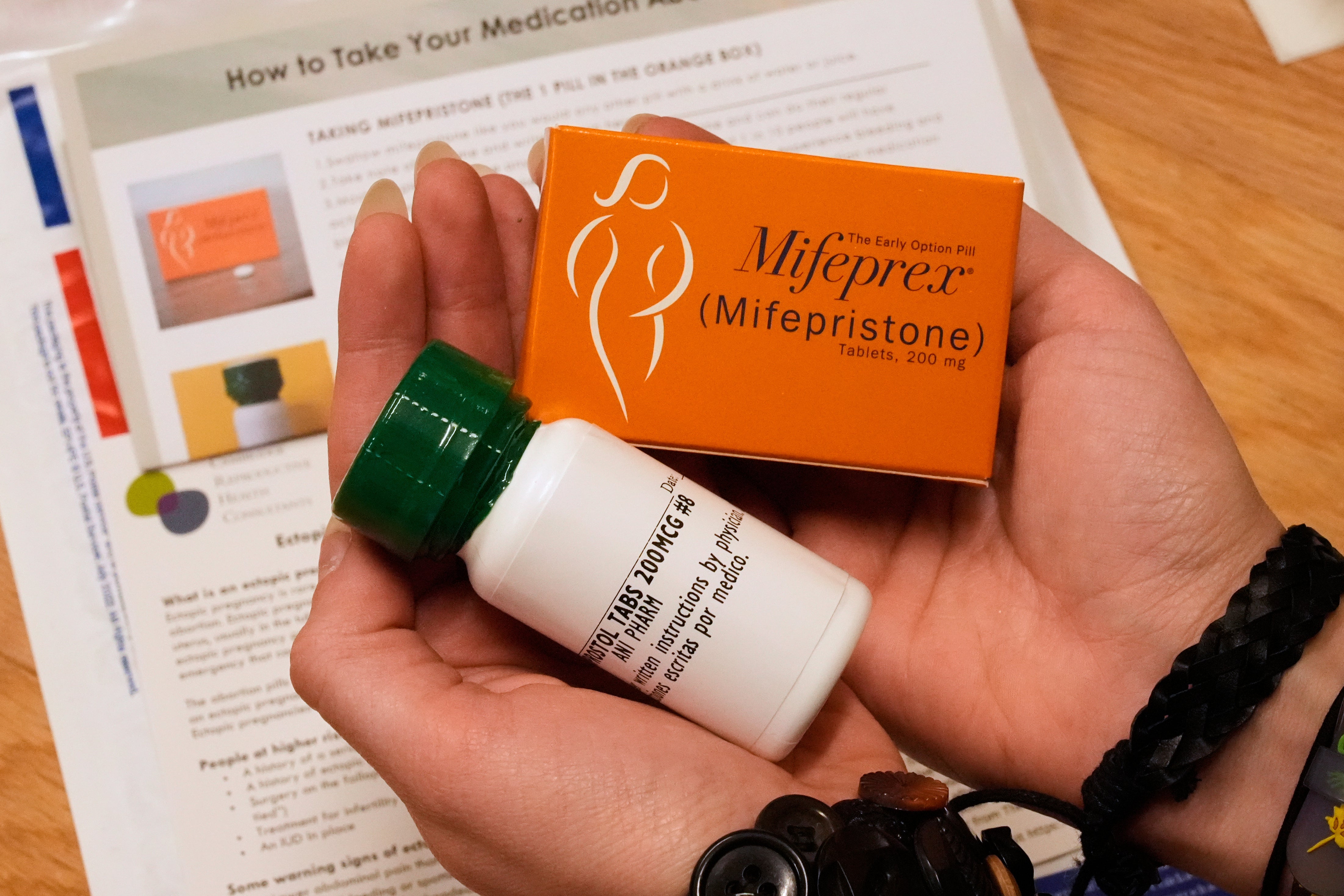 open image in gallery
Democratic Attorneys General Letitia James of New York and Andrea Joy Campbell of Massachusetts stated separately that the Republican-led states are attempting to export their local prohibitions into other jurisdictions and penalize medical providers for delivering lawful care.
The office of California Attorney General Rob Bonta did not immediately respond to a request for comment.
Nearly half of U.S. states have banned or severely restricted abortion access since the US Supreme Court overturned Roe v. Wade in 2022, ending the 1973 decision that guaranteed a nationwide right to abortion.
Patients in those jurisdictions have had to travel out of state or rely on telehealth care and mailed medications, leading to a sharp rise in medication abortions, which represented 65% of all U.S. abortions in 2023, according to the Guttmacher Institute.
Medication abortion is a two-drug process involving mifepristone followed by misoprostol to terminate a pregnancy within the first 10 weeks.
In response, conservative states have prosecuted doctors, sued out-of-state clinicians, and challenged the original 2000 federal approval of mifepristone along with subsequent regulatory expansions.
In May, the Supreme Court rejected a request from Louisiana in one of those suits to temporarily halt nationwide telehealth prescribing and mail delivery of mifepristone while the litigation moves forward.
Meanwhile, an ongoing safety evaluation by the US Food and Drug Administration has drawn criticism from some anti-abortion groups for its duration.
In a court filing submitted Wednesday in the litigation before the Supreme Court, the agency indicated it expects to wrap up its review by March 2027.
The vast majority of major medical organizations, alongside the FDA at various points since 2000, have maintained that mifepristone is safe and effective when used as directed, with severe adverse events occurring rarely.
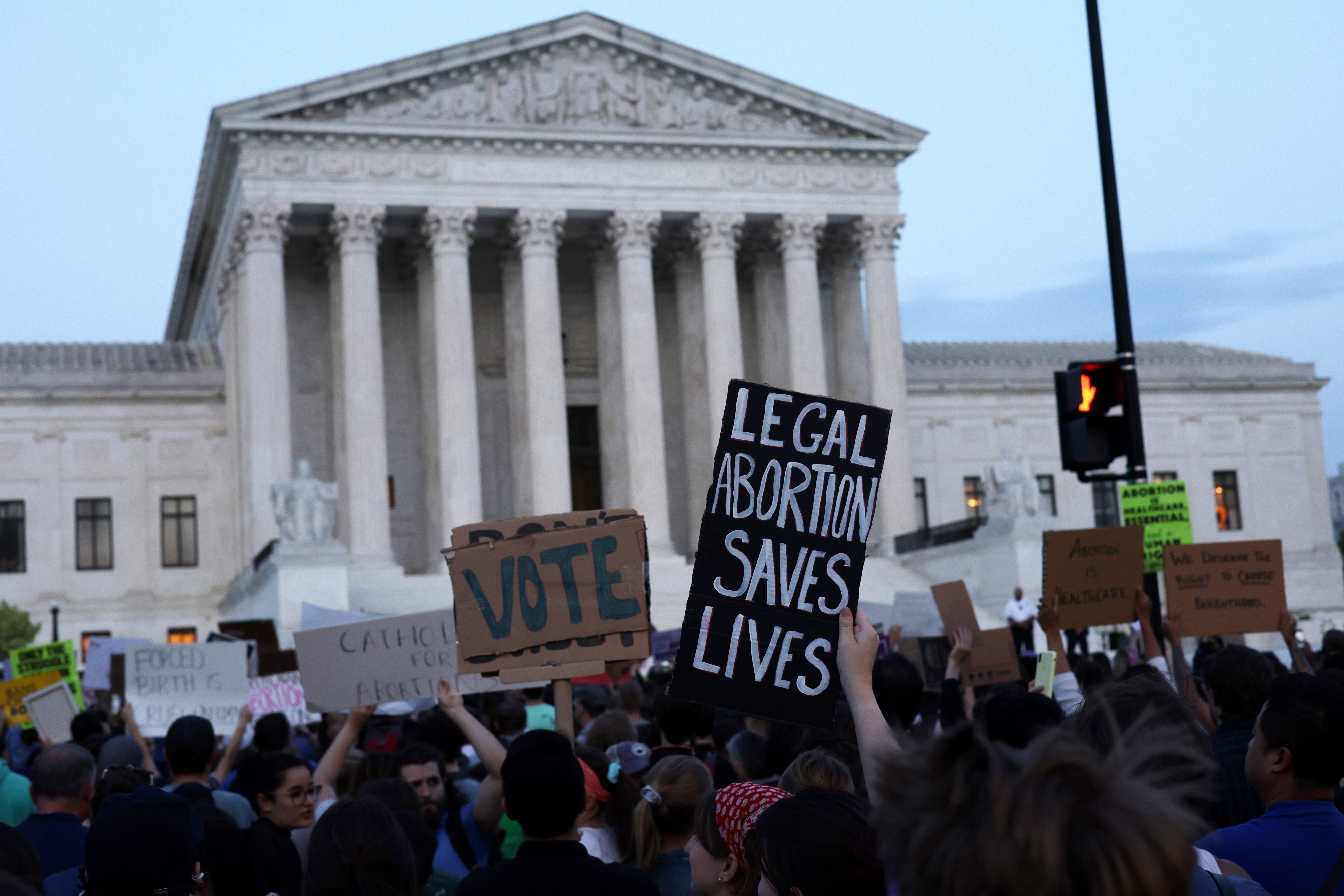 open image in gallery
Public nuisance claims typically target activities that unreasonably interfere with public health and safety, such as blocking public roads, polluting waterways, or releasing harmful fumes. Over recent decades, states have increasingly invoked public nuisance law in broader cases involving tobacco, climate change, opioids, vaping products, and youth social media usage.
Pursuing public nuisance claims offers distinct legal advantages, such as enabling states to request broad court orders requiring defendants to abate the alleged nuisance. It also permits plaintiffs to bypass the standard legal requirement of proving direct harm to specific individuals to establish standing or win a case.
However, legal experts note these claims are unusual because they target medications that have repeatedly received approval for sale from federal regulators, and they focus on a state’s ability to enforce its abortion laws rather than addressing immediate public safety hazards.
“That is not protecting their residents from harm, nor is it in line with typical public nuisance claims,” said Linda Goldstein, senior counsel at the Center for Reproductive Rights, an abortion rights group.
The lawsuit targeting states with shield laws was submitted directly to the US Supreme Court, which holds original jurisdiction over legal disputes between states but regularly turns such cases away.
A second lawsuit, naming nearly 30 individual medical practitioners and organizations as defendants, was filed in Louisiana federal court. Both lawsuits contain several additional legal claims.
The offices of the attorneys general in the three plaintiff states did not respond to requests for comment.
Two non-profit organizations named as defendants in the federal case, A Safe Choice Network and Cambridge Reproductive Health Consultants, did not respond to requests for comment.
In their legal filings, the plaintiff states argued that both the shield laws and the actions of out-of-state clinicians represent classic public nuisances because they are designed to bypass state abortion bans enacted to protect public safety.
If states “enacted laws goading their residents into sending anthrax, fentanyl, or mail bombs into Plaintiff States … there would be no question that Plaintiff States could sue to abate those public nuisances,” the states wrote in their Supreme Court filing.
More about
ArkansasLouisianaAlabamaCenter for Reproductive Rightsabortionsabortion law
Join our commenting forum
Join thought-provoking conversations, follow other Independent readers and see their replies
Most popular
Popular videos
Bulletin
Read next
Fonte: – World RSS Feed