Pope Leo is recovering at the hospital after lung nodule surgery, Vatican says
Por Nicole Winfield and Colleen Barry — – World RSS Feed
Pope Leo is recovering at the hospital after lung nodule surgery, Vatican says
The surgery got under way as medical staff recited the Rosary prayer in the hospital chapel Tuesday evening
Nicole Winfield & Colleen Barry Tuesday 13 October 2026 19:15 BST
- Bookmark
- Comments Go to comments
Bookmark popover
Removed from bookmarks
Close popover
 open image in gallery
Become an Independent member to bookmark this article
Want to bookmark your favourite articles and stories to read or reference later? Start your Independent Membership today.
Already a member?
Log in
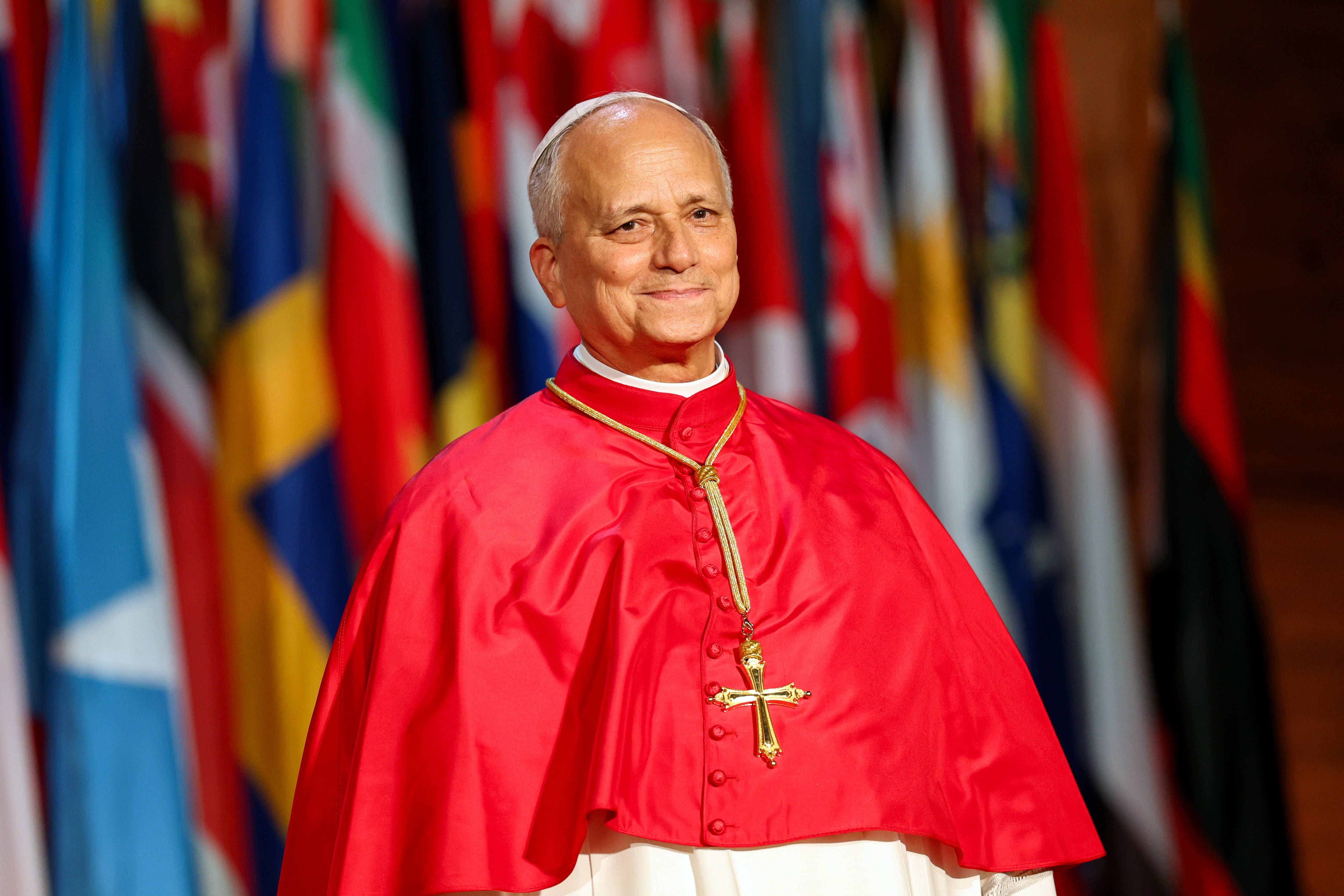
Pope Leo XIV is recovering at the hospital after a “successful” surgery to remove a lung nodule, the Vatican said in an update.
The surgery was completed “successfully, on schedule and as planned” and Leo returned to his room after the operation at Rome’s Gemelli hospital, the Vatican said.
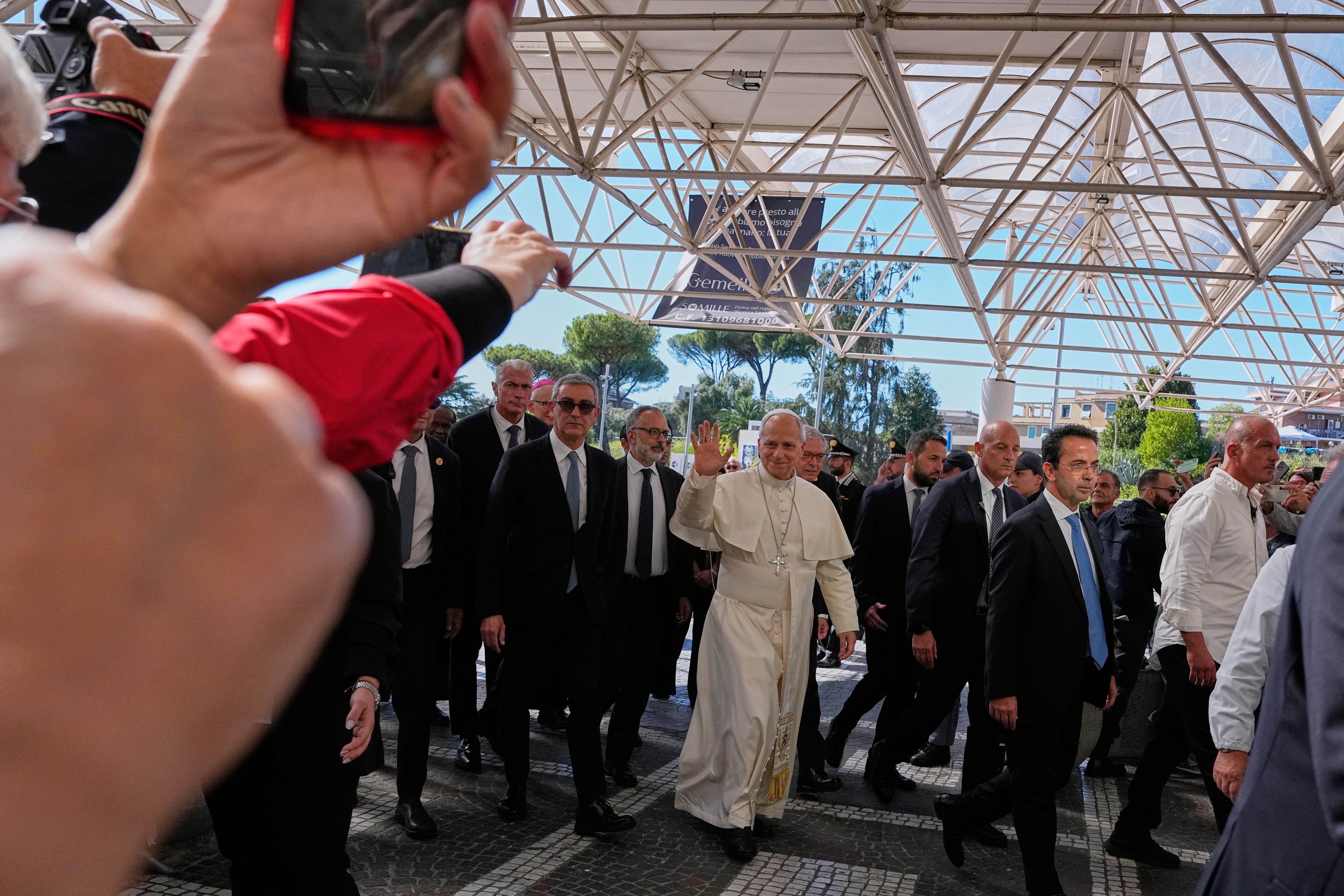
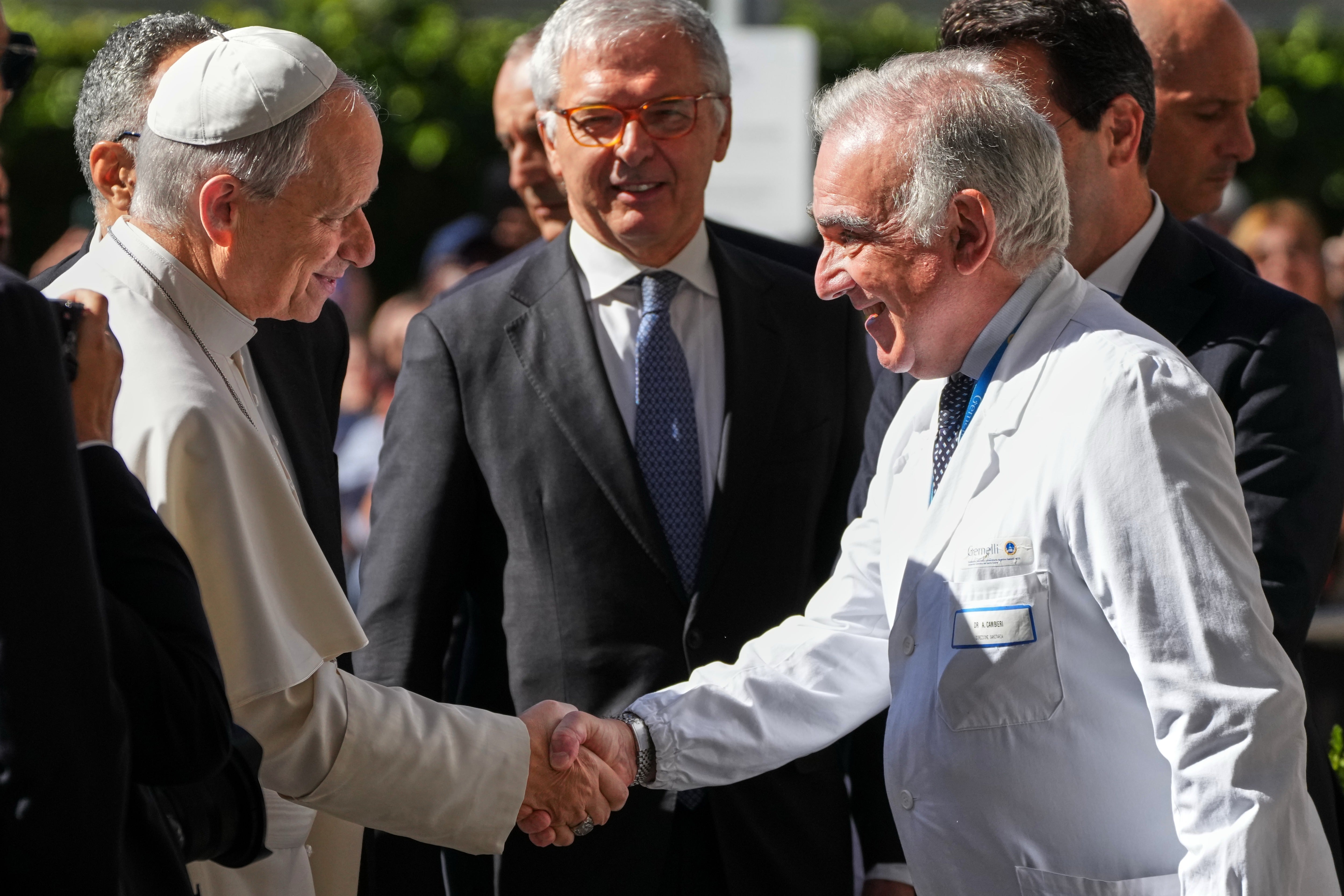
Leo arrived at the hospital earlier Tuesday after a brief drive from the Vatican. He entered the hospital through its main entrance and greeted dozens of well-wishers who had assembled to see him. The procedure was conducted by a surgical team headed by Gemelli’s chief thoracic surgeon, Dr. Stefano Margaritora.
Medical personnel gathered in the hospital chapel to recite the Rosary prayer while the operation was underway. Opening the prayer service, the Vicar of Rome, Cardinal Baldassare Reina, addressed the gathering, saying: “Let us join together in prayer, asking the Lord to sustain our bishop, Pope Leo, and to comfort all those who are hospitalized here.”
The 71-year-old American pontiff has demonstrated an uncommon degree of openness concerning what is the first publicly disclosed major health challenge of his 17-month papacy. During his Sunday noon prayer, he personally shared the discovery of the small, localized nodule and confirmed his decision to undergo its surgical removal.
 open image in gallery
Medical experts in oncology said that even if the tissue was determined to be cancerous, the pontiff’s prognosis remains “excellent” because the intervention occured at an early stage.
The procedure, typically conducted under general anesthesia, requires a hospital stay of about a week. The Vatican said Monday that all scheduled audiences for the pope have been canceled through Oct. 20.
“These are things that can be treated very well, if the words he used reflect the clinical situation,” observed Dr. Lorenzo Spaggiari, director of thoracic surgery at the European Institute of Oncology, or EIO, in Milan. Although not directly managing the pope’s care, Dr. Spaggiari is familiar with the medical team at Gemelli.
The timing of the intervention appears to have caught officials somewhat off-guard. Though Gemelli maintains a dedicated papal apartment on its 10th floor equipped with a private chapel, ongoing renovations mean the pope is being accommodated in a neighboring room instead, according to the Vatican press office.
Dr. Spaggiari said he expected the Gemelli specialists to carry out a biopsy to establish if lung cancer is present, followed by the excision of the specific section or lobe of the lung where the nodule is located.
The Vatican said the nodule was identified during a routine medical exam.
 open image in gallery
“I think he has had a bit of luck. They found something that was asymptomatic — a lung nodule, possibly a tumor. He might call it something else; we call it luck,” Dr. Spaggiari said.
A lung nodule is defined as a small, abnormal area measuring under 3 centimeters (1.2 inches) across, frequently discovered on chest or abdominal CT scans performed for unrelated reasons like infection or trauma rather than formal screening. While nodules can be benign or malignant, surgical extraction is routinely advised both to establish a definitive diagnosis and to treat a malignancy while it remains localized.
The surgery marks what is understood to be only the second hospitalization for the pope, who maintains an active lifestyle that includes weekly games of tennis and swimming.
In 1985, as a young missionary priest shortly after arriving in Chulucanas, Peru, he contracted typhoid fever. The severe illness and subsequent hospital stay proved to be a pivotal moment, shaping his commitment to remain among the impoverished communities of Peru despite the contrast with his previous life in Rome—a decision that eventually led to his papacy, as recounted in an interview for Elise Ann Allen’s 2025 book, Pope Leo XIV: The Biography.
In the biography, the pope recalled praying for relief from the intense suffering caused by the fever: “I was hooked up to an IV, and I said, ‘If this is your sense of humor, Lord, I think you could do a little better.’
“Obviously, I survived; I recovered, but it turned out to be a very significant moment for me, because it was like, ’Well, you’ve already dealt with the illness; you already see what the needs are here — the order, the Augustinians, the church are telling you, ‘We need you here; go for it.’ I never looked back.”
More about
Join our commenting forum
Join thought-provoking conversations, follow other Independent readers and see their replies
Most popular
Popular videos
Bulletin
Read next
Fonte: – World RSS Feed