Pentagon reissues testosterone guidance for troops after pulling it and removing female hormone tips
Por Konstantin Toropin and Matthew Perrone — – World RSS Feed
Pentagon reissues testosterone guidance for troops after pulling it and removing female hormone tips
Defense Secretary Pete Hegseth said screening troops for ‘testosterone deficiency’ is necessary to allow them to operate at their ‘absolute best’
Konstantin Toropin & Matthew Perrone Friday 18 September 2026 19:46 BST
- Bookmark
Bookmark popover
Removed from bookmarks
Close popover
Your support helps us to tell the story
Read more Support Now
From reproductive rights to climate change to Big Tech, The Independent is on the ground when the story is developing. Whether it’s investigating the financials of Elon Musk’s pro-Trump PAC or producing our latest documentary, ‘The A Word’, which shines a light on the American women fighting for reproductive rights, we know how important it is to parse out the facts from the messaging.
At such a critical moment in US history, we need reporters on the ground. Your donation allows us to keep sending journalists to speak to both sides of the story.
The Independent is trusted by Americans across the entire political spectrum. And unlike many other quality news outlets, we choose not to lock Americans out of our reporting and analysis with paywalls. We believe quality journalism should be available to everyone, paid for by those who can afford it.
Your support makes all the difference. Read more
The Pentagon has issued formal guidance for mandatory testosterone testing for male service members 30 and older, two weeks after publishing and abruptly pulling the policy.
The updated guidance excludes female personnel, for now, as medical experts question the necessity and efficacy of such a program.
Defense Secretary Pete Hegseth announced in July that a broad program to screen troops for “testosterone deficiency” was being rolled out to help them operate at their “absolute best.” The new clinical guidance, released late Thursday, outlines how this program will function.
The Pentagon’s effort to test personnel for low testosterone coincides with widespread public interest in the hormone, largely driven by men’s health influencers and podcasters who promote the treatment to boost energy, build muscle, and feel younger.
Recommended
 Pentagon demands only fittest and most ‘impeccably’ groomed troops attend Hegseth speech: report
 However, many medical experts say those sweeping benefits are not supported by scientific evidence. Hegseth’s statements on the hormone have combined established scientific facts with broader and less substantiated assertions.
The Pentagon’s previously posted guidance involved separate screening for women service members. While it did not require routine hormonal testing, it said women over the age of 35 should be asked about symptoms of hormonal dysregulation and referred for further assessment if needed. It also issued guidelines for when it is appropriate to prescribe off-label testosterone in women, Fox News reported at the time.
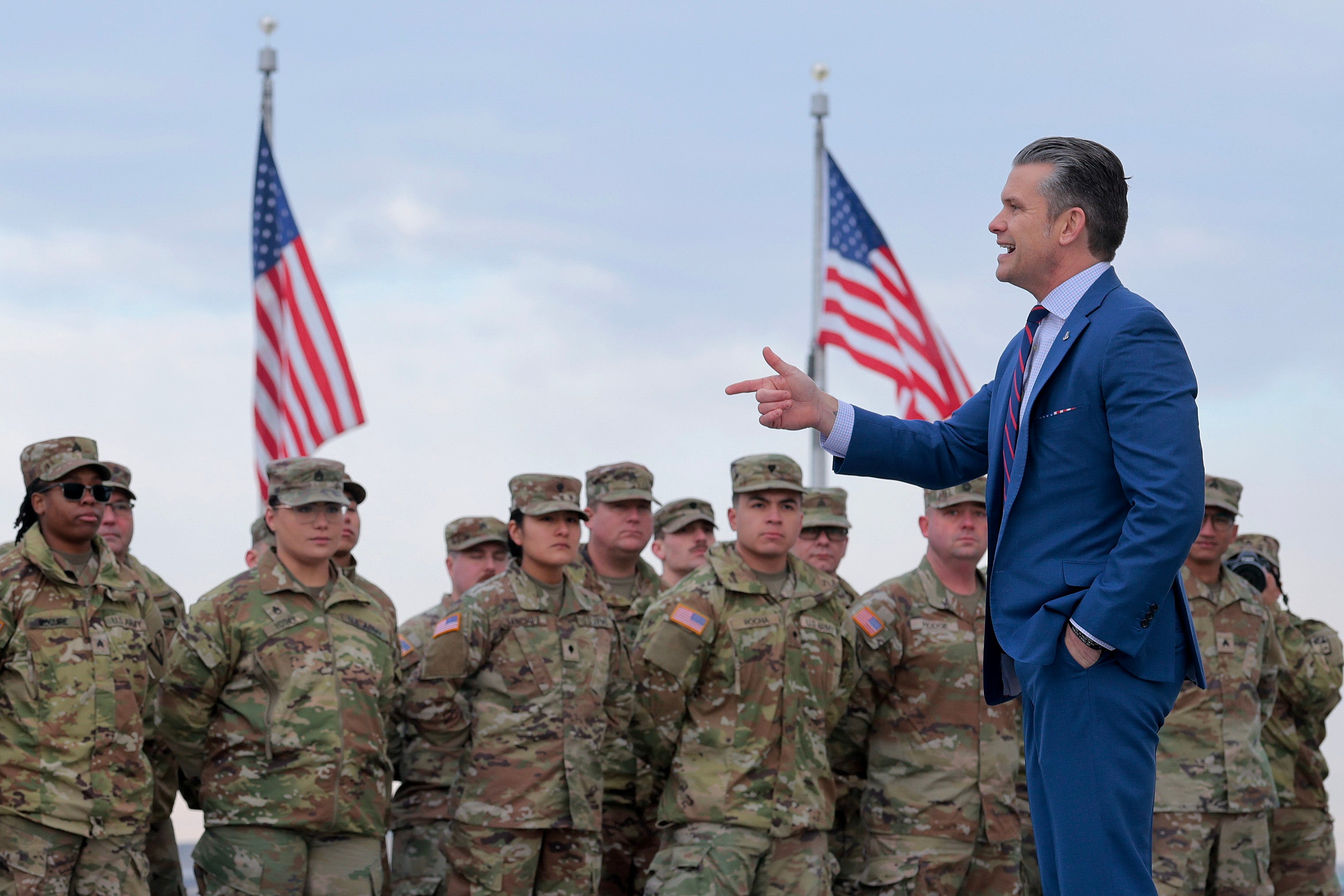
The clinical guidance released Thursday specifies the mandatory tests are for “testosterone deficiency in the male service member.”
The guidance notes that “the female clinical practice guideline is being reviewed and will be posted upon approval.” The Pentagon has not specified whether female service members will be eligible for evaluation for estrogen-based therapy as they enter perimenopause.
Testosterone levels decrease naturally as men age, impacting mood, sexual function, bone density, and other physical measures. However, health experts have long debated how to properly diagnose these issues and whether hormone replacement therapy is appropriate.
Over the last decade, federal research has shown that increasing testosterone levels can help improve erectile dysfunction, reduced libido, and other medical concerns in men.
The Pentagon’s top spokesman, Sean Parnell, stated Thursday that “by proactively identifying and treating suboptimal hormone levels,” the Defense Department aims to “invest in the health of its warfighters, strengthen their performance, and maximize force readiness.”
Major medical organizations generally advise against routine, automatic screening of testosterone levels. Instead, standard clinical guidelines recommend testing for men who report specific symptoms — such as low libido and depressed mood — and receive two blood tests confirming reduced hormone levels.
The Pentagon’s policy departs from that established approach by requiring testosterone screening for every male service member 30 and older, while also allowing younger personnel to request testing.
In other respects, the new protocol mostly conforms to accepted medical standards, including acknowledging the limited benefits of hormone replacement.
For example, the document states: “Evidence does not support its use to improve energy, vitality, physical function, or cognition.” Instead, it points to “demonstrated benefits” for sexual function and specific physical measures, including bone density.
The policy does not require replacement therapy if a service member tests eligible, and the guidance highlights long-established side effects of hormone therapy, including a potential drop in sperm count. When synthetic testosterone is administered, the body often reduces — or stops — its natural sperm production.
As a result, military healthcare providers are instructed not to prescribe testosterone therapy to service members planning to father children in the near future.
Another complicating factor for personnel is the regulated status of testosterone itself. The memo notes that its “use in the deployed environment raises supply, custody, storage, and continuity considerations that should be resolved before departure rather than in theater.”
The new guidelines specify that injectable testosterone “requires controlled room temperature storage and controlled substance accountability” and that service members receiving therapy must ensure they maintain an adequate supply, despite federal legal limits on prescriptions for controlled substances like testosterone.
The caution and practical hurdles outlined in the document regarding deployment stand in contrast to statements from Hegseth in July, when he argued that the demands of the modern battlefield require “maximum psychological and mental readiness” and positioned testosterone therapy as part of the solution.
More about
PentagonPete HegsethtestosteroneDefense Department
Most popular
Popular videos
Bulletin
Read next
Fonte: – World RSS Feed


:quality(85)/e69ad77b-5bc6-4c4b-be5b-939a3e2ae48c.jpg)
:quality(85)/14bc4096-9c57-4e3a-8923-4d3ed5ff3576.png)
:quality(85)/676c7703-561f-4448-a5ef-20d129ffe01d.webp)