Nobel prize awarded to US economists for work in shock management
Por Kostya Manenkov,Stefanie Dazio and Paul Wiseman — – World RSS Feed
Nobel prize awarded to US economists for work in shock management
The US economists awarded the prize for their research into how central banks and governments can better handle economic shocks
Kostya Manenkov , Stefanie Dazio & Paul Wiseman Monday 12 October 2026 12:14 BST
- Bookmark
- Comments Go to comments
Bookmark popover
Removed from bookmarks
Close popover
 open image in gallery
Become an Independent member to bookmark this article
Want to bookmark your favourite articles and stories to read or reference later? Start your Independent Membership today.
Already a member?
Log in
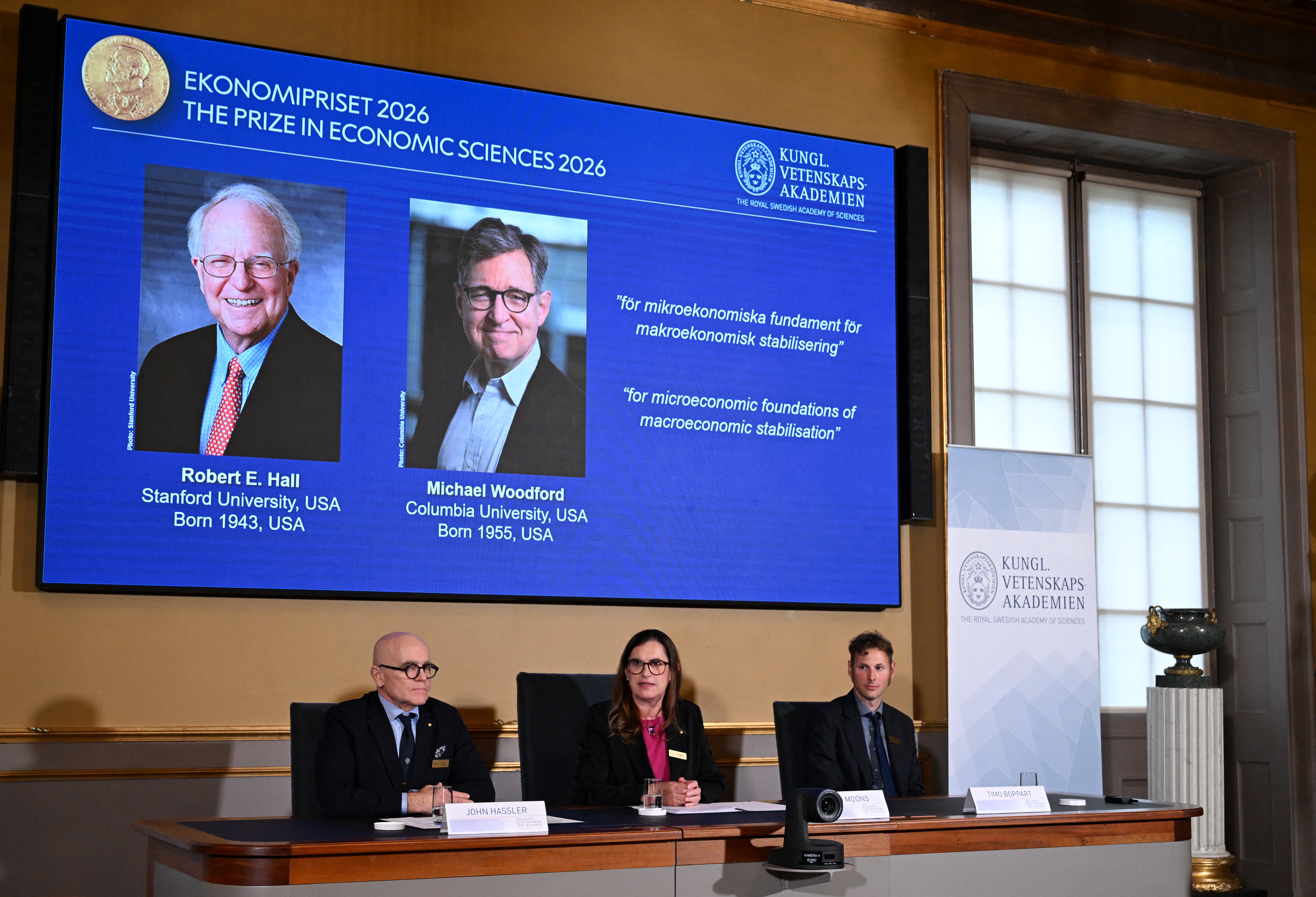
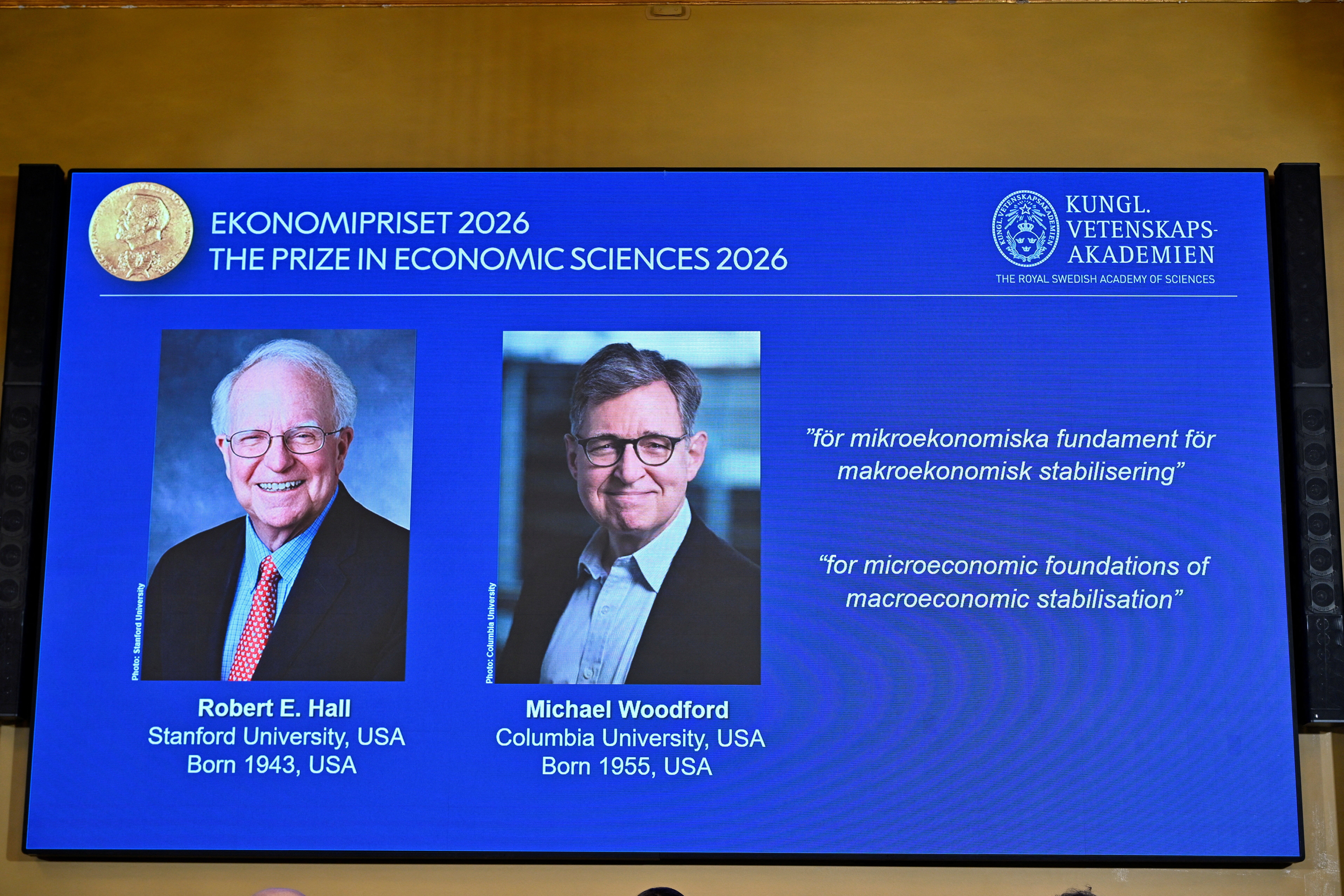
Two US economists, Robert E. Hall and Michael Woodford, have been awarded the Nobel prize in economics for their research into models that assist governments and central banks in managing economic shocks.
Announcing the award in Stockholm, the Royal Swedish Academy of Sciences lauded the duo “for microeconomic foundations of macroeconomic stabilisation.”
In a statement, the organisation added: “The laureates have helped us smooth out the economy’s peaks and troughs,”.
Hall is an affiliate of Stanford University in California, while Woodford is connected with Columbia University in New York.
“It’s a tremendous honour, it’s a surprise,” Woodford said, reacting to the news from New York via telephone.
John Hassler, chair of the Committee for the Prize in Economic Sciences, highlighted the practical importance of their findings.
“The laureates’ work has provided us with a stable theoretical foundation for the models that are now used by central banks and governments around the world,” he noted in a news release.
“With them, we are better equipped to deal with shocks in the economy, such as energy crises or sudden changes in how much households consume.”
 open image in gallery
For decades, governments responded to economic shocks by following the Depression-era prescriptions of the British economist John Maynard Keynes: intervene in the economy by lowering taxes and hiking government spending, thereby encouraging consumers and businesses to spend and invest themselves and help growth get restarted.
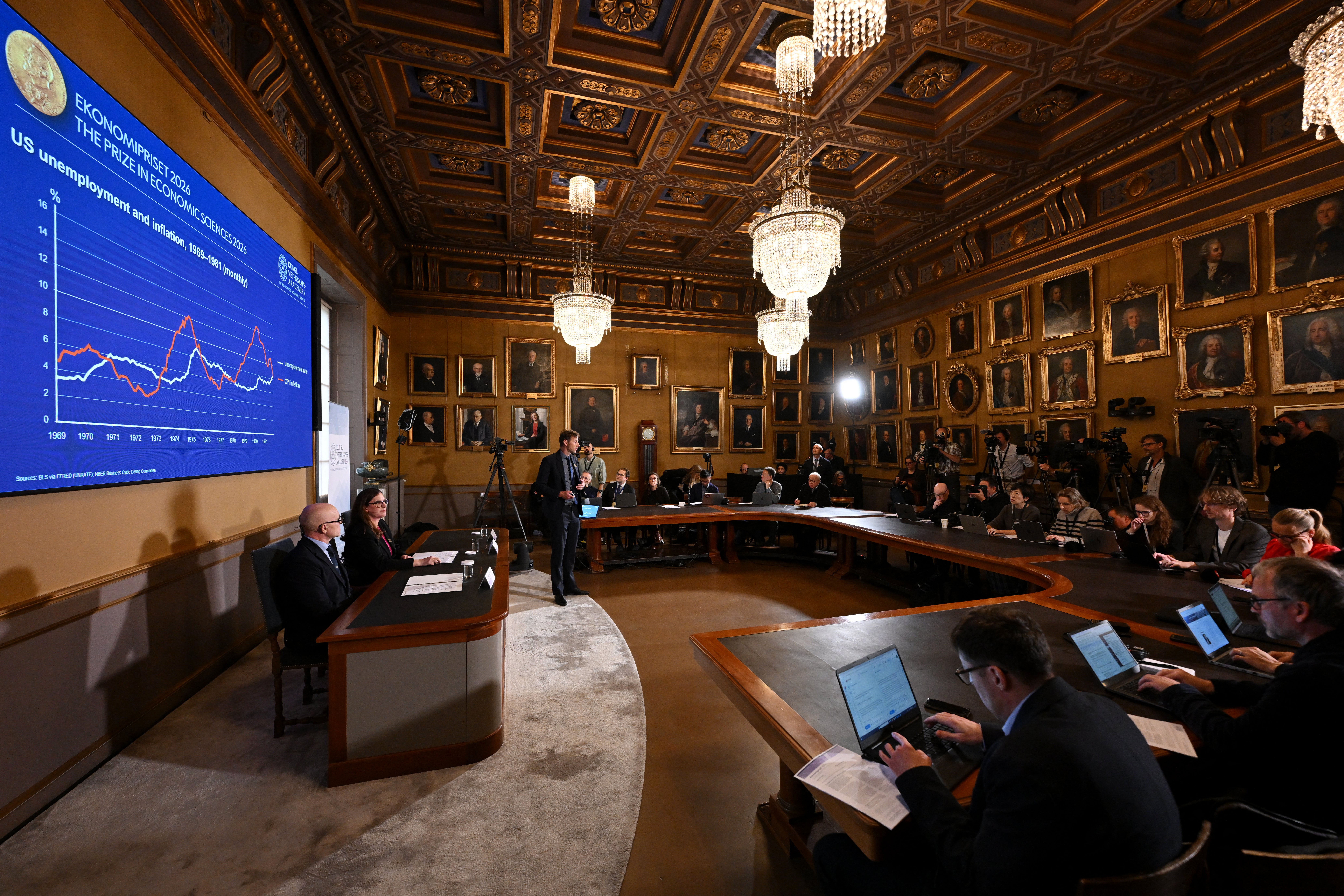
“This is the Keynesian recipe and it worked well – until it didn’t,’’ said Timo Boppart of the Nobel economics prize committee. Policymakers had thought economic management involved simple tradeoffs – unemployment, for instance, would stay low at a time of high inflation and rise when inflation fell. But the “stagflation’’ of the 1970s – when the world economy experienced simultaneous high inflation and high unemployment – proved the formula was simplistic.
Some economists argued that government attempts to intervene in the economy were doomed to fail. But Hall and Woodford, in separate contributions, set about improving the Keynesian model to take into account how consumers and businesses actually make decisions about whether to invest and spend.
“Economic outcomes are the result of millions of decisions made at the microlevel by households and businesses,’’ the Nobel committee wrote. “Using models based upon this approach, rather than simply studying the economy from a macro perspective, like a bird’s eye view, Hall’s and Woodford’s research has generated a paradigm shift in the theory of stabilization policy.’’
During the phone call broadcast during the live conference, Woodford said his work has stressed “the understanding of the people who are in the markets and making decisions about spending.”
“And so, creating a framework that allows governments to talk to the public about what they’re doing, I think is also important. And that was one of the key goals of trying to develop an analytical framework was not simply to use it on people, but to also talk to people about why the things that are being done are being done.”
Last year, the prize was awarded to three academics studying business innovation for demonstrating how groundbreaking inventions spur economic growth and human welfare, even as established businesses are left behind.
 open image in gallery
The economics prize is formally known as the Bank of Sweden Prize in Economic Sciences in Memory of Alfred Nobel.
The central bank established it in 1968 as a memorial to Nobel, the 19th-century Swedish businessman and chemist who invented dynamite and established the five Nobel Prizes.
Nobel purists stress that the economics prize is technically not a Nobel Prize, but it is always presented together with the others on 10 December, the anniversary of Nobel’s death in 1896.
Nobel honours were announced last week in medicine, physics, chemistry, literature and peace.
Peace prize winner, former UN human rights chief Navi Pillay, took a swipe US President Donald Trump last week after collecting her award, joking that she would offer to share it with him.
The prize money this year is 12 million Swedish kronor (about £900,000), whether for an individual, small group of laureates or organisation.
More about
Nobel PrizeStockholmColumbia UniversityStanford UniversityEconomics
Join our commenting forum
Join thought-provoking conversations, follow other Independent readers and see their replies
Most popular
Popular videos
Bulletin
Read next
Fonte: – World RSS Feed