Mining for minerals in the Congo could help save the rainforest, former minister says
Por Nick Ferris — – World RSS Feed
In Focus Mining for minerals in the Congo could help save the rainforest, former minister says
Lee White – a former minister for the environment in Gabon – tells Nick Ferris why he believes investment from responsible mining companies gives the world’s second largest rainforest a better chance of survival than traditional foreign aid
 Monday 14 September 2026 12:39 BST
- Bookmark
- Comments Go to comments
Bookmark popover
Removed from bookmarks
Close popover
 open image in gallery
Your support helps us to tell the story
Read more Support Now
From reproductive rights to climate change to Big Tech, The Independent is on the ground when the story is developing. Whether it’s investigating the financials of Elon Musk’s pro-Trump PAC or producing our latest documentary, ‘The A Word’, which shines a light on the American women fighting for reproductive rights, we know how important it is to parse out the facts from the messaging.
At such a critical moment in US history, we need reporters on the ground. Your donation allows us to keep sending journalists to speak to both sides of the story.
The Independent is trusted by Americans across the entire political spectrum. And unlike many other quality news outlets, we choose not to lock Americans out of our reporting and analysis with paywalls. We believe quality journalism should be available to everyone, paid for by those who can afford it.
Your support makes all the difference. Read more
M ining for critical minerals in the Congo could help protect Africa’s great rainforest by creating new economic opportunities and giving countries in the region greater power over the value of their natural resources, the former environment minister of Gabon – a country 90 per cent covered by the rainforest – has told The Independent.
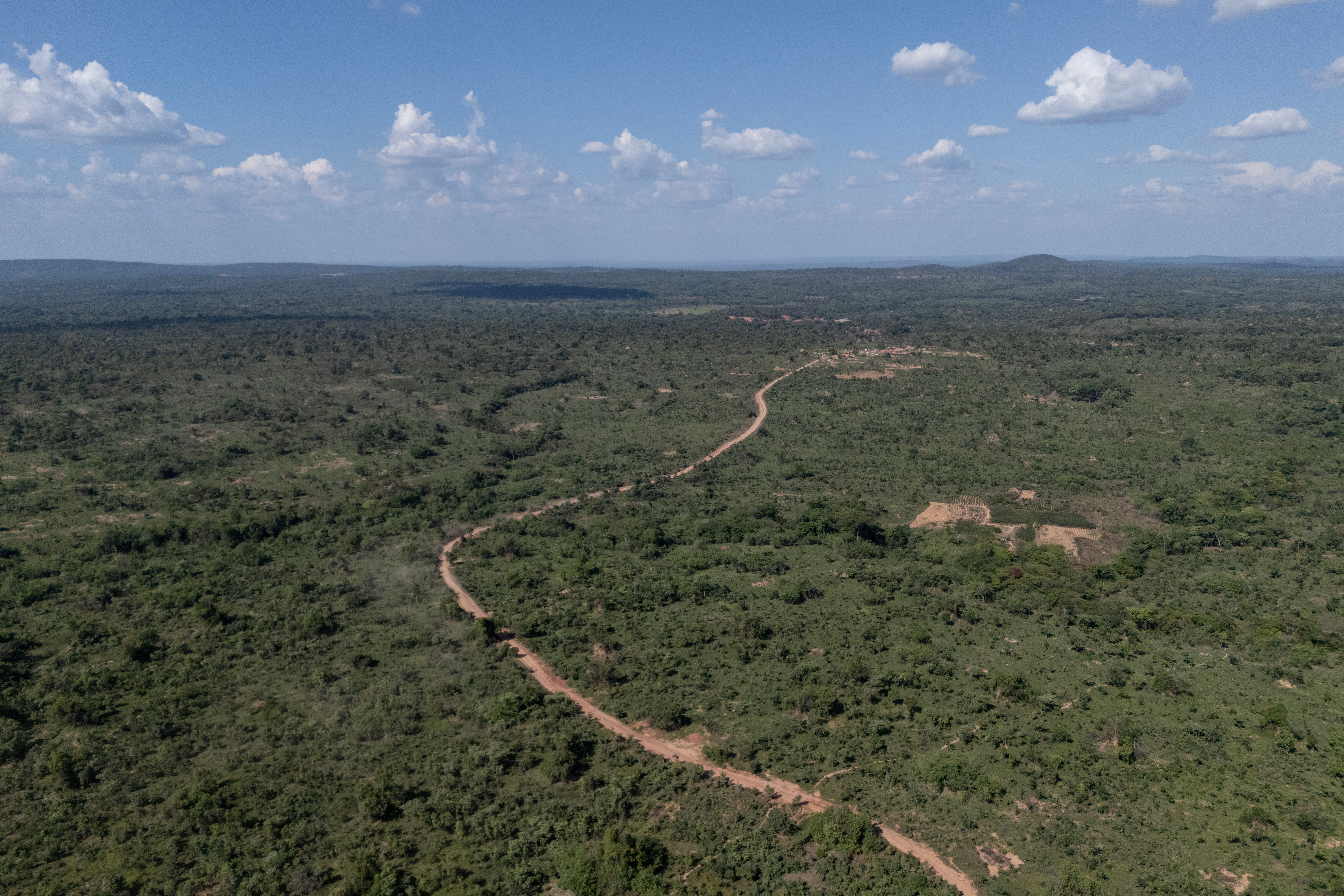
The Congo Rainforest stretches across two million square kilometres in central Africa, and is the world’s largest forest carbon sink, absorbing around 1.5 billion tonnes of CO2 per year, roughly equivalent to the annual emissions of Russia.
There are concerns, however, that without more strategic conservation efforts, environmental destruction could reach such a point that, like the Amazon, it becomes a net source of emissions. The year 2024 saw the Democratic Republic of the Congo (DRC), the country which holds 60 per cent per cent of the forest, lose a record 590,000 hectares of primary forest, equivalent to some 825,000 football pitches. DRC’s government has also issued bids for oil and gas drilling across around half of its landmass.
Speaking to The Independent, Lee White – who served as Gabon’s environment minister between 2019 to 2023 – says that growing demand for critical minerals during the clean energy transition could provide a route to saving the rainforest, despite the environmentally-destructive reputation that the mining industry often holds.
The region holds vast reserves of minerals including copper, cobalt, lithium, manganese, tin, and gold, which are critically important to produce clean energy technologies including batteries, electric vehicles, solar, and wind.
“Bring in responsible mining or forestry companies that are not taking bribes, that are putting pressure on governments to get rid of corrupt officials, and over time you are going to see an improvement in governance, which can support environmental protection, while generating more money for schools, hospitals and everything else,” White says.
Speaking at a time when countries of the Congo Basin, along with most of Sub-Saharan Africa, are receiving significantly less foreign aid than they did a couple of years ago, White says that such responsible private investment could ultimately deliver much stronger outcomes for people and the planet than foreign aid has ever done.
“Aid, I am afraid to say, has barely made a dent in the challenges facing these countries,” he adds. “Only through private sector investment tied to international standards can you begin to solve these problems.”
On the subject of aid specifically directed to forest protection, he added: “Rich countries make all these commitments to funding the Congo Basin and stopping deforestation, but none of it actually reaches the ground.
“We urgently need to find ways to bring money and protection to this ecosystem, because if we lose it, we lose the source of weather systems that people depend on for agriculture in the Sahel and the Horn of Africa, and we are looking at 500 million climate refugees,” White says.
.jpeg) open image in gallery
open image in galleryThere are already significant mining operations in the Congo, with DRC notably supplying around three-quarters of the world’s cobalt, which is a metal critical to producing batteries.
But the country’s cobalt industry is infamous for human rights abuses including child labour and forced labour. Control over mining sites is also a key factor in the ongoing conflict in the East of the country.
According to White, a crucial step in ensuring mining benefits countries in the region would be to bring more processing onshore. Currently, 97 per cent of the DRC’s cobalt is sent to China, primarily unprocessed, meaning the country retains little of the value generated by its mineral wealth.
“Currently if ore is exported unprocessed, African countries might get five per cent of the value. If that ore is also extracted illegally, then countries might get none of the value at all,” he said.
White’s comments echo those given by UN chief Antonio Guterres earlier this summer.
“It is time to break the age-old pattern – where resources are extracted, value is captured elsewhere, and impoverished communities are left behind to cope with the environmental and socioeconomic damage,” Guterres said during a July UN Security Council debate on natural resources.
In the aftermath of the closure of the US Agency for International Development (USAID), the US – under President Donald Trump – has embarked on a more transactional approach to foreign aid, where public US money is provided in exchange for access to markets or other benefits.
In the case of DRC, Trump has been offered mineral rights in exchange for a US-supported peace deal in the East. Many have criticised the deal as potentially opaque and exploitative – however, White believes it could end up being beneficial to the Congolese people.
“US companies have a long track record of extracting minerals in a fairer way than equivalent companies from other countries,” White says. “I would be hopeful that this agreement could result in gradual improvements in governance and in conditions for local people.”
White – and research body the Science Panel for the Congo Basin, which he co-founded – sees Gabon as an important test case in the push to retain value in mineral extraction in the Congo Basin.
The country is the world’s second largest manganese producer, supplying around 23 per cent of global output in 2024, and has announced plans to ban exports of unprocessed manganese from 2029.
Rich countries should support such measures, Mr White suggests, as they need to find ways to bring money to the countries of the Congo Basin, which have long-helped to absorb industrial pollution from Europe and North America without receiving any compensation to do so.
“These African countries continue to be a buffer that subsidises the bad pollution behaviour of the Global North,” White says. “So it is time for rich countries to say: we will come and help you optimise the way that you do things, so that you don’t destroy your environment, but can create the wealth that your people need.”
This article has been produced as part of The Independent’s Rethinking Global Aid project
More about
Rethinking Global AidCobaltMineralsMiningCongo Basin
Join our commenting forum
Join thought-provoking conversations, follow other Independent readers and see their replies
Most popular
Popular videos
Bulletin
Read next
Fonte: – World RSS Feed