Middle school kids are choosing AI friends over real ones
Por Owen Scott — – World RSS Feed
Middle school kids are choosing AI friends over real ones
‘This is a pretty existential concern for this generation,’ one of the study’s authors says
Owen Scott Monday 28 September 2026 13:46 BST
- Bookmark
- Comments Go to comments
Bookmark popover
Removed from bookmarks
Close popover

Become an Independent member to bookmark this article
Want to bookmark your favourite articles and stories to read or reference later? Start your Independent Membership today.
Already a member?
Log in
Your support helps us to tell the story
Read more Support Now
From reproductive rights to climate change to Big Tech, The Independent is on the ground when the story is developing. Whether it’s investigating the financials of Elon Musk’s pro-Trump PAC or producing our latest documentary, ‘The A Word’, which shines a light on the American women fighting for reproductive rights, we know how important it is to parse out the facts from the messaging.
At such a critical moment in US history, we need reporters on the ground. Your donation allows us to keep sending journalists to speak to both sides of the story.
The Independent is trusted by Americans across the entire political spectrum. And unlike many other quality news outlets, we choose not to lock Americans out of our reporting and analysis with paywalls. We believe quality journalism should be available to everyone, paid for by those who can afford it.
Your support makes all the difference. Read more
Middle school children are choosing to socialize with artificial intelligence chatbots, a new study claims.
As many as one in five students said that they utilized A.I. tools for emotionally intimate companionship, only to be more likely to later report higher levels of loneliness.
The study, which was carried out by researchers at the University of North Carolina at Chapel Hill, examined more than 2,300 students in grades six, seven and eight and was carried out in two stages – the first being undertaken in December and the second through April and May.
The research was carried out at 22 middle schools in what The Wall Street Journal describes as a “large southeastern state.”
 open image in gallery
“We found that two to four kids in every classroom are now reporting they prefer interaction with a chatbot over a human peer,” Mitch Prinstein, one of the study’s authors, told The WSJ. “This is a pretty existential concern for this generation.”
The use of A.I. chatbots by young people has become an increasingly controversial topic after several families alleged that their children took their own lives after becoming close with a chatbot.
Early this year, a court filing obtained by Reuters stated that Google and Character A.I. agreed to settle a case brought by Megan Garcia over her t her 14-year-old son, Sewell. She alleged that he took his own life after forming a relationship with a chatbot modeled on Daenerys Targaryen, a character from the HBO franchise Game of Thrones. Both companies did not comment on the report.
 open image in gallery
Common Sense Media, a nonprofit organization that reviews games, books, apps and websites, described social A.I. companions as posing “unacceptable risks” to those under 18 and alleged that they encourage “harmful behaviors.”
Speaking to The WSJ, Prinstein warned that children relying on chatbots could cause them to miss out on developing interpersonal skills.
“There’s research that shows the experiences we have with peers at this age predict a whole slew of outcomes well into our 40s and 50s – things like our career advancement, marital satisfaction, child-rearing style and even our health,” he said. “When kids replace human relationships with chatbots, they’re missing major learning opportunities to develop the interpersonal skills they’ll need for a lifetime.”
Wider concerns about A.I. have increased in recent months, after the leaders of several tech firms called for more restrictive guardrails on the technology.
 open image in gallery
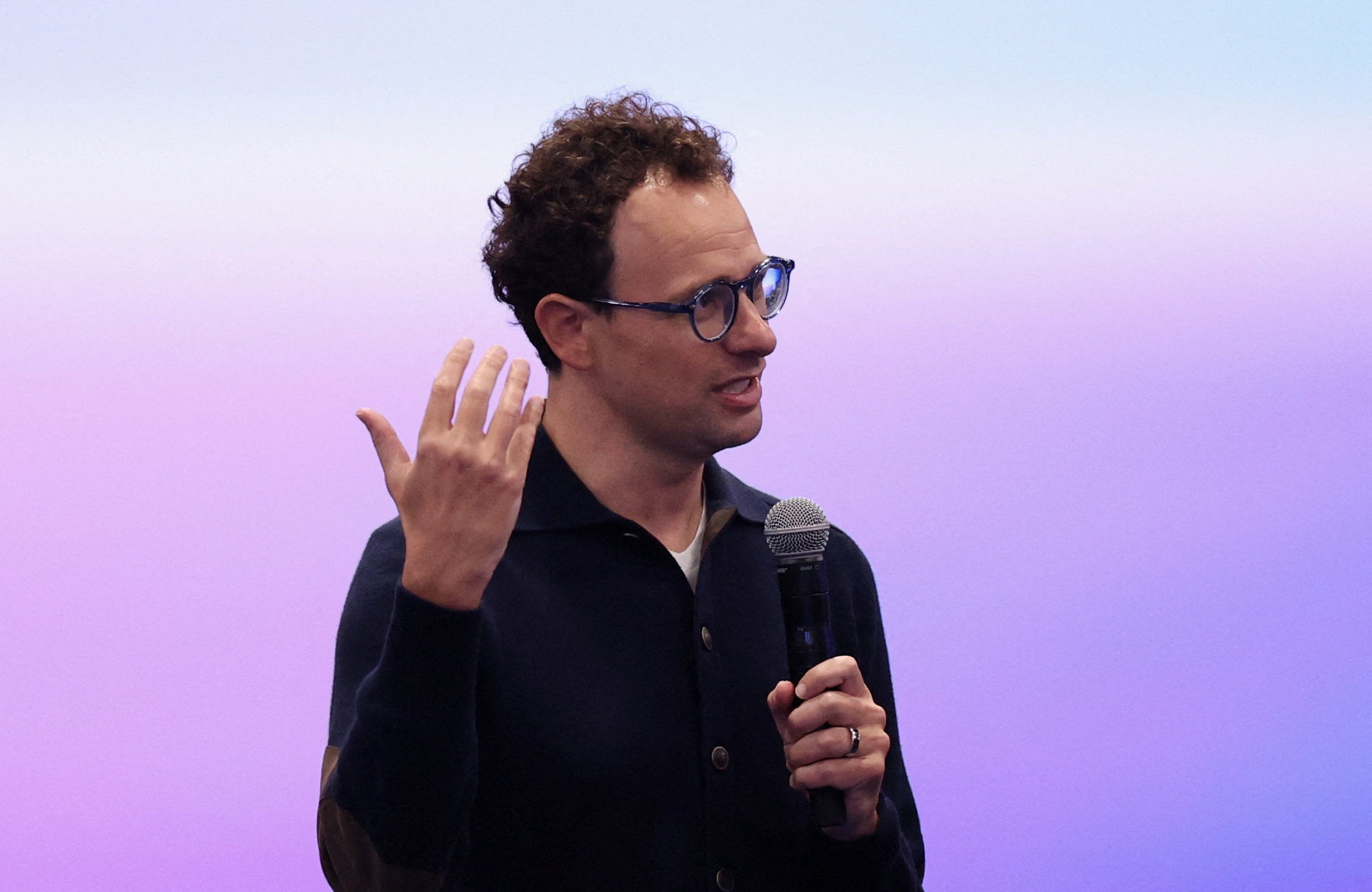
Anthropic CEO Dario Amodei suggested in an essay that A.I. firms could be subject to teams of third-party evaluators and called for coordination between international governments over A.I. development.
Amodei’s suggestions were backed by SpaceX’s Elon Musk and OpenAI’s Sam Altman.
President Trump hosted Amodei for a private dinner at the White House on Sunday night, although he dismissed concerns about A.I. when questioned by reporters that same day.
“Well, I don’t worry about it,” he said, when asked about the possibility of A.I. going rogue. “I, just, you know, it’s a huge industry.”
“If something is bad, they have to fix it,” he added. “And, if they don’t fix it, that’s why you have the Department of Justice.”
More about
University of North CarolinaAnthropicSpaceXOpenAIDepartment Of JusticeArtificial intelilgenceAI
Join our commenting forum
Join thought-provoking conversations, follow other Independent readers and see their replies
Most popular
Popular videos
Bulletin
Read next
Fonte: – World RSS Feed
