Meet Navi Pillay: The former UN human rights chief awarded the Nobel Peace Prize
Por Kostya Manenkov,Mark Lewis and Stefanie Dazio — – World RSS Feed
Meet Navi Pillay: The former UN human rights chief awarded the Nobel Peace Prize
Navanethem ‘Navi’ Pillay was awarded the Nobel Peace Prize for her efforts to promote peace and international law
Kostya Manenkov , Mark Lewis & Stefanie Dazio Friday 09 October 2026 13:28 BST
- Bookmark
- Comments Go to comments
Bookmark popover
Removed from bookmarks
Close popover

Become an Independent member to bookmark this article
Want to bookmark your favourite articles and stories to read or reference later? Start your Independent Membership today.
Already a member?
Log in
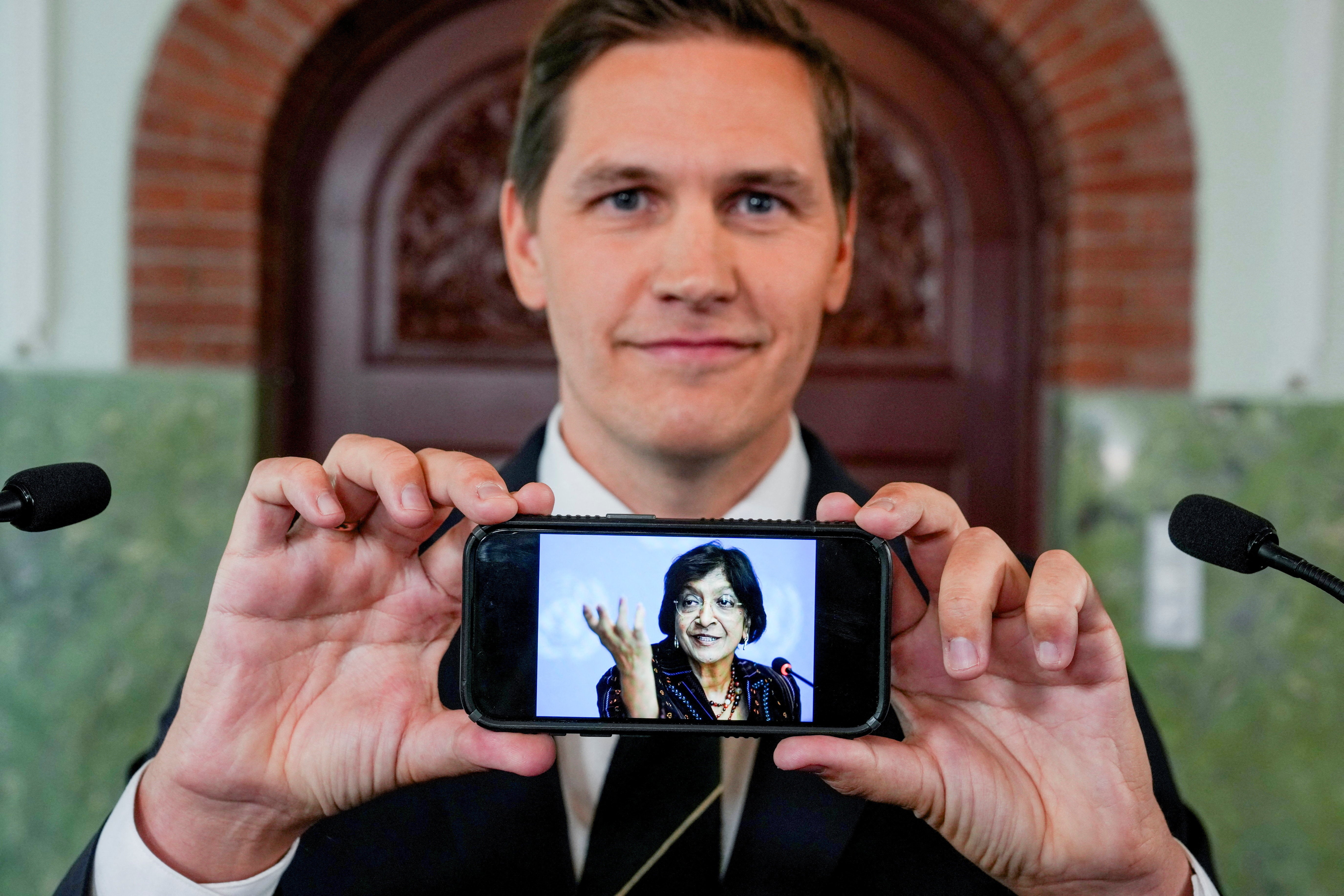
Navanethem ‘Navi’ Pillay, a South African-born jurist, has been awarded the Nobel Peace Prize for her efforts to promote peace and international law.
The former UN human rights chief currently serves as an ad hoc judge at the International Court of Justice, the highest court of the United Nations, in the ongoing genocide case against Myanmar.
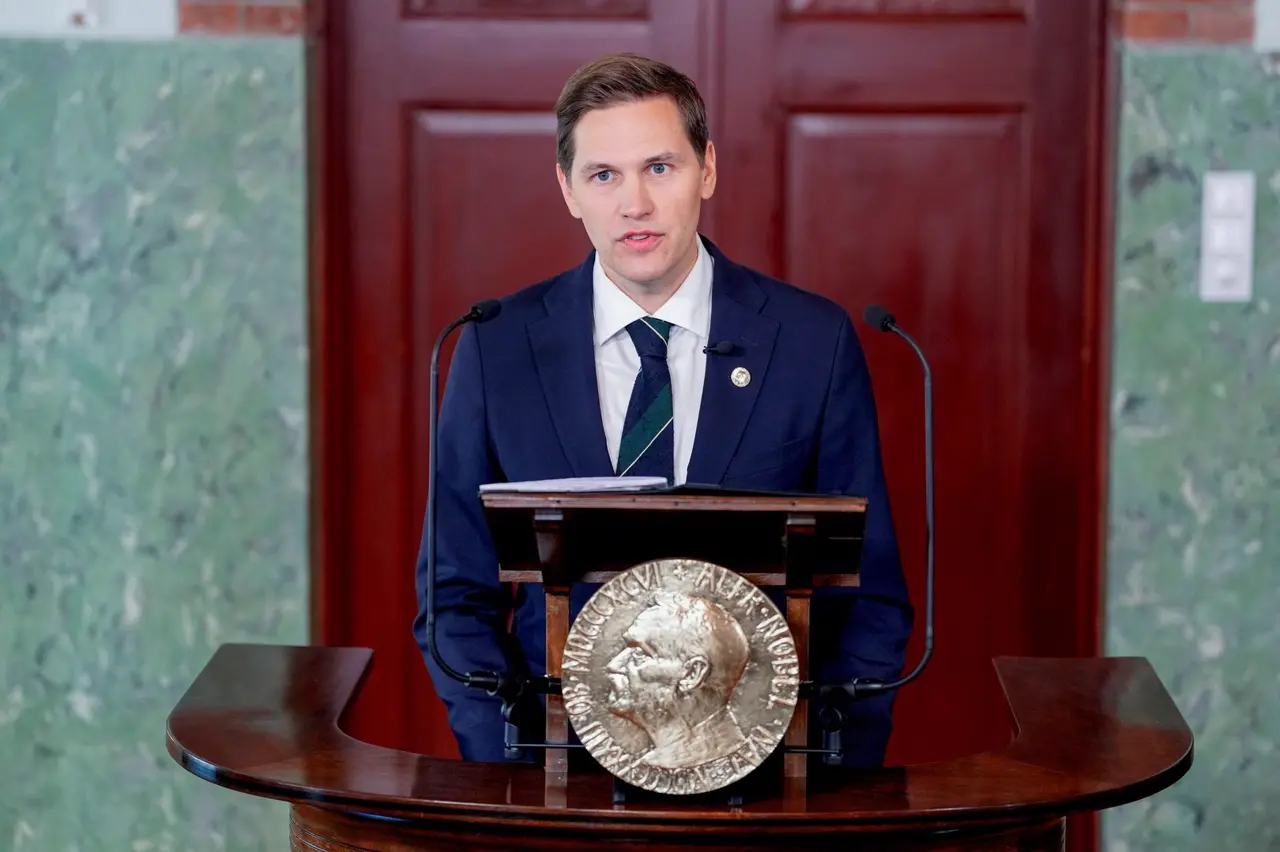
Making the announcement in Oslo, Norway, Jørgen Watne Frydnes, chair of the Norwegian Nobel Committee, said Pillay’s work “is a source of hope and inspiration to all those who seek to bring about a more peaceful world”.
Her win is expected to be seen as a high-profile rebuke to US president Donald Trump and Israeli prime minister Benjamin Netanyahu, both of whom have rejected the findings of a UN commission she led that Israel committed genocide in Gaza. Both leaders also have been highly critical of the institutions where Pillay has worked.
While her work has been global in scope, criticism often has been fiercely local, notably in places like Israel and in apartheid-era South Africa, as she and peers took on some of the world’s most painful and sensitive legal issues and most vulnerable populations.
 open image in gallery
Pillay, 85, received the news while attending the Nuremberg Forum, a gathering to discuss international law in Nuremberg, Germany, the location of the trials of Nazi war criminals that helped lay the foundations of international law.
“Firstly, at this venue, your applause means a great deal to me,” she said to a standing ovation.
“You know, you don’t want to receive an award, prize or anything unless the public agrees that you deserve this.”
And joking, she added: “But being a lawyer and a judge, I still want to verify this information.”
Born in Durban, in South Africa’s Natal province, Pillay served as UN High Commissioner for Human Rights from 2008 to 2014.
In 1967, she became the first woman to start a law practice in Natal and the first non-white woman to serve on South Africa’s High Court.
She is the fifth South African national to win the Nobel Peace Prize, after Nelson Mandela and FW de Klerk, Archbishop Desmond Tutu and Albert Luthuli.
She chaired an investigation that determined Israel committed genocide in Gaza
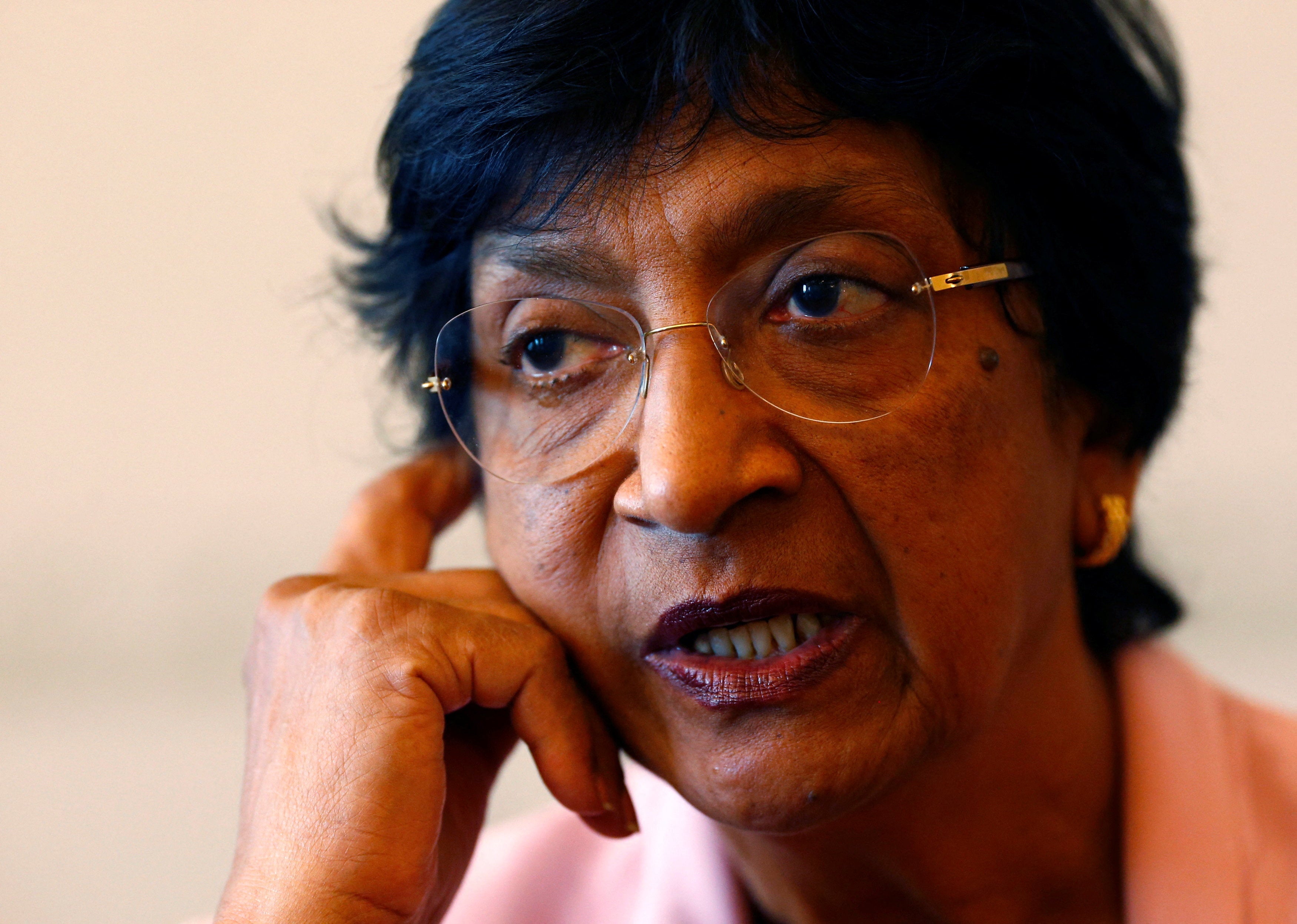
Pillay chaired the Commission of Inquiry on the Occupied Palestinian Territory and Israel, which was created by the UN-backed Human Rights Council.
The commission a year ago concluded Israel was responsible for genocide in Gaza with a specific intent to destroy Palestinians in Gaza.
The commission also found that the Israeli president, prime minister and former defence minister “have incited the commission of genocide.” Israel, which has refused to cooperate with the commission since it was established in 2021, has strenuously denied the charges.
 open image in gallery
Pillay has repeatedly rejected accusations from critics who accused her of antisemitism or allegedly turning a blind eye to the Hamas attacks in Israel.
In an interview last year, she recalled how she worked closely with some Jewish lawyers in the fight against apartheid in her native South Africa and was invited to Israel as the UN rights chief from 2008 to 2014.
Pillay’s win brings renewed attention to US President Donald Trump’s ongoing feud with the International Criminal Court. The Trump administration has already sanctioned 13 of the ICC’s staff members, among them key prosecutors and nine judges, including the court’s Japanese President Tomoko Akane.
US Secretary of State Marco Rubio has launched what he called a “sweeping campaign to dismantle the threat posed by the International Criminal Court.”
More about
Nobel Peace PrizeInternational Court of JusticeOsloDonald TrumpGazaUNIsrael
Join our commenting forum
Join thought-provoking conversations, follow other Independent readers and see their replies
Most popular
Popular videos
Bulletin
Read next
Fonte: – World RSS Feed