Holocaust survivors’ heirs sue California museums for return of Nazi-looted art
Por Deepa Bharath — – World RSS Feed
Holocaust survivors’ heirs sue California museums for return of Nazi-looted art
‘It’s our honor to take on this role on behalf of the community and use most of the proceeds to help these elderly survivors’
Deepa Bharath Saturday 19 September 2026 18:10 BST
- Bookmark
- Comments Go to comments
Bookmark popover
Removed from bookmarks
Close popover
Your support helps us to tell the story
Read more Support Now
From reproductive rights to climate change to Big Tech, The Independent is on the ground when the story is developing. Whether it’s investigating the financials of Elon Musk’s pro-Trump PAC or producing our latest documentary, ‘The A Word’, which shines a light on the American women fighting for reproductive rights, we know how important it is to parse out the facts from the messaging.
At such a critical moment in US history, we need reporters on the ground. Your donation allows us to keep sending journalists to speak to both sides of the story.
The Independent is trusted by Americans across the entire political spectrum. And unlike many other quality news outlets, we choose not to lock Americans out of our reporting and analysis with paywalls. We believe quality journalism should be available to everyone, paid for by those who can afford it.
Your support makes all the difference. Read more
Two legal actions have been initiated in California by representatives and heirs of Jewish Holocaust victims seeking the recovery of paintings seized by Nazis that currently reside in renowned institutions in Auschwitz and Los Angeles.
These filings mark the first legal challenges mounted following fresh state and federal legislation designed to bolster claims in the U.S. regarding cultural property taken from Jewish families during World War II.
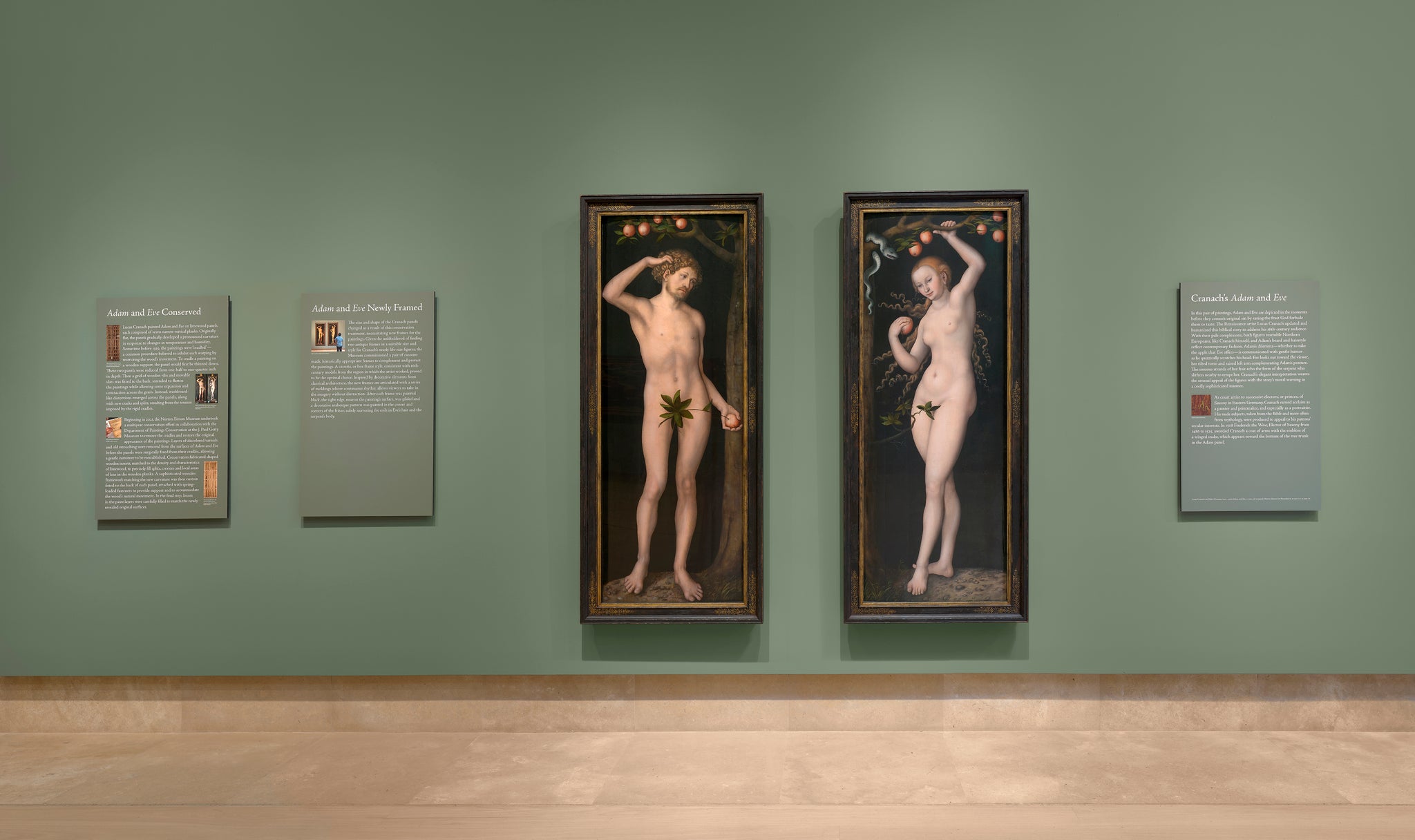
Filed on Monday in Los Angeles Superior Court, one action brought by the Jewish Federation of Greater Los Angeles alongside its board chair Daniel Gryczman targets the Norton Simon Museum in Pasadena, demanding the return of “Adam and Eve,” a pair of 1530 life-size panel paintings by Lucas Cranach the Elder.
A second action, submitted the same day in Los Angeles federal court by the daughters of late Holocaust survivor Dinah Gottliebova Babbitt, a California animator held at Auschwitz, demands the surrender of watercolor portraits.
The artist was coerced into creating these images of fellow captives for Josef Mengele, the Nazi doctor known as the “Angel of Death.”
Spokespersons representing the institutions state that the museums retain valid legal title to the paintings and plan to maintain public displays. Specific monetary valuations are not stated in the legal complaints.
Tensions over Nazi-confiscated artwork pit the descendants of Jewish families navigating generational trauma against cultural institutions seeking to preserve material evidence from a dark historical period.
The Nazi regime carried out history’s largest plunder between 1933 and 1945, stripping Jewish owners, collectors, and public institutions across Europe of more than 600,000 artistic items.
Decades later, numerous creations remain hanging in international institutions, complicating restitution efforts far beyond basic ownership disputes.
Marei von Saher, sole heir to Dutch Jewish art dealer Jacques Goudstikker, assigned her legal rights to the Jewish Federation of Los Angeles, led by president and CEO Rabbi Noah Farkas.
The pair of panel works had been taken from Goudstikker’s holdings by Hermann Goring, Adolf Hitler’s second-in-command, before passing through several hands and ultimately being purchased in the 1960s by the Pasadena Museum of Modern Art, later renamed the Norton Simon Museum after its major benefactor.
Farkas stated that the federation intends to direct most net financial recoveries toward providing crucial assistance to approximately 2,500 Holocaust survivors residing throughout the Los Angeles region.
“These are incredibly beautiful European masterpieces stolen from a Jewish family to enrich the Nazi party and fund the war and death machine against the people,” Farkas noted.
“It’s our honor to take on this role on behalf of the community and use most of the proceeds to help these elderly survivors live out the last years of their lives in dignity, comfort and peace – something their family members were denied during the Holocaust.”
In a statement, Marei von Saher expressed appreciation to the organization for championing her family’s legal battle.
“This effort represents a meaningful step toward justice for Holocaust survivors and victims of Nazi era atrocities,” she stated.
California Assemblyman Jesse Gabriel, D-Woodland Hills, drafted Assembly Bill 2867, which Gov. Gavin Newsom signed in September 2024.
The measure mandates the application of state law in cases brought by state residents or heirs attempting to reclaim art taken during the Holocaust or other persecutions.
Gabriel, co-chair of the California Legislative Jewish Caucus, authored the bill following a federal ruling allowing Madrid’s state-owned Thyssen-Bornemisza National Museum to retain a valuable impressionist work by Camille Pissarro.
That artwork had been confiscated from the Cassirer family by Nazi authorities in 1939. The lawsuit that catalyzed the statutory revision is scheduled for a federal court hearing in California next month.
Gabriel remarked that public institutions should “do some deep introspection on whether they want to be on the right side of history.”
Responding to the suit, the Norton Simon Museum issued a statement highlighting a 2018 federal court ruling that unanimously confirmed the institution’s legal ownership of the Cranach works.
The U.S. Supreme Court declined to review lower court decisions in May 2019.
According to the museum, the Cranach panels originally belonged to the Stroganoff family before being offered at an unauthorized 1931 Soviet sale in Berlin, where Goudstikker acquired them.
Following a complex chain of ownership, a Stroganoff descendant sold the works to the institution, which subsequently preserved and restored them.
“For nearly 50 years, they have been on view at the Norton Simon Museum and will continue to be accessible to the public for years to come,” the museum stated.
Pawel Sawicki, representing the Auschwitz Memorial, asserted that the watercolors depicting Roma captives—painted under coercion by Gottliebova Babbitt to document Mengele’s illicit medical experiments and racial studies— “must remain in the Memorial” as evidence of atrocities.
He argued they should not be categorized as “Nazi-looted art” because the artist created them under duress as an inmate without technical legal ownership.
While acknowledging the family’s deep connection, Sawicki emphasized that the portraits of Roma and Sinti victims are rare surviving records of Mengele’s horrific experiments and must be safeguarded as historical artifacts specific to Auschwitz.
“While fully respecting the rights of people who created some of the documents here, we are of the opinion that any loss in the collections of the Memorial will constitute irreparable harm,” Sawicki said. ” … The loss of even the smallest part of the documentation is an irreparable loss and blemish on the memory of the victims of Auschwitz.”
Joel Greenberg, founder of Philadelphia-area non-profit Art Ashes, which assists Jewish families in tracking Nazi-stolen property, noted that beyond California’s statute, President Donald Trump enacted and refreshed the Holocaust Expropriated Art Recovery Act of 2025. This legislation permanently eliminated statute-of-limitations deadlines, enabling survivors and heirs to pursue art recovery indefinitely.
Greenberg explained that the federal update allows families up to six years to pursue legal recovery from the point they identify the current possessor of their property.
“These new laws mean that technical defenses will no longer stick in court,” he said. “Every case will be heard on its merits.”
He added that the revised legal framework guarantees Jewish families procedural fairness and an opportunity to present ownership claims in court.
“It will make sure the stories of what happened to European Jewry is not lost and forgotten,” Greenberg remarked. “The art can still be returned to the rightful owner.”
More about
NazisCaliforniaAuschwitzStolenJosef Mengele
Join our commenting forum
Join thought-provoking conversations, follow other Independent readers and see their replies
Most popular
Popular videos
Bulletin
Read next
Fonte: – World RSS Feed