‘FAA Should Not Use My Constituents as Guinea Pigs’: House Democrat Demands End of AI Air Traffic Control
Por Brett Wilkins — Common Dreams
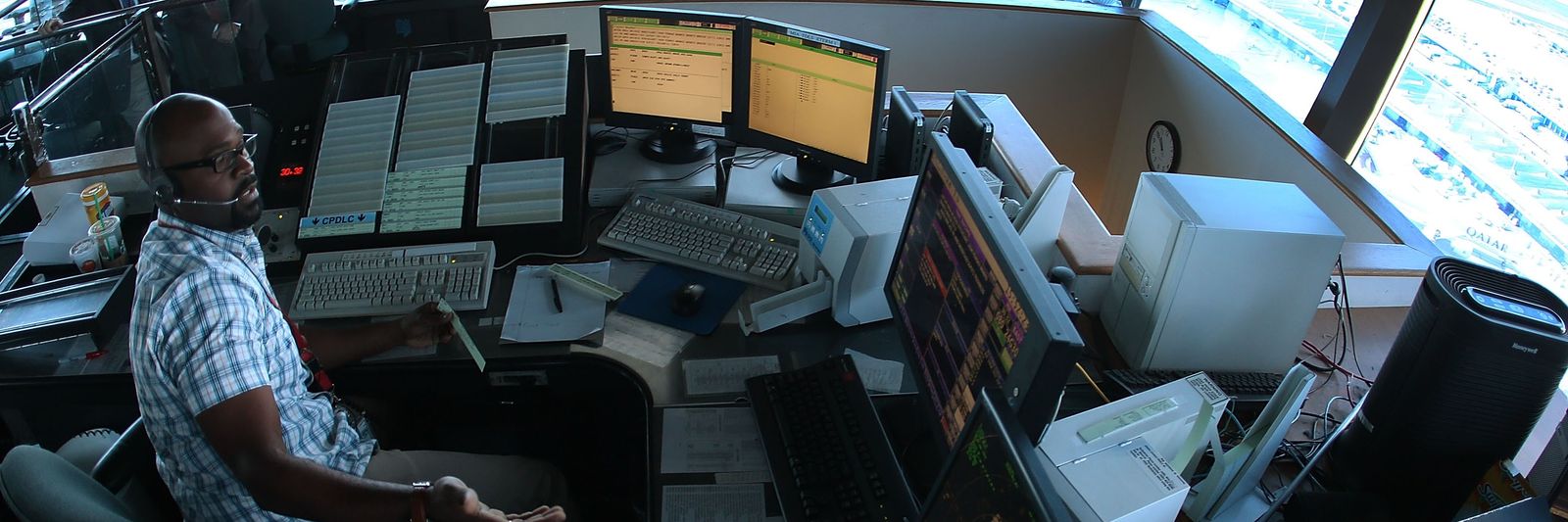
A Democratic US congressman on Monday urged the Federal Aviation Administration to immediately suspend a new artificial intelligence system being used to help manage air traffic around Washington, DC, accusing the agency of using passengers as “guinea pigs” without adequately vetting the new technology.
The Strategic Management of Airspace, Routes, and Trajectories (SMART) system, developed by AI firm Air Space Intelligence under an $875 million contract, began limited operations Monday at Ronald Reagan Washington National Airport, Washington Dulles International Airport, and Baltimore-Washington International Thurgood Marshall Airport.
The Federal Aviation Administration (FAA) says the system uses AI to synthesize roughly 200 data streams—including weather, flight paths, airline schedules, airport capacity, and controller staffing—to anticipate congestion and recommend ways to avert delays and cancellations.
The FAA claims that use of SMART will result in fewer flight delays and cancellations, optimized airspace, more predictable operations, and lower airfare costs for consumers.
“To really improve the flying experience for the American people, we needed to build a 21st century scheduling tool like SMART,” US Transportation Secretary Sean Duffy said in a statement. “By fundamentally reshaping how we manage our airspace and preventing problems before they happen, SMART will slash those frustrating delays, reduce stress on air traffic controllers, and lower travel prices.”
“It’s always going to be a human that manages the airspace in America,” Duffy promised. “Humans control the airspace, humans make decisions.”
The industry trade group Airlines for America called SMART “exciting and bold,” while United Airlines CEO Scott Kirby told The Washington Post that “if it works as we think it can, it will do more to reduce delays and cancellations than anything that’s happened in decades.”
However, Congressman Don Beyer (D-Va.)—whose district includes Reagan National Airport—said in a statement that “the FAA should not use my constituents as guinea pigs for an unproven AI air traffic control system.”
“The safety of the 24 million people traveling through DCA each year must be the top priority,” he added, referring to the International Air Transport Association code for Reagan National Airport.
The FAA should not use my constituents as guinea pigs for an unproven AI air traffic control system that has Americans’ lives in its hands.I’m calling on the FAA to immediately suspend use of this AI system at Washington area airports until its safety has been established.My full statement:
[image or embed]
— Congressman Don Beyer (@beyer.house.gov) September 21, 2026 at 1:25 PM
A National Transportation Safety Board investigation concluded that the January 2025 midair collision between a US Army Blackhawk helicopter and an American Airlines regional jet, operated by PSA Airlines—which killed 67 people—was caused by a chain of human errors.
“Residents of this region are still uncertain about air safety after last year’s fatal accident, and the administration did shockingly little to educate the traveling public about this development before implementing it in one of the most complex airspaces in the world,” Beyer said.
The congressman continued:
Unfortunately, I was informed today that air traffic controllers were not consulted on the SMART system’s design and development, and were not trained on using it prior to the system’s adoption at local airports. I was further informed that the air traffic controllers have been told the SMART system can adjust schedules and potentially even routes. Despite outward appearances, the airlines reportedly were privately “panicking” about the hasty implementation of this system. I do not know why the administration felt the need to race it into use, but it is unacceptable to use AI as a substitute for rebuilding the human-directed air traffic controller workforce.
“Dangerously rushing a system that holds Americans’ lives in its hands is not a good use case for artificial intelligence,” Beyer asserted. “I call on the FAA to immediately suspend its operation, at the very least until it is clearly established beyond doubt via air traffic controller feedback and independently verified stress testing that the technology is safe.”
Duffy responded to Beyer’s concerns in an interview with Fox News’ Brian Kilmeade, saying: “I like Don [but] this is just complete stupidity. The problem with this analysis is our new software is predictive, so we can predict weather and make better decisions on when we fly and weather.”
Beyer isn’t the only lawmaker voicing concerns over the use of SMART. Congresswoman Pramila Jayapal (D-Wash.) said Monday that “safety must always be the FAA’s number one priority. This is extremely concerning, and we need immediate answers about what this means for travelers.”
The National Air Traffic Controllers Association (NATCA) said that it was not involved in the SMART rollout.
“NATCA has not been involved in the design, testing, or implementation of SMART and therefore cannot speak to its effect on the air traffic control workforce at this time,” the union said, adding that any new technology “should complement and not replace the experience, training, and professional judgment of air traffic controllers who are responsible for the safety of the National Airspace System.”
The FAA’s launch of SMART comes as the agency continues to suffer from a shortage of certified air traffic controllers. The Washington Post reported that the FAA had about 11,000 certified controllers as of April, more than 1,500 short of its official target of 12,563.
Fonte: Common Dreams