Experts predict El Nino’s impact on US weather as new forecast is issued
Por Brittney Donovan — – World RSS Feed
Experts predict El Nino’s impact on US weather as new forecast is issued
Concerns surrounding El Niño have heightened global food market supply fears, pushing up staple prices including vegetable oils and sugar
Brittney Donovan Thursday 10 September 2026 16:16 BST
- Bookmark
Bookmark popover
Removed from bookmarks
Close popover
Your support helps us to tell the story
Read more Support Now
From reproductive rights to climate change to Big Tech, The Independent is on the ground when the story is developing. Whether it’s investigating the financials of Elon Musk’s pro-Trump PAC or producing our latest documentary, ‘The A Word’, which shines a light on the American women fighting for reproductive rights, we know how important it is to parse out the facts from the messaging.
At such a critical moment in US history, we need reporters on the ground. Your donation allows us to keep sending journalists to speak to both sides of the story.
The Independent is trusted by Americans across the entire political spectrum. And unlike many other quality news outlets, we choose not to lock Americans out of our reporting and analysis with paywalls. We believe quality journalism should be available to everyone, paid for by those who can afford it.
Your support makes all the difference. Read more
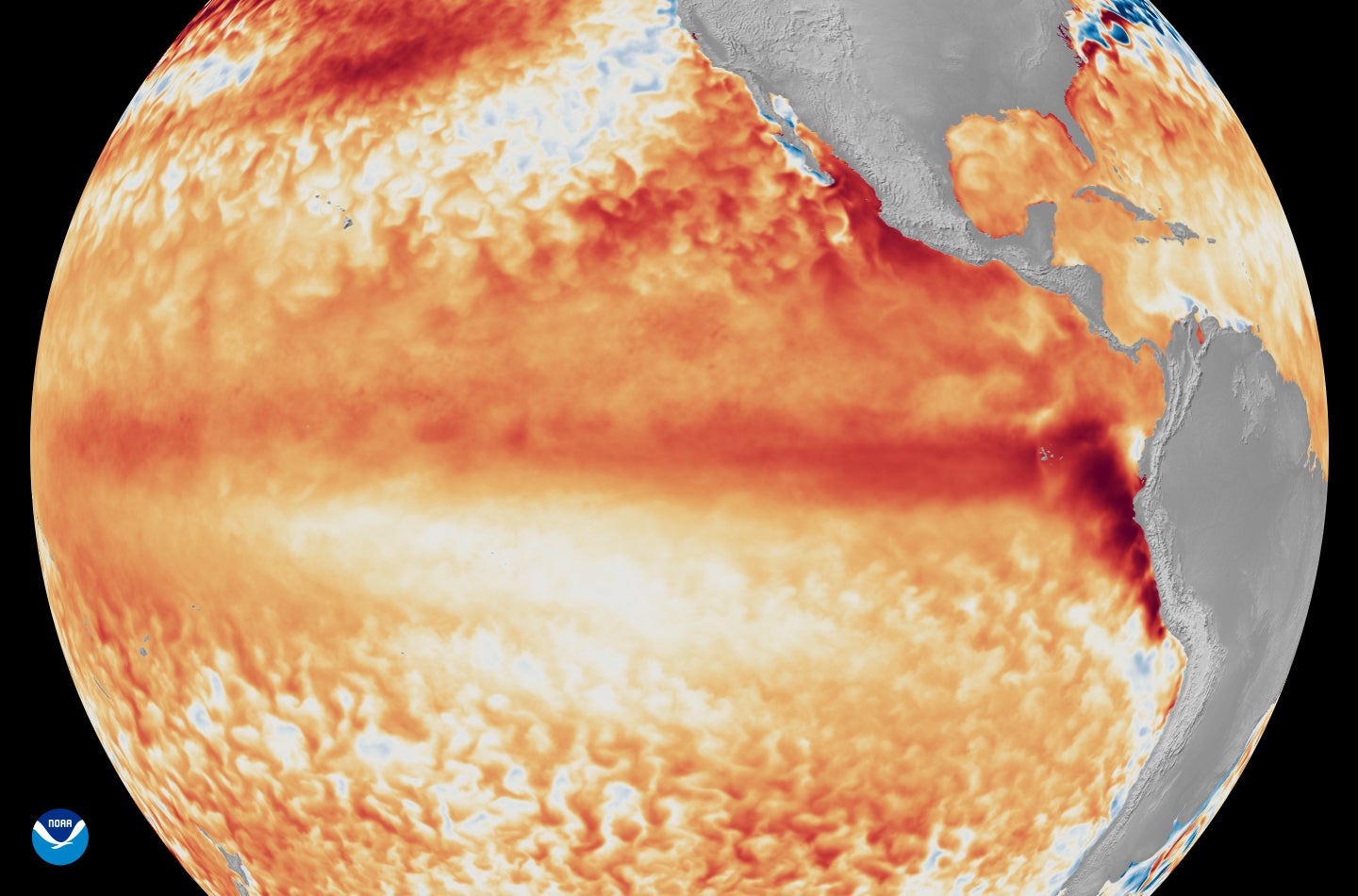
El Niño is strengthening and there’s a greater than 90% chance of a very strong event during the Northern Hemisphere fall and winter 2026-27, the U.S. Climate Prediction Center said Thursday.
“During the October-December 2026 season, there is a 75% chance of a historic event that would exceed the strength of previous El Niño events dating back to 1950,” forecasters wrote. “With an event of this magnitude, the chances of experiencing impacts consistent with El Niño are larger, though not guaranteed. In summary, El Niño is strengthening, with a greater than 90% chance of a very strong event during the Northern Hemisphere fall and winter 2026-27.”
El Niño naturally occurs when weakening trade winds build up warmer ocean waters in the central and eastern equatorial Pacific. The phenomenon generally raises global temperatures and alters weather patterns, causing droughts in some regions and heavy rainfall in others.
“The current El Nino is strong and will continue to strengthen over the coming months and has to be the strongest El Nino on record,” said Jason Nicholls, lead international forecaster at AccuWeather.
Drought linked to El Niño has ruined bean and corn crops across Central America’s Dry Corridor, deepening food and water insecurity for rural households, Oxfam reported.
“We are currently seeing drier conditions across Central America, and that should continue for the next few months while we are in the El Nino influence,” said Donald Keeney, agricultural meteorologist at Vaisala Weather in Finland.
Concerns surrounding El Niño have heightened global food market supply fears, pushing up staple prices including vegetable oils and sugar, according to the UN Food and Agriculture Organization.
“We do expect some additional warming over the next month or so before a slow decline later this winter and spring,” Keeney added.
“This should equate to increased rain later this fall and over the winter across the central and southern Plains, Delta, and Southeast, and should result in a better year for winter wheat production in the central and southern Plains.”
Usual impacts of El Nino can include:
- Stronger upper-level winds that tend to suppress storm and hurricane development in the Atlantic Basin, while weaker winds tend to enhance tropical development in the eastern and central Pacific basins.
- Stormier weather is more likely in the Southern U.S., with chances of both rain and snow increased during El Nino winters.
- High tide flooding could become a higher risk in parts of the U.S., especially on the West Coast.
- Changes in the migration of fish and other oceanic organisms, with warm water species moving north while cold water species move farther north or into deeper waters. These behavioral changes impact growth, survival, and reproduction.
- Past El Nino episodes have also enhanced the formation of harmful algal blooms along the U.S West Coast.
More about
Most popular
Popular videos
Bulletin
Read next
Fonte: – World RSS Feed