Black robin which was once world’s rarest bird wins NZ’s prestigious Bird of the Year
Por Anna Loren — – World RSS Feed
Black robin which was once world’s rarest bird wins NZ’s prestigious Bird of the Year
There were once only five black robins in the world, including just one breeding pair
Anna Loren Tuesday 22 September 2026 13:05 BST
- Bookmark
- Comments Go to comments
Bookmark popover
Removed from bookmarks
Close popover
Your support helps us to tell the story
Read more Support Now
From reproductive rights to climate change to Big Tech, The Independent is on the ground when the story is developing. Whether it’s investigating the financials of Elon Musk’s pro-Trump PAC or producing our latest documentary, ‘The A Word’, which shines a light on the American women fighting for reproductive rights, we know how important it is to parse out the facts from the messaging.
At such a critical moment in US history, we need reporters on the ground. Your donation allows us to keep sending journalists to speak to both sides of the story.
The Independent is trusted by Americans across the entire political spectrum. And unlike many other quality news outlets, we choose not to lock Americans out of our reporting and analysis with paywalls. We believe quality journalism should be available to everyone, paid for by those who can afford it.
Your support makes all the difference. Read more
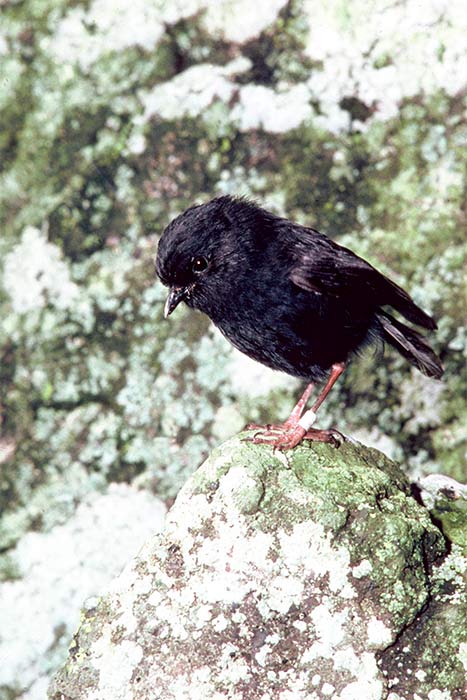
A tiny bird that was once the world’s rarest has been named New Zealand’s bird of the year.
The black robin, or Chatham Island robin, won the coveted competition – which rose to international prominence thanks to British-American comedian John Oliver – with more than 25,000 votes.
The little birds, which are found only on the Chatham Islands, about 400 miles east of New Zealand’s South Island, were once at grave risk of extinction.
Their population numbered just five in the 1970s due to habitat loss and introduced pests. Of those, there was one single breeding pair: female Old Blue and male Old Yellow.
A pioneering breeding programme, using other species to foster the robins’ eggs, saw the birds battle back from the brink of extinction.
 open image in gallery
Today there are about 350 adult black robins – all descended from Old Blue and Old Yellow.
However, they are still in serious trouble and are classified as nationally critical.
The little birds, known as kakaruia in Māori and karure in Moriori, the indigenous language of the Chathams, live on two pest-free nature reserves.
However, those habitats are nearly at capacity, and a third pest-free island is needed, with Pitt Island/Rangiauria – the Chathams’ second-largest island – being eyed as a possibility.
The black robin is a distinct species from overseas robins, including the European robin found widely in the UK.
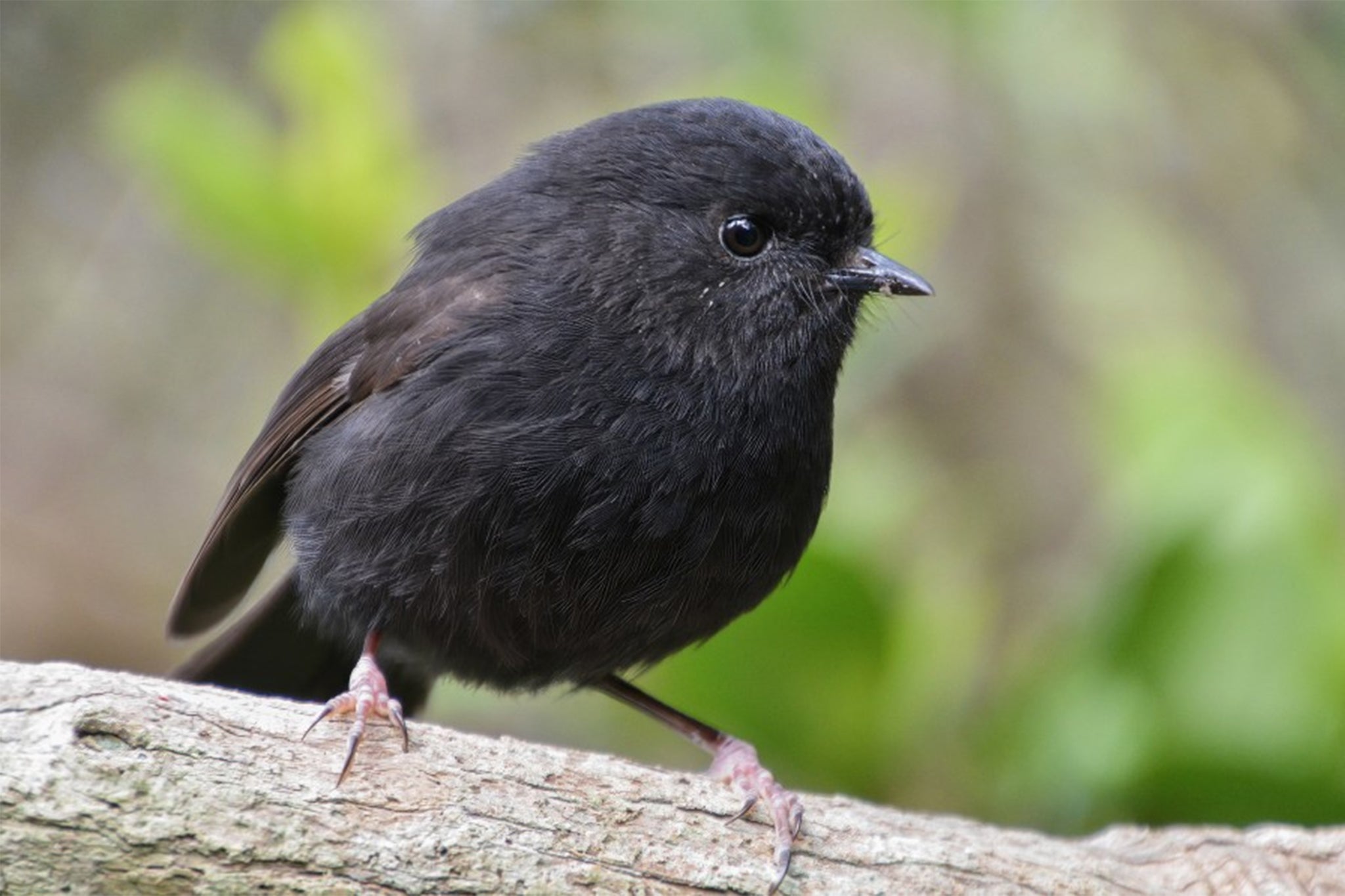
They are known as the ‘goth’ of the bird world due to their black feathers, eyes, and beak.
 open image in gallery
A record 105,000 people cast their votes for the Bird of the Year competition, which is run by the conservation group Forest & Bird.
“In particular, New Zealanders have really shown up for nature,” Rebecca Hatch, Forest & Bird’s group manager of growing support, said.
“Roughly one in every 50 Kiwis voted in Bird of the Year 2026.”
The kākāpō, the world’s only flightless parrot, came second with 19,445 votes, while the kārearea or New Zealand falcon came third with 17,423, fresh off the heels of a win in 2025.
Bird of the Year has been plagued by scandal in recent years. There were claims that Australians tried to rig the contest in 2018 and allegations of Russian interference in 2019, while in 2021, the long-tailed bat was crowned the winner, upsetting some twitchers.
In 2023, John Oliver threw his support behind the threatened pūteketeke or great crested glebe, leading to a swell of international support and the bird being crowned Bird of the Century.
More about
MaoriNew ZealandBirdsJohn Oliver
Join our commenting forum
Join thought-provoking conversations, follow other Independent readers and see their replies
Most popular
Popular videos
Bulletin
Read next
Fonte: – World RSS Feed

