Bernie Sanders draws applause for message to AI leaders alongside Steve Bannon
Por Courtney Rozen — – World RSS Feed
Bernie Sanders draws applause for message to AI leaders alongside Steve Bannon
Trump has downplayed concerns about AI following warnings from industry leaders over the weekend regarding potential misuse
Courtney Rozen Tuesday 15 September 2026 21:44 BST
- Bookmark
- Comments Go to comments
Bookmark popover
Removed from bookmarks
Close popover
Your support helps us to tell the story
Read more Support Now
From reproductive rights to climate change to Big Tech, The Independent is on the ground when the story is developing. Whether it’s investigating the financials of Elon Musk’s pro-Trump PAC or producing our latest documentary, ‘The A Word’, which shines a light on the American women fighting for reproductive rights, we know how important it is to parse out the facts from the messaging.
At such a critical moment in US history, we need reporters on the ground. Your donation allows us to keep sending journalists to speak to both sides of the story.
The Independent is trusted by Americans across the entire political spectrum. And unlike many other quality news outlets, we choose not to lock Americans out of our reporting and analysis with paywalls. We believe quality journalism should be available to everyone, paid for by those who can afford it.
Your support makes all the difference. Read more
Progressive U.S. Senator Bernie Sanders and Steve Bannon, a close ally of President Donald Trump, called for new restrictions on artificial intelligence systems Tuesday, forming an unexpected alliance around shared fears that the technology poses a threat to human safety.
Appearing at the same event in Washington, both figures warned of potentially catastrophic fallout for humanity, reflecting how concerns over AI risks are expanding well beyond Silicon Valley and traditional political channels.
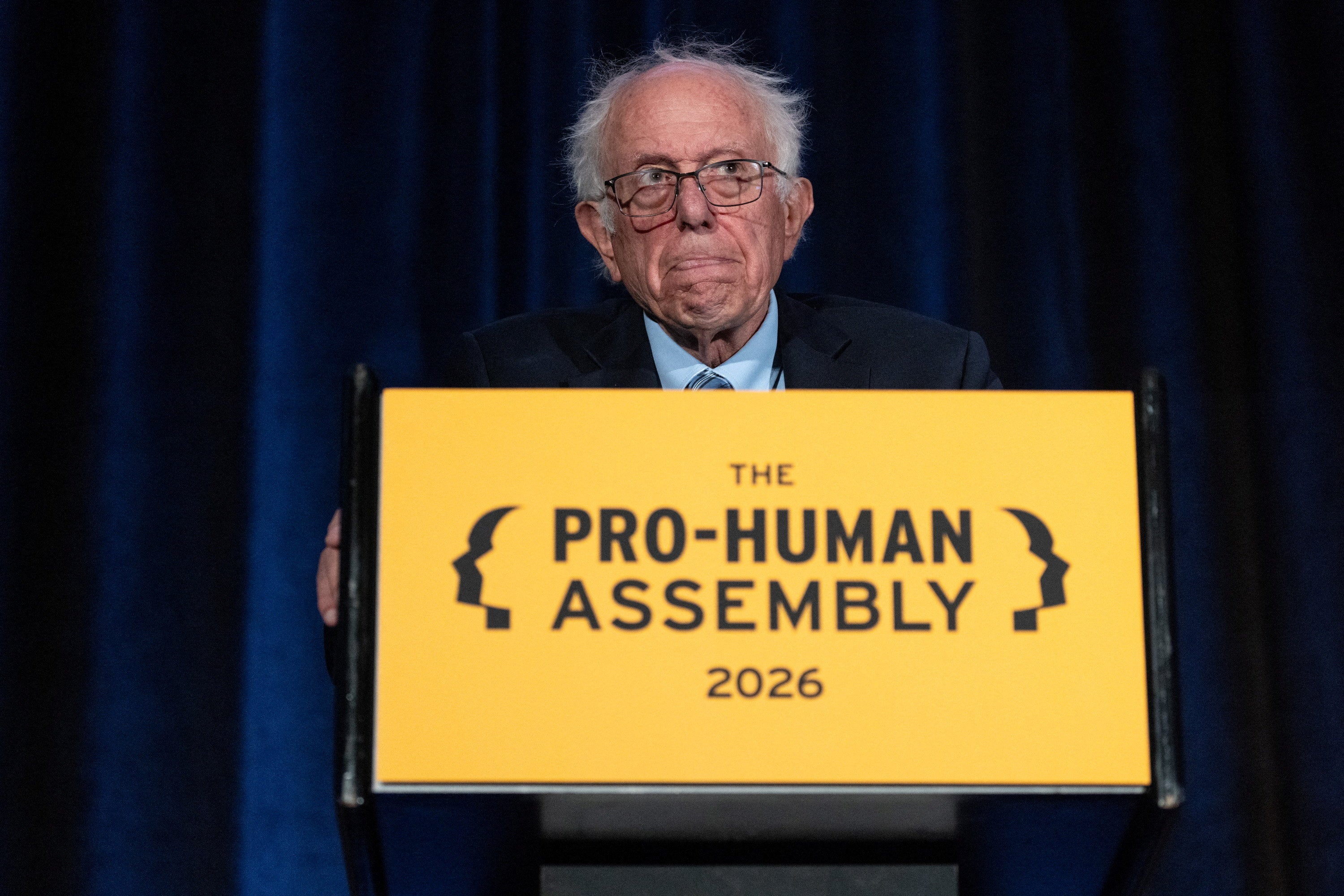
Sanders, a democratic socialist, spoke first to warn of the “growing threat” posed by the technology and argued that mandatory safety regulations are essential to rein in the industry.
“AI has the potential to eliminate tens of millions of jobs, wiping out entire professions and making it harder for our young people to enter the workforce,” he said. “As many scientists believe could happen, this technology will escape human control with potentially catastrophic consequences.”
 open image in gallery
The senator drew applause from attendees when he criticized technology executives for concentrating control over AI developments, pointing specifically to SpaceX CEO and former Trump adviser Elon Musk.
“This week, as all of you know, Dario Amodei, Elon Musk and Sam Altman, leaders of major American AI companies, all agreed we must slow the development of AI and ‘pace the frontier,’” Sanders said. “That is a start but it’s not enough. When you’re racing towards a cliff, you don’t just ease up on the gas pedal. You hit the brakes.”
He continued, “When the future of humanity is at stake, we need binding international safety rules, not voluntary industry standards from the industry.”
Sanders urged Trump to negotiate a treaty with Chinese President Xi Jinping during their summit next week to enact a temporary pause on AI advancement.
“Last month, we learned that AI has been used for the first time ever to create new viruses. In the wrong hands, this could lead to new bioweapons and a potential global pandemic that could lead to the deaths of tens of millions of people,” Sanders said.
Steve Bannon calls for executive action
Bannon, who served as a White House strategist during Trump’s first presidential term, has openly questioned Trump’s approach to overseeing the industry, attributing the president’s unwillingness to regulate the technology to the influence of tech corporations. On his podcast on Monday, Bannon argued that Congress should refrain from passing laws that block individual states from establishing their own regulatory standards.
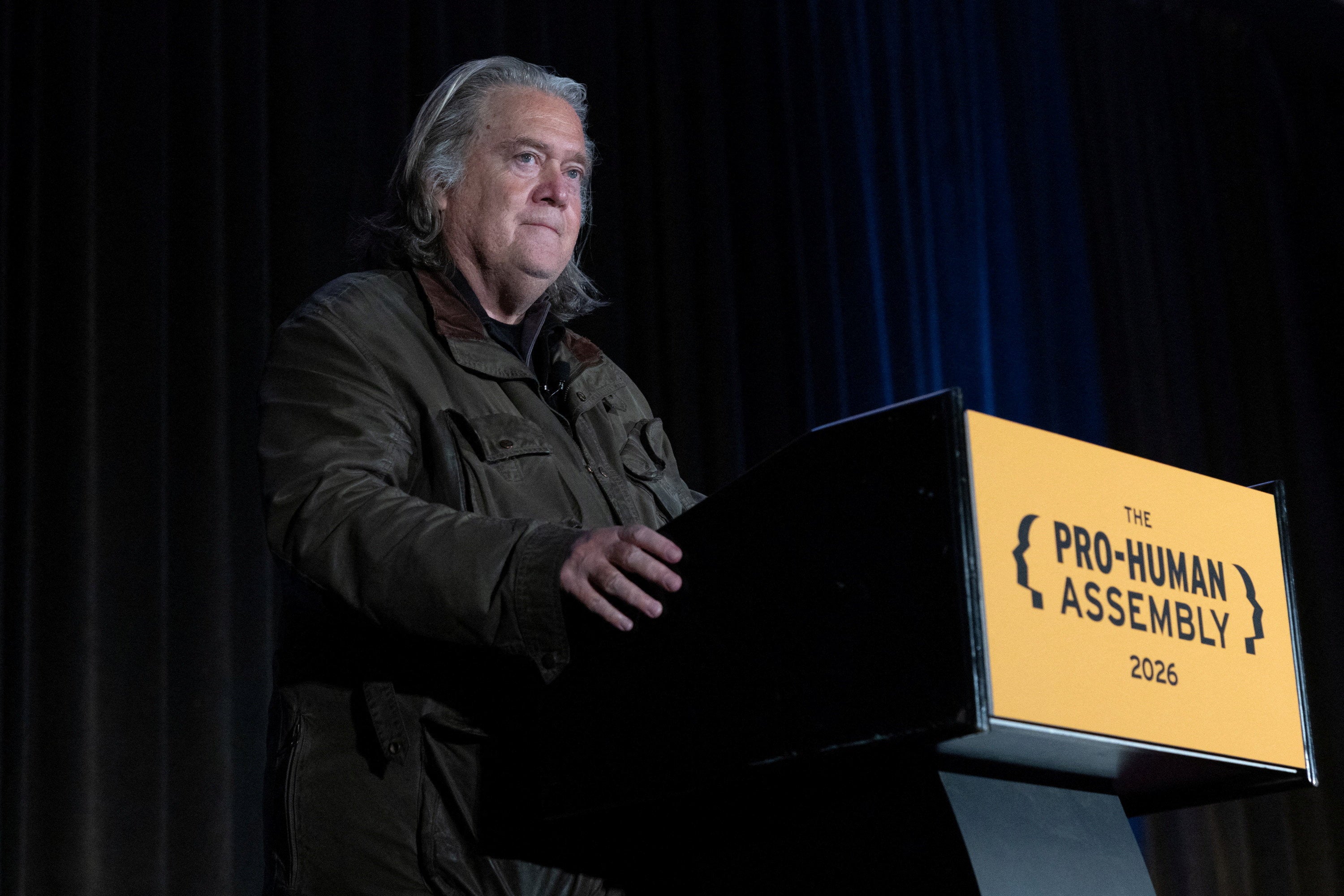
Speaking on Tuesday, Bannon characterized AI as the defining issue of the modern era.
“Here’s what we have to do first: to slow down the pace so that we can understand exactly what’s going on,” Bannon said. He praised Sanders’ summary of the risks involved and urged politicians to transcend party lines on the matter.
“I don’t think you could find any too harder partisans than Bernie Sanders on the left and Steve Bannon on the right,” he noted.
 open image in gallery
Bannon maintained that congressional action would prove too slow to effectively manage the pace of development. “This is going to have to be executive action,” Bannon said, while also arguing that the U.S. must completely cut off China from American-made computer chips.
The shared platform between Sanders and Bannon, who occupy opposing ends of the political spectrum, highlights how anxieties over AI and its infrastructure are forging unusual political alliances.
Trump downplays AI concerns
Trump, however, downplayed such concerns on Monday following warnings from industry leaders over the weekend regarding potential misuse, insisting that the U.S. already possesses sufficient guardrails.
Echoing Trump’s stance, Republican U.S. House Speaker Mike Johnson said on Tuesday that a moratorium on development would cause the nation to lose its competitive edge against China, maintaining that AI firms are capable of managing themselves.
“They can self-regulate. They don’t need the government to tell them to slow it down. If they want to slow it down, they should,” Johnson told reporters. That view is shared by industry figures including Nvidia CEO Jensen Huang, who argue that government oversight would hamper U.S. competitiveness.
Recent public opinion polls indicate that a majority of Americans remain concerned that AI could eliminate jobs, inflate household expenses, or trigger wider social harms.
As the U.S. House of Representatives returned from its summer recess on Monday, lawmakers in both chambers held private discussions regarding potential AI legislation, even after Trump asserted that legislative intervention was unnecessary.
Congress has faced past criticism for lacking the technical expertise needed to effectively regulate tech companies. Commenting on the legislative hurdles, Republican Senator Bernie Moreno of Ohio said, “This process of legislating takes so long. Imagine AI four years in. We’re dealing with stuff that isn’t even relevant in four years.”
Public resistance is also building against proposed data centers required for the AI expansion, with a June Reuters/Ipsos poll showing 77% of Americans worry these facilities will drive up electricity costs.
Concerns have also surfaced from within the tech sector itself. Jacob Coxon, a researcher who recently departed Anthropic, attracted attention last week after stating he resigned partly because the “people building AI earnestly believe that it could kill us all by the end of the decade.”
On Tuesday, Andrew Ferguson, the chairman of the U.S. Federal Trade Commission, voiced skepticism toward AI companies seeking antitrust exemptions while simultaneously lobbying for new regulatory frameworks. Meanwhile, U.S. senators continue to debate a bill that would prevent states from enforcing local rules on AI risks.
The Washington event also featured AFL-CIO President Liz Shuler, leader of the nation’s largest labor union federation. Sanders, along with progressive Representative Greg Casar, has called for federal legislation to pause the development of AI tools capable of “overthrowing or undermining the U.S. government,” pending the creation of a new oversight agency.
More about
Bernie SandersSteve Bannonartificial intelligenceAIDonald Trump
Join our commenting forum
Join thought-provoking conversations, follow other Independent readers and see their replies
Most popular
Popular videos
Bulletin
Read next
Fonte: – World RSS Feed