As the last U.S. troops pack up in Iraq, militias signal their weapons will stay
The Hindu – International
You are logged in
Loading…
You don’t have any Active Subscription.
Subscribed with another email? Logout and Login with that one.
Your active subscription(s)
Account subscription benefits alongside Premium Stories, Editorials,
Opinions and more. Unlock these with Subscription
Products you’ve access to
Additional Subscription Benefits
Account Settings
Need help with your subscription?
September 15, 2026 e-Paper
The View From India
Looking at World Affairs from the Indian perspective.
First Day First Show
News and reviews from the world of cinema and streaming.
Today's Cache
Your download of the top 5 technology stories of the day.
Science For All
The weekly newsletter from science writers takes the jargon out of science and puts the fun in!
Data Point
Decoding the headlines with facts, figures, and numbers
THEdge
At the cutting edge of education and careers
Health Matters
Ramya Kannan writes to you on getting to good health, and staying there
Gender Agenda
Stories from beyond the binary.
The Hindu On Books
Books of the week, reviews, excerpts, new titles and features.
September 15, 2026 e-Paper
Published – September 15, 2026 01:03 pm IST – BAGHDAD
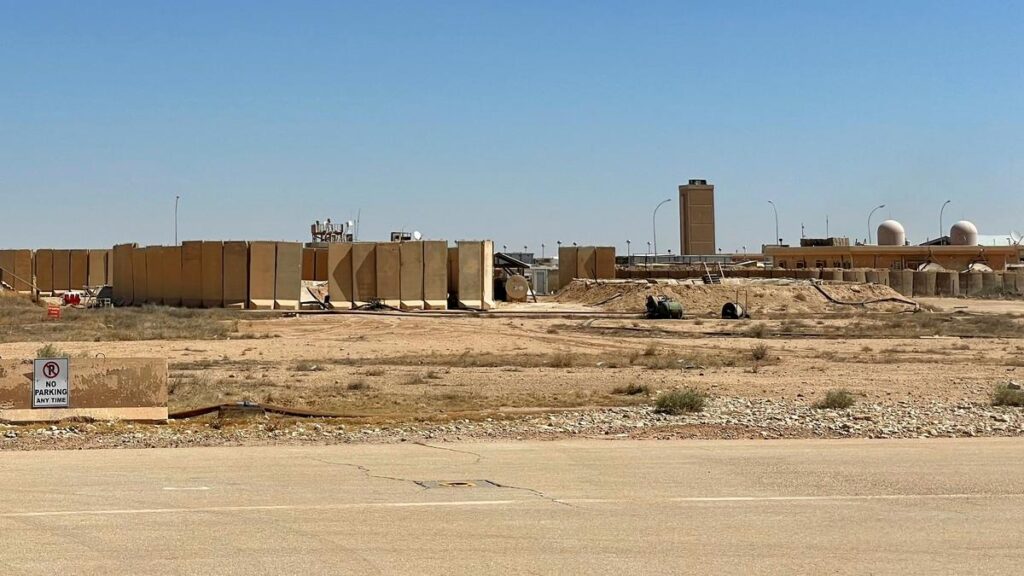
A file image of the Ain al-Assad air base hosting U.S. forces in Iraq in the western Anbar province.
| Photo Credit: AFP
Two deadlines are looming for Iraq at the end of the month: the end of a decades-long U.S. military presence and the disarmament of non-state armed groups.
The U.S. withdrawal is underway, and officials say the hundreds of troops remaining in northern Iraq will be out by the September 30 deadline.
The Iraqi government has linked the U.S. withdrawal to an ultimatum for militias to lay down their weapons. But most have indicated they have no plans to do so.
That leaves major questions about what the day after will look like in Iraq.
Iranian-backed Iraqi militias have struck U.S.-linked targets both inside and outside of Iraq since the U.S. and Israel attacked Iran on February 28. They also have coordinated with Yemen’s Houthi rebels to attack Saudi Arabia.
With the war between the U.S. and Iran raging, Tehran is unlikely to give up the leverage it has in neighbouring Iraq. U.S. officials are concerned about the militias' ability to continue carrying out attacks — but not enough to delay their withdrawal.
U.S. troops invaded Iraq in 2003 to topple Saddam Hussein. They departed in 2011, but three years later, Iraqi authorities invited a smaller U.S.-led mission to fight the Islamic State group, which had rampaged across Iraq, seizing large swaths of territory.
With the extremist group now reduced to scattered sleeper cells — a result of the intervention of Iran-backed militias as well as the U.S.-led coalition — Washington and Baghdad agreed in 2024 to wind the mission down.
U.S. troops pulled out of bases in most areas of Iraq last year but maintained a presence in the semiautonomous northern Kurdish region. Bases there have regularly come under attack since the U.S. and Israel launched their war against Iran.
A U.S. military official said the withdrawal would be completed by September 30, and the hundreds of troops still present in northern Iraq would mostly be redeployed to Jordan and other countries in the region. Military equipment, including air defence systems, will also be removed. He spoke on condition of anonymity because he was not authorised to comment publicly.
A “normal bilateral security cooperation” agreement could then be negotiated with the central government in Baghdad, he said, but it remains unclear what form that would take.
The official said that the counterterrorism base in Irbil had lost its importance for U.S. troops with the Islamic State threat receding.
During the war with Iran, northern Iraq for the most part did not serve as an “offensive platform,” but U.S. forces there were frequently targeted by Iran and Iran-backed Iraqi militias, so pulling troops out “will reduce our risk,” he said.
But the U.S. military remains concerned about the ability of the Iraqi militias to launch attacks on targets elsewhere in the region, including in Saudi Arabia, Jordan and Israel, and about the presence of Houthi rebel forces in Iraq, he said.
In the past, the U.S. has sometimes struck militia sites in Iraq in retaliation for attacks. Washington has slapped sanctions on some of the groups and could impose more.
Drawdown in Iraq: Editorial On U.S. troop reduction
Iraqi government officials have waffled over whether September 30 is a hard deadline for disarmament of militias or merely the starting point for negotiations.
“There will be no disarming of any groups by the 30th of September,” said Iraqi analyst Sajad Jiyad, speaking at a panel convened by the Atlantic Center think tank last week. “I think that’s probably clear to anybody who watches Iraqi politics.”
While a handful of less-influential militias have agreed to turn over their weapons, the most powerful groups — and closest to Iran — Kataib Hezbollah, Harakat al-Nujaba and Kataib Sayyid al-Shuhada have rejected the prospect or set conditions for disarming that they know the government is unlikely to meet in the near future.
Those include bringing the Kurdish peshmerga security forces in northern Iraq under control of the central government’s military and expelling Iranian Kurdish dissident groups and the Kurdistan Workers’ Party, or PKK, that have bases in the region.
“After establishing these parameters, discussions will focus on regulating weapons, not surrendering them,” an official with one of the Iran-backed Iraqi militias said. “There is absolutely no decision among the factions to surrender weapons, and we have not surrendered any weapons.”
A government official said the government’s strategy currently focuses on bringing armed factions under the control of the Iraqi military. Already, many of the militias are part of the Popular Mobilisation Forces, a coalition of armed groups that is officially part of the Iraqi armed forces, although the individual militias often act on their own.
The official said the government wants the armed factions to hand over “dynamic weapons”, including missiles and long-range aircraft, to the central leadership of the PMF and for the individual factions to be dissolved and placed under the command of the PMF and the Iraqi army.
The officials spoke on condition of anonymity because they were not authorised to speak publicly.
Iraqi government spokesperson Sabah al-Numan said last week that “discussions and dialogues are ongoing, and the file will be resolved after the withdrawal of the international coalition forces."
While the withdrawal of U.S. troops removes one target from the Kurdish region, it may not halt the attacks.
Mohammed A. Salih, a non-resident senior fellow at the U.S.-based Foreign Policy Research Institute and an expert on Kurdish and Iraqi affairs, noted that Iran and affiliated groups “have targeted other locations in the Kurdistan region that have not been related to the U.S. troops’ presence.”
Those include the bases of exiled Iranian Kurdish dissident groups, energy facilities, and even the office of the Kurdish region’s Prime Minister Masrour Barzani.
“The withdrawal will expose the Kurdistan region even further and make it an even easier target,” Mr. Salih said.
Regional government officials declined to comment, but Barzani has publicly expressed anxiety that the removal of U.S. air defenses would leave the area more vulnerable.
Numan said last week that the Iraqi government was close to procuring new air defence systems from South Korea, Turkiye and the U.S.
He told The Associated Press that the new systems “will be deployed according to carefully devised military plans to ensure the complete protection of Iraqi airspace, including the Kurdistan region.”
Published – September 15, 2026 01:03 pm IST
West Asia
/
World
/
USA
/
Iraq
/
Iran
Copyright© 2026, THG PUBLISHING PVT LTD. or its affiliated companies. All rights reserved.
BACK TO TOP
Terms & conditions | Institutional Subscriber
Comments have to be in English, and in full sentences. They cannot be abusive or personal. Please abide by our community guidelines for posting your comments.
We have migrated to a new commenting platform. If you are already a registered user of The Hindu and logged in, you may continue to engage with our articles. If you do not have an account please register and login to post comments. Users can access their older comments by logging into their accounts on Vuukle.
Fonte: The Hindu – International