What US ban on Indian IT firms means for H1B visas and businesses
Por Alisha Rahaman Sarkar — – World RSS Feed
What US ban on Indian IT firms means for H1B visas and businesses
Analysts warn companies could face higher hiring and compliance costs for being forced to rely on US talent
Alisha Rahaman Sarkar Friday 09 October 2026 12:49 BST
- Bookmark
- Comments Go to comments
Bookmark popover
Removed from bookmarks
Close popover

Become an Independent member to bookmark this article
Want to bookmark your favourite articles and stories to read or reference later? Start your Independent Membership today.
Already a member?
Log in
The US government has suspended major Indian IT firms and US tech giants from a programme employers use to sponsor foreign workers for green cards.
The move, seen as a major blow for Indian workers employed in the US, comes as president Donald Trump intensifies his crackdown on talent-based immigration.
The Trump administration suspended Infosys, Tata Consultancy Services (TCS), Cognizant, Wipro, and HCL, along with Microsoft, Capgemini, and Adobe, from the programme used to apply for green cards for employees residing and working in the US on H-1B visas.
US labour secretary Keith Sonderling announced: “I am hereby suspending from the Permanent Labour Certification Program (PERM) some of the largest IT outsourcing firms in the world.”
India’s foreign ministry on Friday said Washington’s decision to curb the Perm “does not advance shared ambitions”. Analysts have warned that companies could face higher hiring and compliance costs for their reliance on US talent.
Thursday’s actions mark the broadest strike yet against skilled-worker immigration programmes, while putting some of the top American research universities on notice.
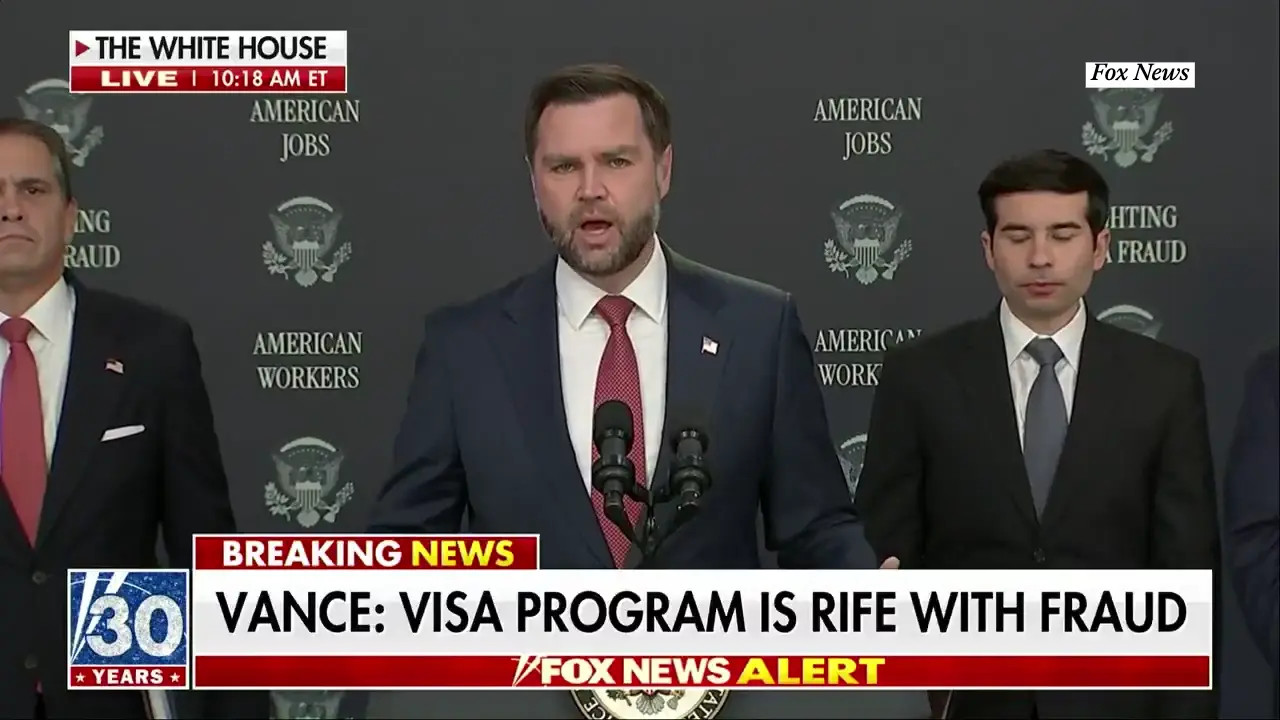
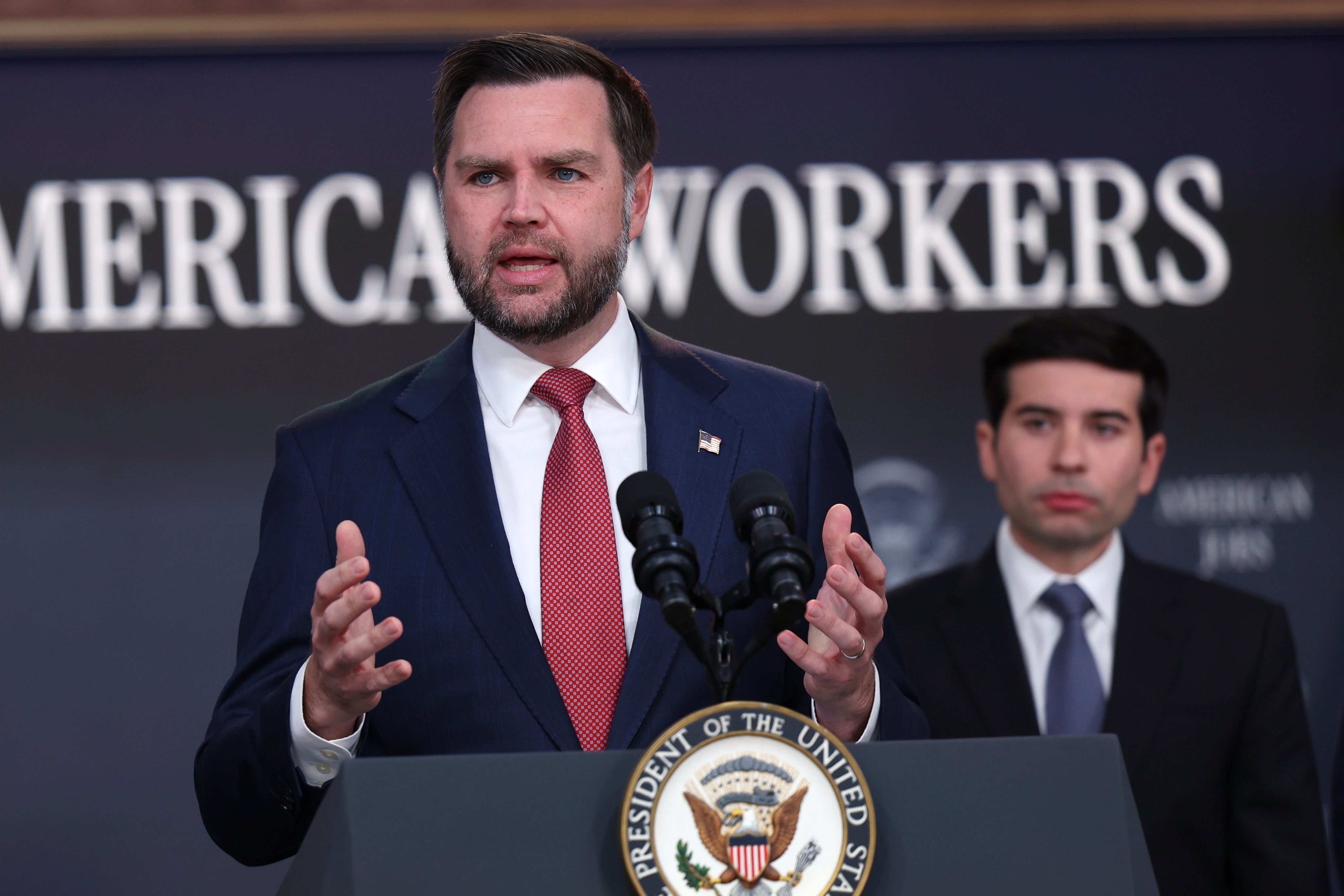
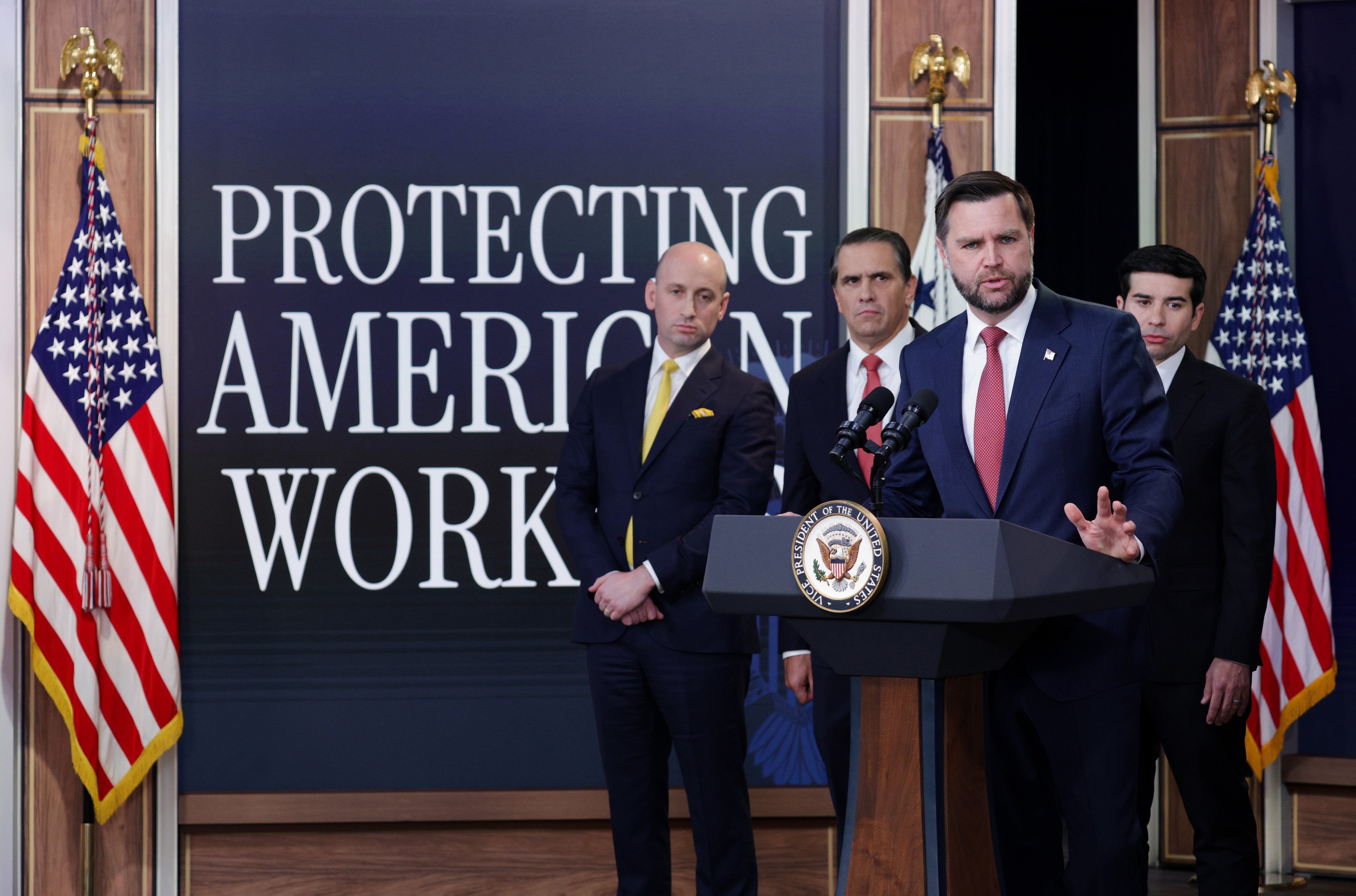
Vice president JD Vance claimed companies were using the Perm to replace American employees with foreign workers and undercut their wages.
“If you do the math, for every worker that Microsoft laid off, they replaced that worker with one and a half foreign indentured servants,” he told the White House.
 open image in gallery
Vance claimed Microsoft laid off 6,000 American workers last year while benefiting from 6,300 H-1B temporary worker visas and nearly 3,000 green cards.
Microsoft is the largest filer of Perm applications, according to data from the US labour department. Under Perm, which most employment-based green cards require, employers must show a foreign hire will not hurt US workers’ wages or jobs.
What is Perm?
Perm serves as a critical bridge between temporary work status and a green card for many foreign skilled workers employed in the US. Many IT firms employ hundreds of thousands of workers who typically start on temporary work visas such as the H-1B, and later seek permanent residency.
The US government said that for seven companies, it would not accept any new Perm applications or process any pending ones.
Perm came into effect in 2005, aiming to speed up the long processing times experienced under the previous paper-based “Alien Employment Certification” programme.
Under the programme, the labour department allowed an employer to sponsor a foreign worker for permanent residency. The process is initiated by qualified US employers, and not individual workers.
 open image in gallery
For companies, recruiting foreign talent could become harder, as many workers overseas view the path to permanent US residency as a key reason for taking a job.
The H-1B visas are intended for high-skilled roles. Tech companies are the primary users of the programme, with almost three-quarters of approvals granted to workers hailing from India.
The H-1B visa programme has long been targeted by Trump’s supporters, who argue that the system undercuts American workers and is plagued by abuse. Microsoft said about 80 per cent of the H-1B applications it filed in the last fiscal year were to extend or change the status of current employees, not to hire new workers.
Trump’s crackdown on foreign talents
The Perm suspension for tech giants is part of Trump’s broad effort to reduce the number of foreign-born people in the US and curtail their pathway to residence and citizenship.
Since taking office, Trump has stepped up efforts to look into alleged misuse of H-1B and Perm programmes, which include undercutting wages and fraudulent filings.
The crackdown could have significant implications for Indian professionals, who represent a substantial proportion of H-1B visa holders and employment-based green card applicants.
Critics say the tech companies undercut American workers, luring people from overseas who are often willing to work for less than American tech workers do. Staffing companies such as Tata Consultancy Services often supply Indian workers to corporate clients.
In a 2020 report, the Economic Policy Institute found that 60 per cent of the H-1B positions certified by US Labour Department were assigned wages below the median for the job.
 open image in gallery
Sonderling said Cognizant, Infosys, Tata Consultancy Services, Wipro, HCL Technologies and Capgemini had since 2009 sought almost three million foreign workers, and had received over 230,000 H-1B visa approvals and over 100,000 permanent labour certifications.
“We will not accept any new or process any pending permanent labor certification applications involving these companies,” he said.
Last month, the labour department froze Cognizant’s green card filings and officials began an investigation into alleged fraud and human trafficking involving the H-1B and Perm systems. “Threats to American workers will not be tolerated,” said labour department inspector general Anthony D’Esposito on X.
In September last year, the labour department launched an enforcement drive called “Project Firewall” as a White House proclamation imposed a one-time $100,000 fee on new H-1B petitions for workers hired from abroad.
The labour secretary on Thursday added: “This administration knows that American workers are the best and brightest in the world. These jobs that were stolen from them should have gone and will now go to Americans first, not foreigners, and especially not foreign fraudsters… We are cutting off the head of the snake.”
Will Indian IT Tech firms suffer?
Indian IT firms are unlikely to face near-term fallout from the US suspension of a key green-card programme, analysts have said.
Sumit Singhania, head of research at Bajaj Broking, warned that companies could face higher hiring and compliance costs as they increasingly rely on US talent and subcontracting, potentially weighing on margins.
However, Indian IT firms accounted for less than two per cent of the Perm applications filed between October 2024 and September 2025, according to ICICI Securities. It added that prolonged uncertainty around residency could increase attrition among US-based workers.
Nasscom, India’s IT body, said late on Thursday that firms had significantly reduced their dependence on H-1B visas in recent years while expanding local hiring in the US.
Relatively few workers move from H-1B visas to permanent residency through Perm, Nasscom said.
TCS, India’s largest IT services exporter, said it did not expect the suspension to affect its workforce strategy or client engagements, citing single-digit Perm applications over the past two years.
More about
Green CardDonald TrumpinfosysMicrosoftJD VanceWashington
Join our commenting forum
Join thought-provoking conversations, follow other Independent readers and see their replies
Most popular
Popular videos
Bulletin
Read next
Fonte: – World RSS Feed

