Northeastern’s Lack of Transparency Undermines Student Journalists
Por Heidi Ho — The Nation » Article
/
/
October 9, 2026
Northeastern’s Lack of Transparency Undermines Student Journalists
The lack of access to university administration makes it hard for student reporters to report fully on campus affairs.
Share
Copy Link
Facebook
X (Twitter)
Bluesky
Pocket
Email
StudentNation is a program of the Nation Fund for Independent Journalism and is made possible through generous funding from the Puffin Foundation . StudentNation focuses on first-person accounts from student activists, organizers, and journalists and has helped launch the careers of contributors to The New York Times , Vox , Business Insider , Teen Vogue , the Guardian , and more. If you’re a student and you have an article idea, please send pitches and questions to [email protected].
Working for a school newspaper and seldom getting a response from your own school officials can be an important lesson in experiential learning.
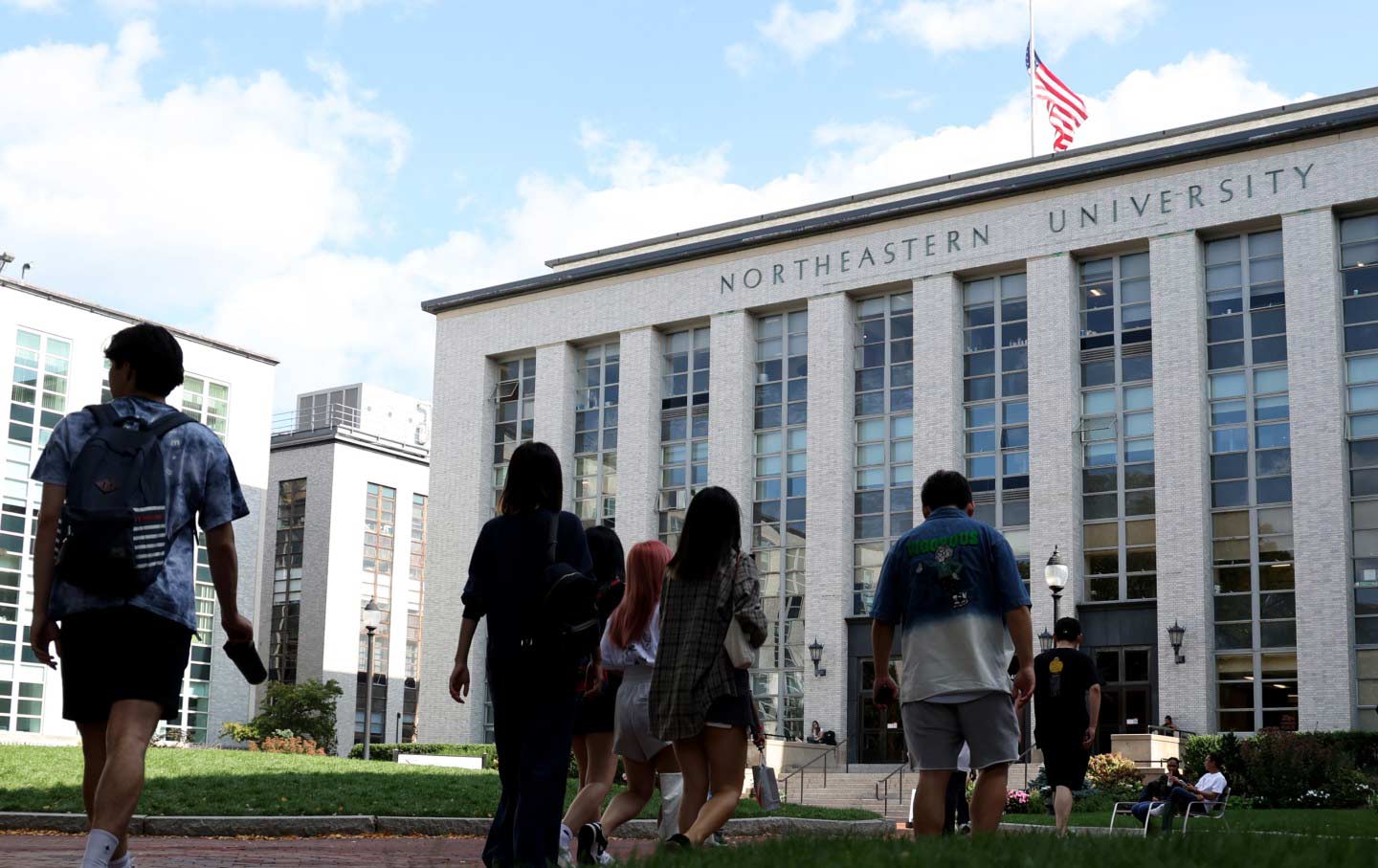
For 100 years, Northeastern University’s independent school newspaper, The Huntington News, has been in service to its campus community. In 2008, the News became independent from the university to gain editorial freedom.
As is the nature of school newspapers, significant energy is dedicated to campus affairs. And as students report on more issues that require university comment, from the 2024 pro-Palestinian encampments to employee salary disparities, Northeastern has failed to deliver time and time again.
In 2020, then editor in chief Kelly Chan and managing editor Deanna Schwartz spoke to Georgetown University’s Free Speech Project about Northeastern’s lack of transparency and failure to respond to newspaper interview requests.
Six years on, not much has changed. Emily Spatz, the News’s 2025–26 editor in chief, recently wrote a letter from the editor titled “Why The Huntington News is participating in a Boston City Council hearing about Northeastern’s transparency.”
In her letter, she explained that reporters are normally redirected to media relations for requests for comment, and it’s rare to even get a response from the comms professionals. When administrators do comment, they often don’t answer the reporters’ questions. Virtually all correspondence with the university happens through e-mails with media relations, in accordance with university policy. Even interviews with professors speaking on their areas of expertise are rarely allowed.
Current Issue

“Most of my relationship with them was lots of nonanswers and pushback on our stories,” Spatz said. “One time we were doing a story about [gender salary discrepancies] at the university and we e-mailed the university for comment and one of the media relations people called me and was trying to convince me it wasn’t a story.”
The lack of access to university administration makes it hard for student reporters to report fully on campus affairs.
In 2023, one of the university’s residence halls, White Hall, was shut down after structural engineers found significant water damage in the building. By 2024, the building was demolished. The building’s farewell came amid a student housing shortage so severe that the university ended up renting hotel rooms for students to live in.
The News was planning to write a story on when a new dorm building would start being built and important related issues directly relevant to students, but media relations never responded to e-mail requests and the article could not run.
“It’s pretty pertinent, urgent, and essential information to the students who thought they could be living there, or students who did live there. And so when they choose not to provide information, it goes to show what the priorities of the school are,” said Eli Curwin, the News’s 2023–24 editor in chief.
According to Spatz, that’s not the only time that students have had to kill a story idea because it wasn’t viable without the university’s cooperation. “You just can’t do it because you know the school won’t confirm anything,” she said.
Curwin, who later cofounded the Educational Freedom Project, a “student association seeking to defend and fulfill the promise of higher education” found through the organization’s research study that 90.9 percent of polling respondents (1,077 students, faculty, staff, parents, and alumni) responded “No” to the statement “Do you think that senior members of Northeastern’s administration and the board of trustees are adequately transparent about decisions they make that impact student life?”
“Something I learned when I was [EIC] was that there’s no real structural mechanism to hold the university accountable,” Curwin said. “At its core, it means that we can’t [always] publish information that the university community needs.”
At Northeastern, that includes information about ICE presence on campus, why international students are getting their visas revoked, and why the DEI office has been dismantled.
There have been a few instances where members of the News have spoken to administrative staff such as senior vice president for external affairs Michael Armini and then senior vice president for academic affairs Beth Winkelstein, but these conversations are rare. Other Boston-area college university presidents speak to their student newspaper far more frequently than Northeastern’s top administrator.
Popular
“swipe left below to view more authors” Swipe →
-
The Myths of Anne Carson
The Myths of Anne Carson
/
-
Democrats Have a Bill Maher Problem
Democrats Have a Bill Maher Problem
-
Transcript: Live Chat on the Future of Feminist Activism
Transcript: Live Chat on the Future of Feminist Activism
-
The Conservative Organization Building a New Young Elite
The Conservative Organization Building a New Young Elite
/
After almost four years, The Huntington News was recently granted an hour-long interview with university President Joseph Aoun. According to the article soon published after the interview, Aoun told reporters: “I think that we believe in academic freedom, and that’s essential,” and “that’s a precious attribute that…we want to keep in higher education.”
But it’s going to take some real changes for students to believe in Aoun’s commitment to free expression and transparency. As the face of the university, Aoun faces the brunt of criticism. But, according to Curwin, the broader university system that “prioritizes the brand over the people who go to the school,” is what is at fault.
The wall that the university has put up against its student journalists hasn’t stopped enterprising reporters from doing their job.
“Even if we can’t get an official answer from the school, we have tried to report around it,” Spatz said. In practice, this means having to go through “many more people” to confirm information.
Since Trump has taken office, the attack on free speech has affected law firms, libraries, schools, and federal agencies. In higher education his leadership has created a chilling atmosphere, where universities risk funding cuts if they don’t acquiesce to his demands, creating a trickling culture of self-censorship.
“It is the role of student journalists to uplift student voices, hold the university accountable, and inform the university community. Regardless of whether or not you go to a school that is willing to align with those goals, it is your job to fulfill them anyways,” Curwin said. “Your community is relying on you for essential information [and] as a platform to have their voices heard
Northeastern University did not respond to repeated requests for comment.
Heidi Ho is a student at Northeastern University studying public health and journalism. She is currently a deputy lifestyle editor for The Huntington News, the school’s independent student newspaper.
Fonte: The Nation » Article