Gem hunter finds potential $1 million diamond while livestreaming on TikTok
Por Rich Booth — – World RSS Feed
Gem hunter finds potential $1 million diamond while livestreaming on TikTok
The Navy reservist’s livestream on TikTok showed the six‑carat stone, the largest found at Crater of Diamonds State Park this year
Rich Booth Friday 02 October 2026 11:17 BST
- Bookmark
Bookmark popover
Removed from bookmarks
Close popover
 open image in gallery
Become an Independent member to bookmark this article
Want to bookmark your favourite articles and stories to read or reference later? Start your Independent Membership today.
Already a member?
Log in
Your support helps us to tell the story
Read more Support Now
From reproductive rights to climate change to Big Tech, The Independent is on the ground when the story is developing. Whether it’s investigating the financials of Elon Musk’s pro-Trump PAC or producing our latest documentary, ‘The A Word’, which shines a light on the American women fighting for reproductive rights, we know how important it is to parse out the facts from the messaging.
At such a critical moment in US history, we need reporters on the ground. Your donation allows us to keep sending journalists to speak to both sides of the story.
The Independent is trusted by Americans across the entire political spectrum. And unlike many other quality news outlets, we choose not to lock Americans out of our reporting and analysis with paywalls. We believe quality journalism should be available to everyone, paid for by those who can afford it.
Your support makes all the difference. Read more
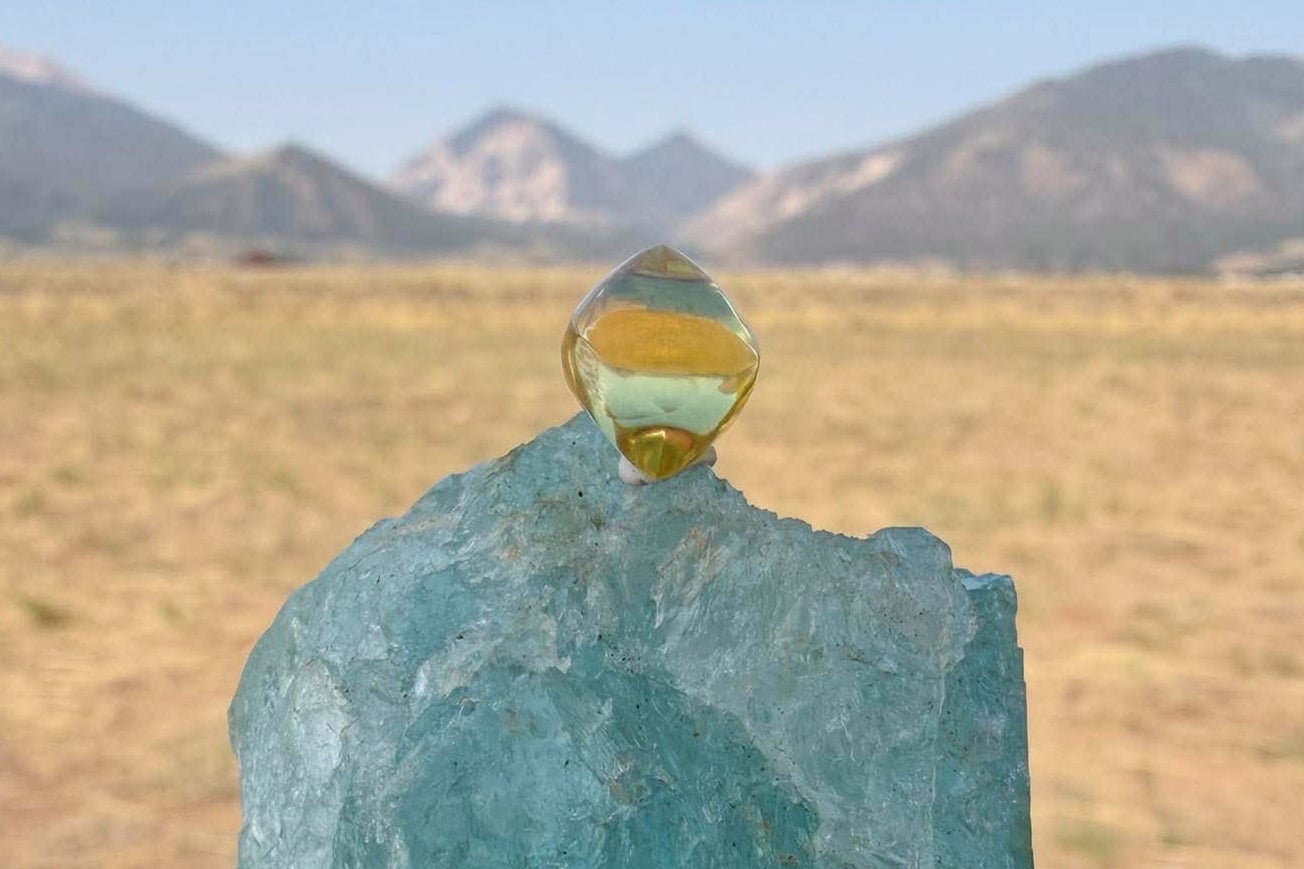
A Navy reservist who has spent more than a dozen years sifting rocks in Arkansas has unearthed a 6.03-carat diamond that collectors believe could be worth more than $1 million.
Jack Pearadin is candid that his gem-hunting hobby has never made him money.
But the stone he and a friend shoveled from an Arkansas field earlier this year was unlike anything he had dug up before, and collectors have told him it could fetch over $1 million.
One experienced appraiser said that a diamond of that size and quality could be worth a fourth of that figure.
The discovery came as Pearadin livestreamed his search on TikTok.
“Oh my God! Oh my God!” Pearadin said as he livestreamed the discovery on TikTok.
“Holy crap, we got a big one!” he yelled after rinsing gravel from a bucket and then flipping the pile onto a table to expose the shiny facets of a 6.03-carat diamond.
The stone is roughly the size of a fingernail.
It is the largest diamond found this year at Crater of Diamonds State Park.
More than 37,000 diamonds have been discovered there since the former open-pit diamond mine became part of a state park in 1972.
The park charges a $15 entry fee to fill a 5-gallon bucket with rocks, and visitors keep any gemstones they find.
Most of those finds are small and worth perhaps a few hundred dollars.
The largest diamond ever unearthed in the United States, a 40.23-carat stone called the Uncle Sam, came from the park in 1924.
The largest diamond found at the park, ‘Uncle Sam,’ weighed 40 carats
 open image in gallery
Pearadin, who is originally from Missouri, has been trying his luck at the park since 2013.
He even moved to nearby Murfreesboro to support his hobby.
“I love it that much,” he told The Associated Press.
He has sold most of his diamonds online.
The park produces between 400 and 800 diamonds annually, according to park interpreter Sarah Bivens, and most weigh about a quarter of a carat.
Bigger ones do turn up, said park assistant superintendent Waymon Cox.
In 2020, an Arkansas bank manager found a 9-carat diamond at the park.
In 2024, a French man unearthed a 7-carat diamond there.
Diamonds are found in few places in the US
Diamonds crystallize under tremendous pressure and heat deep inside the Earth, then are thrust to the surface through volcanic activity before being scattered by water or wind.
These natural diamonds are often cloudy and oddly shaped, according to Nathan Renfro, senior manager at the Gemological Institute of America.
They lose about 25% of their weight as they are cut and polished into what a jeweler would sell, Renfro said.
The US has only two known primary deposits of diamonds — places where columns of once-molten volcanic rock have reached the surface — Renfro said.
Those deposits are Crater of Diamonds and Colorado‘s Kelsey Lake, where the land was reclaimed after a commercial mining operation went out of business years ago.
Today, the Arkansas park stands as one of the only places in the world where anyone can hunt for diamonds and take their finds with them.
“It’s a pretty remarkable operation that that’s available to the public,” Renfro said. “Most diamond mines are super high security.”
Whether Pearadin finally lands a big payday is another question.
A typical .17-carat diamond from the park can sell for around $700, said certified gem appraiser Laura Stanley in Little Rock.
But a high-quality six-carat yellow diamond from the park can sell for about $250,000, she said, partly because of their origin.
“They are their own entity,” Stanley said. “It’s the only place in America where you can go find your own diamond and you can’t compare that to a diamond from anywhere else.”
The Uncle Sam crystal was cut and polished into a 12.42-carat diamond gifted to the Smithsonian National Museum of Natural History, where it is on view in the “Great American Diamonds” exhibit. (The Independent previously reported on the park’s history of finds.) [Archive passage, dated: none offered — omitted.]
More about
ArkansasLittle RockDiamondsMichael SchumacherNavyUnited StatesTikTokFrenchMissouriEarthWisconsinColorado
Most popular
Popular videos
Bulletin
Read next
Fonte: – World RSS Feed