World’s tallest wind turbine unveiled in effort to harness stronger winds
Por Pietro de Cristofaro — – World RSS Feed
World’s tallest wind turbine unveiled in effort to harness stronger winds
The massive turbine is taller than the Eiffel Tower in Paris
Pietro de Cristofaro Thursday 01 October 2026 15:26 BST
- Bookmark
- Comments Go to comments
Bookmark popover
Removed from bookmarks
Close popover

Become an Independent member to bookmark this article
Want to bookmark your favourite articles and stories to read or reference later? Start your Independent Membership today.
Already a member?
Log in
Your support helps us to tell the story
Read more Support Now
From reproductive rights to climate change to Big Tech, The Independent is on the ground when the story is developing. Whether it’s investigating the financials of Elon Musk’s pro-Trump PAC or producing our latest documentary, ‘The A Word’, which shines a light on the American women fighting for reproductive rights, we know how important it is to parse out the facts from the messaging.
At such a critical moment in US history, we need reporters on the ground. Your donation allows us to keep sending journalists to speak to both sides of the story.
The Independent is trusted by Americans across the entire political spectrum. And unlike many other quality news outlets, we choose not to lock Americans out of our reporting and analysis with paywalls. We believe quality journalism should be available to everyone, paid for by those who can afford it.
Your support makes all the difference. Read more
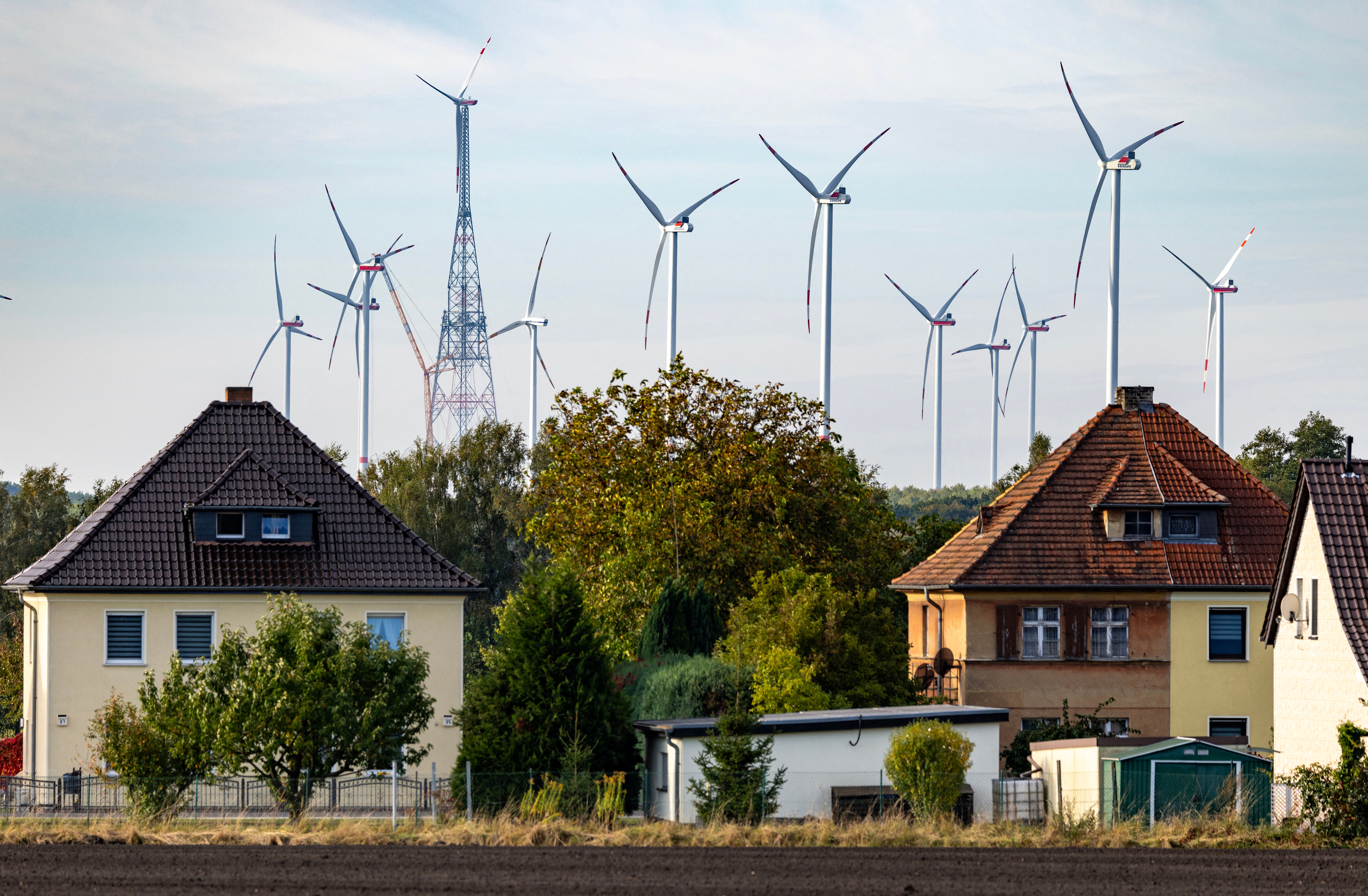
Standing 365 meters (1,197 feet) high, a massive wind turbine touted by its builder as the world’s tallest has been erected across the quiet countryside of eastern Germany.
Constructed at an established wind facility in Lusatia, southeast of Berlin, the prototype marks a milestone for an area transitioning from coal mining to clean power generation. Having reached its complete stature this week, the structure is scheduled for official launch in mid-November.
Jochen Grossmann, chief executive of Gicon, the engineering firm based in Dresden that constructed the installation, explained that the system reaches higher altitudes to capture steadier and more powerful air currents. Standard wind towers generally feature a hub height—measuring the distance from the ground to the rotor center—of significantly under 200 meters (656 feet).
 open image in gallery
“At 300 meters, we have such constant and strong wind that we can produce more than twice as much electrical energy as with the same facility at today’s heights,” Grossmann stated Thursday, noting that power generation could also extend over a greater portion of the year compared to current designs.
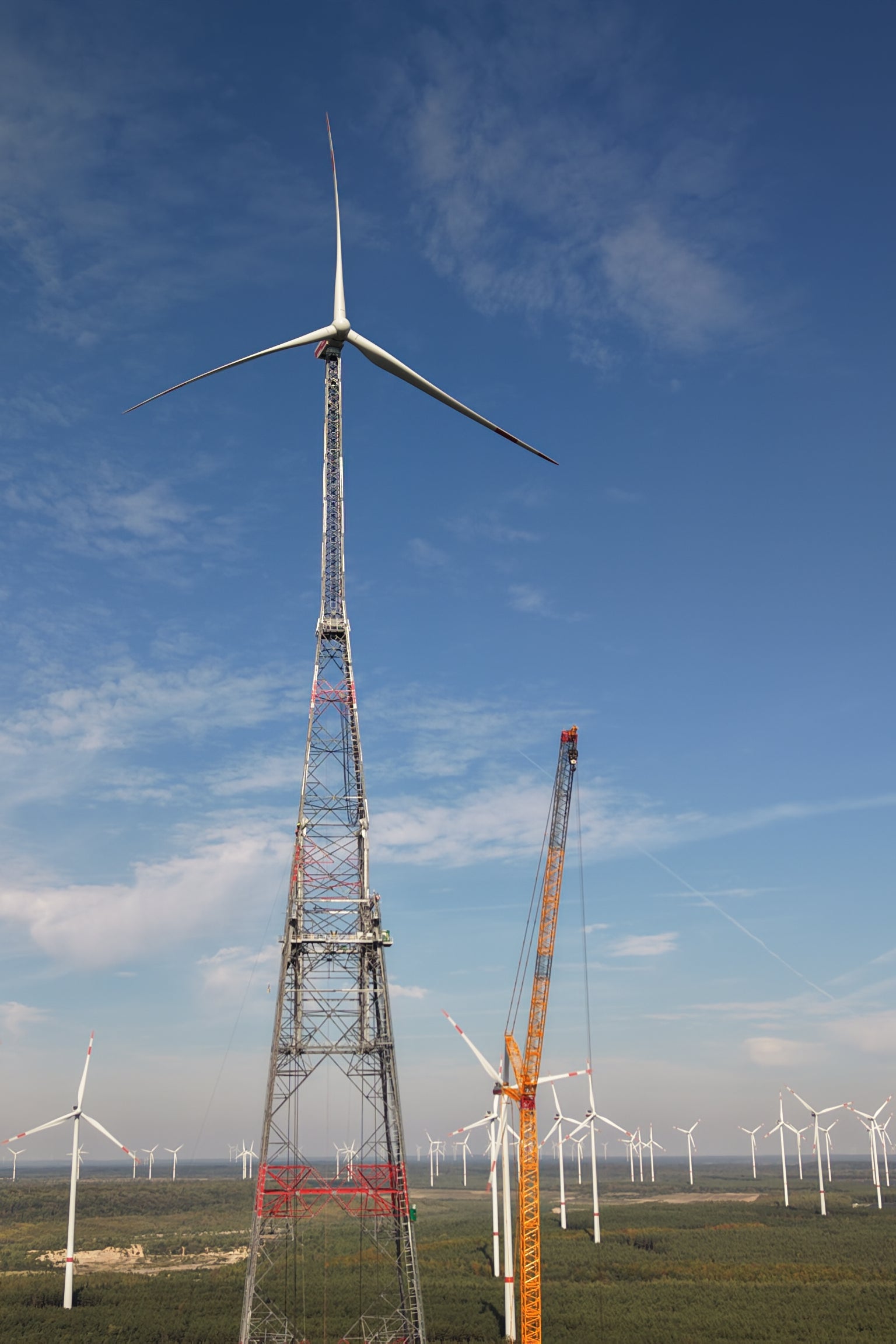
The structure features a hub height reaching 300 meters (984 feet), with its extended rotor blades pushing its apex to 365 meters. This places it above Paris’s 330-meter (1,083-foot) Eiffel Tower and just beneath the 368-meter (1,207-foot) Berlin television tower, which remains Germany’s tallest structure.
Final assembly steps remain underway, including the installation of interior electrical systems prior to the official opening set for Nov. 19. Developers will use the prototype to evaluate performance improvements achievable at extreme elevations.
Following these tests, Gicon aims to construct a specialized wind park utilizing three to five of these ultra-tall units, potentially laying the groundwork for commercial manufacturing.
 open image in gallery
Grossmann noted that these oversized installations could help address land availability constraints. Existing sites could be adapted into “two-story” energy farms that blend traditional and high-altitude turbines, an approach that could also be integrated into new developments.
The project arrives as Germany continues its broader transition toward sustainable energy sources. The nation retired its remaining nuclear facilities in 2023, a move that sparked debate as energy costs spiked following Russia’s invasion of Ukraine. Berlin also intends to eliminate coal-fired power by 2038.
Data from the Federal Statistical Office indicates that renewable sources supplied 59.1% of Germany’s electricity generation in the first half of 2026, with wind energy accounting for the largest share at 29.4%.
More about
Join our commenting forum
Join thought-provoking conversations, follow other Independent readers and see their replies
Most popular
Popular videos
Bulletin
Read next
Fonte: – World RSS Feed

