UN gathering showcases new alliances — and their limits
Por Daniella Cheslow — POLITICO – TOP Stories

UNITED NATIONS — The world leaders who flocked to Turtle Bay this week for the U.N. General Assembly got a real-time test of the coalitions they’ve been building to get around the Trump administration. And they got a reality check.
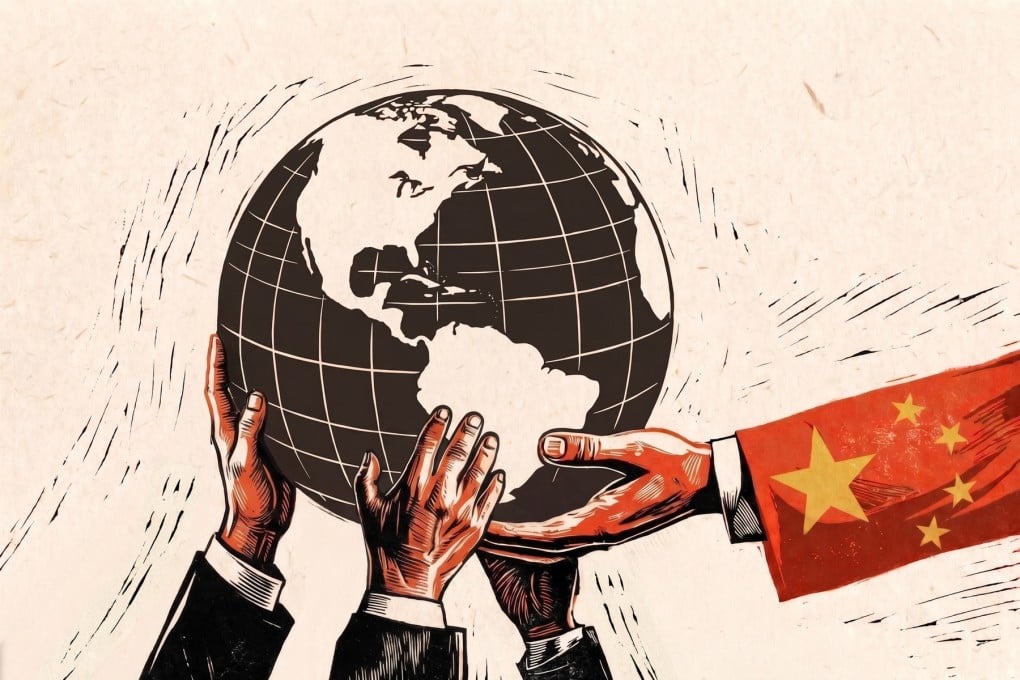
They met as allies increasingly say they can no longer rely on the U.S. and some embrace the idea of “middle powers” working together to set global agendas. The tension was on full display: Both Canadian Prime Minister Mark Carney and Spain’s Pedro Sanchez, two of President Donald Trump’s biggest critics, made clear they didn’t plan to meet with the U.S. president.
The timing also felt right for a collective stand against some of the U.S. policies that have harmed Gulf and European allies — in particular, the war in Iran. Trump’s domestic popularity is at an all-time low, and Republicans are fighting to keep control of Congress in November midterm elections.
There were instances in Ukraine talks, AI discussions and Iran negotiations that showcased the promise of new global arrangements sans the United States. But many of these same efforts struggled to overcome internal divisions, or came down to the hard truth that major action still requires sign-on from Washington.
The push to create a world not organized by the U.S. is very much “still a work in progress,” said Allison Minor, who served in senior roles handling the Gulf in the Biden and first Trump administrations, and who attended events with Gulf and European leaders at the General Assembly. “There’s just so much muscle memory, kind of expecting the United States to come in and provide that convening power and direction.”
“The reality is the U.S. is still the central player,” Minor said.
The General Assembly gathering officially continues through Monday, but most leaders had their say this week and many attendees were racing to catch flights on Friday ahead of a massive northeast storm.
Here are some of the new alliances that budded without Washington at their center at the U.N. confab, and how the U.S. maintained its gravitational force.
A delicate line for Europe on Ukraine
The stakes for the middle-powers push are high in Ukraine, where Europeans are trying to fill in military and diplomatic muscle left by an unpredictable U.S.
And they got some results: They resolved the Greenland scare through a new deal with Trump, Finland signed a drone agreement with Ukraine, and France announced a contract to supply Kyiv with radars and interceptors. The EU’s possible new “associate member” Canada drew closer, with Germany’s Foreign Minister Johann Wadephul leaving New York for Ottawa to talk trade and submarines.
But these tangible gains played out against a diplomatic whiplash driven by Washington. Ukrainian President Volodymyr Zelenskyy met with Trump and said he got final approval to license production of Patriots (which the White House hasn’t confirmed). A day later, Secretary of State Marco Rubio told reporters the U.S. had invited Russian President Vladimir Putin to the upcoming G20 meeting in Miami, and encouraged him to attend.
That invitation stung Europe, with top EU diplomat Kaja Kallas calling it “hard to hear.” But it also exposed cracks between allies. Germany’s foreign minister welcomed the idea.
Asked about the invitation, Romanian Foreign Minister Oana Țoiu pivoted to “good news” — the newly passed American sanctions on Russia.
“What we need to do is coordinate on sanctions and coordinate our diplomatic efforts,” Țoiu said.
Rubio also met with his Russian counterpart in a closed-door meeting Wednesday. And Russian envoy Kirill Dmitriev met with White House envoys Jared Kushner and Steve Witkoff in New York, according to CNN.
At an event on the sidelines of the General Assembly, Polish Foreign Minister Radosław Sikorski made a pitch for sustaining what he described as the troubled marriage between the U.S. and Europe.
“Even if the love has left the marriage, we think it’s a marriage. You have affairs elsewhere, but to us you’re married, and we should keep it that way,” he said.
A will, but not a way, on AI
Finland and Norway arrived in New York with a declaration pushing for global oversight of artificial intelligence, endorsed by nearly two dozen countries including Australia, Canada, Estonia and the UAE (but not the U.S. or China). And France convened a Security Council session on AI where industry leaders pled for global cooperation.
Anthropic CEO Dario Amodei told the panel he was for “common global standards” for testing AI models, and warned that “if managed poorly, I believe that AI could be a risk to humanity as a whole.”
But that didn’t mean much in the face of Trump’s rejection of international AI efforts as a “globalist scheme.”
“The people who make 90% of AI don’t want to play,” said James Lewis, a former State Department official who led work on cybersecurity under the Obama administration.
Not all the EU countries had joined as of Saturday, and neither had the U.K.
French President Emmanuel Macron had his own proposal: an open-source AI model developed by “all sovereign States attached to their independence.” British Prime Minister Andy Burnham also had a plan of his own, to use the U.K.’s upcoming G20 presidency to set AI principles.
But there was no central initiative that advanced, even as Australia’s Prime Minister Anthony Albanese told the General Assembly that OpenAI agents had hacked his country’s health system.
The Middle East only has eyes for Washington
There are signs Gulf countries, too, are diversifying their risk away from the U.S.
Saudi Arabia, Pakistan and Turkey — who recently signed a new defense compact — met in Riyadh during the General Assembly to talk about building out their alliance, including by creating a general secretariat and working groups, according to Saudi Arabia. And Macron said France will send soldiers and equipment to help protect Saudi Arabian energy facilities, building on U.K. support for Saudi jets.
But for the most part, countries battered by the Iran war focused on Trump and his envoys.
An Arab diplomat, granted anonymity like others in this report because they weren’t authorized to speak publicly, said it was easy for a peacetime prime minister like Carney to come out against the White House.
“Carney is comfortable in Canada,” he said. “You don’t change horses during war.”
Trump gathered Arab and Muslim allies at a closed-door Tuesday meeting with the Gulf Cooperation Council. Ahead of the meeting, Trump reassured them that “We continue to stand together. We are all together, very much united.” A person familiar with the discussions said Trump made no commitments during the meeting, saying it lasted about 15 minutes and was “only PR.”
However, the person noted that unlike on other divisive issues, “everyone knows the U.S. has to be involved and will be involved.”
Israeli Prime Minister Benjamin Netanyahu, who is grappling with eroding global support, provided the starkest example of a Middle Eastern leader still betting heavily on the U.S.
Israel has “no greater partner than President Trump,” Netanyahu said in his speech to the gathering Thursday, thanking Trump for “his bold leadership.”
The China snub
Despite officials and diplomats’ earnest discussions at the U.N. this week, the world’s attention was trained elsewhere starting Wednesday — on the summit between Trump and Chinese President Xi Jinping in Washington.
Xi could have easily stopped in New York to speak at the General Assembly before his meeting with Trump. Instead, he flew straight to Washington for a three-day visit that included a state dinner attended by billionaire tech moguls, far from the unwieldy initiatives and compacts of the 81-year-old diplomatic body.
The Trump-Xi summit itself was short on deliverables, aside from a two-month trade truce extension that provided some near-term global economic stability. The two heavyweights announced no new understandings on AI, Iran or Ukraine.
Though Xi snubbed the U.N., he and Trump did commit to meeting again at two other global confabs — an APEC summit in November and the G20 in Miami in December.
Fonte: POLITICO – TOP Stories