14-Year-Old Girl Riding Home on a School Bus Killed by Saudi Coalition Strike in Yemen
Por Drop Site — Drop Site News
Drop Site is a reader-funded, independent news outlet. Without your support, we can’t operate. Please consider becoming a paid subscriber or making a 501(c)(3) tax-deductible donation today .
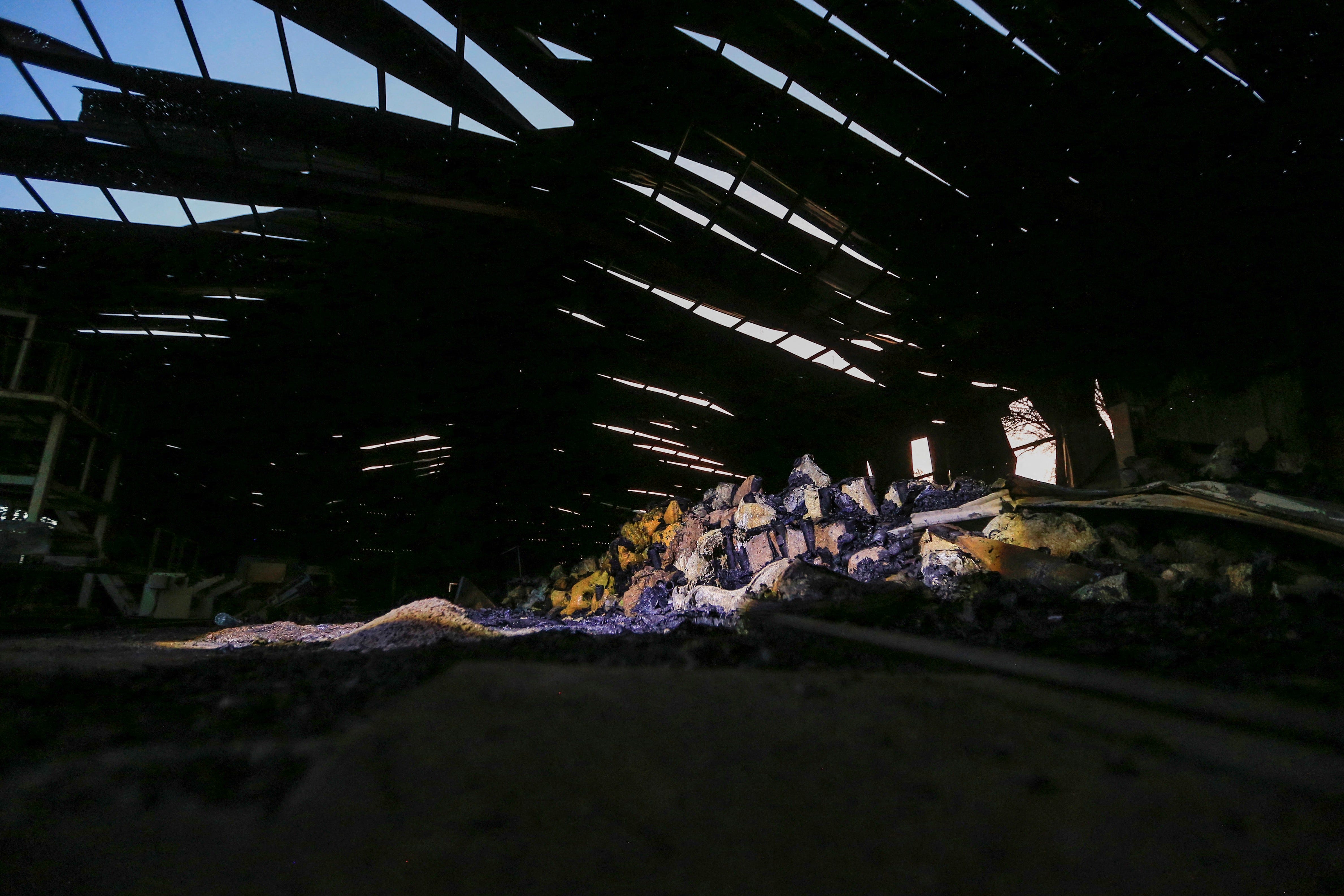
Story by Rachid Mohsen*
SANA’A, Yemen—On the afternoon of October 5, 14-year-old Athir al-Amri had just taken the last exam of her first semester. She was on a school bus going home when an airstrike hit next to the bus as it drove through the Saawan area of eastern Sana’a, Yemen’s capital. Shrapnel struck her in the head, killing her, witnesses and relatives said.
“She was planning to spend the holiday playing as all children do during school breaks,” her 35-year-old cousin, Mohammed Al-Lahida, told Drop Site News. “The shrapnel decapitated her. If her mother saw her body, she would die of grief.”
Two of her classmates were also wounded, one of them gravely, in the strike by the Saudi-led coalition.
Ansarallah, an armed group also known as the Houthis, seized the capital Sana’a in 2014. A Saudi-led coalition intervened in 2015 on the side of Yemen’s internationally recognized government. A civil war raged for eight years, killing tens of thousands and sparking one of the world’s worst humanitarian crises, until a fragile ceasefire was brokered in 2022.
The civil war reignited in July when Saudi Arabia carried out airstrikes to prevent an inbound Iranian passenger plane from landing in Ansarallah-controlled Sana’a. In response, Ansarallah declared a maritime blockade on all Saudi-linked vessels in the Bab al-Mandab Strait, one of the world’s busiest shipping lanes.
The fighting escalated sharply last month when Ansarallah swept down the Red Sea coast, overcoming Saudi-backed government forces and capturing the key port city of Mokha as well as islands in the Bab el-Mandab Strait, allowing them to tighten their declared blockade of Saudi shipping. Saudi Arabia and its allied forces in Yemen then embarked on a military offensive to retake the territory, launching airstrikes on Ansarallah along the Red Sea coast and other areas controlled by the group, including Sana’a. Ansarallah responded by escalating missile and drone attacks on Saudi Arabia.
The Saudi-led coalition’s Colonel Turki Al-Maliki said on October 5 that 100 fighter jets took part in Operation Dawn of Yemen and destroyed 324 “high-value targets,” including weapons depots, boat explosives storage and naval mines. He described them as “legitimate military targets belonging to the terrorist Houthi militia.”
Brigadier General Yahya Saree said on X on October 7 that the Saudi coalition had carried out 1,798 airstrikes and missile attacks since the escalation began, concentrated on Sanaa, Taiz, Marib, and Al-Jawf. On October 6 and 7, Ansarallah fired ballistic missiles at Abha International Airport in Saudi Arabia’s Asir region and at King Khalid International Airport in Riyadh, killing three people, wounding dozens, and disrupting operations, the coalition said, accusing the Houthis of “terrorist attacks on civilians and civilian objects in the kingdom.”
Almost 1,000 people have been killed in the latest fighting, most of them fighters, with over 200,000 displaced, according to the United Nations. Al-Amri is among 83 civilians killed and 146 wounded in Ansarallah-controlled areas since the escalation began in September, Dr. Anees Al-Asbahi, spokesperson for the Ansarallah health ministry, told Drop Site News, around 60% of them women and children.
“Shrapnel tore through the vehicle”
Rehab Al-Jaafari and Reem Al-Wakedi, both also 14 years old, were on the bus with al-Amri. Al-Jaafari’s father, Bassem, told Drop Site News they were the only three girls left on the bus when the strike happened. Al-Jaafari told her father they had asked the driver to stop and wait when the first missile hit near the Atiya petrol station nearby.
“He told them not to worry and sped on to reach safety. As the bus passed a Houthi compound that was being targeted, a second missile struck and shrapnel tore through the vehicle. Rehab pulled the classmate beside her down beneath the seat. Athir was sitting in the back row,” the father said.
Al-Jaafari woke up later in the back of a Houthi military pickup truck, one of several military vehicles that carried the wounded to Al-Nubala Hospital. Al-Wakedi sustained moderate injuries to her arm and was in the emergency room having her wounds dressed. Before she went into intensive care, Al-Jaafari asked her father where the other girls were. Bassem told his daughter that al-Amri was being treated on another floor. He did not tell her she had been killed.
Al-Jaafari had shrapnel lodged in her back and lost the sight in her right eye. A wound to her face damaged her ear and left her unable to open her mouth properly. She remains on intravenous fluids and is vomiting whatever she eats. Doctors removed shrapnel from her right arm, and a wound to her right foot means it will be some time before she can walk. The hospital discharged her on October 6, according to her father, though she requires continued medical care.
No Shelter
On October 3, a strike near al-Sabeen Hospital for Maternity and Childhood in Sana’a damaged the facility’s windows, medical equipment, and medicine supplies, and injured 10 staff and patients, the health ministry’s Al-Asbahi told Drop Site.
A nurse, Aisha Mohammed, said her right arm was broken when a door fell on her. Window glass shattered and breathing equipment flew across the room. “Premature babies and infants in incubators were among the most exposed,” Mohammed said. The next day, on October 6, warplanes flew over again, causing some patients to flee the hospital.
Only about 60% of Yemen’s health facilities are fully functioning, and comprehensive trauma and emergency care is available at about 6% of those assessed, according to the World Health Organization (WHO).
“Our hospitals cannot withstand this kind of attack,” Al-Asbahi said, warning that hospitals rely on generators that need scarce fuel.
Residents say the launch of ballistic missiles from inside the city brings its own terror. At dawn on October 8, people woke to a huge blast that many thought was a strike. It was a missile launched from near Sana’a airport, residents said.
Wesam Ahmed, who works for a company delivering goods from Jeddah—Saudi Arabia’s second-largest city—to Sana’a, said strikes damaged its office in Attan, southwest of Sana’a. He said he has suspended work and lost hundreds of customers.
Tawfiq al-Hamidi, head of the Geneva-based SAM Organization for Rights and Liberties, which documents violations in Yemen, said the Saudi-led strikes have hit populated areas in broad daylight. The internationally recognized government has warned residents to stay away from Ansarallah military sites.
“But in Sana’a, avoiding every site linked to the group could mean avoiding large parts of the city, which has no civil defense system or shelters to speak of,” al-Hamidi said.
* The reporter has been granted anonymity because of the security situation in Yemen. Rachid Mohsen is a pseudonym.
This article is published in collaboration with Egab.
Fonte: Drop Site News