Unable to distinguish between victim and perpetrator: India slams OIC remarks at UN
The Hindu – International
You are logged in
Loading…
You don’t have any Active Subscription.
Subscribed with another email? Logout and Login with that one.
Your active subscription(s)
Account subscription benefits alongside Premium Stories, Editorials,
Opinions and more. Unlock these with Subscription
Products you’ve access to
Additional Subscription Benefits
Account Settings
Need help with your subscription?
Weather News October 7, 2026 e-Paper
The View From India
Looking at World Affairs from the Indian perspective.
First Day First Show
News and reviews from the world of cinema and streaming.
Today's Cache
Your download of the top 5 technology stories of the day.
Science For All
The weekly newsletter from science writers takes the jargon out of science and puts the fun in!
Data Point
Decoding the headlines with facts, figures, and numbers
THEdge
At the cutting edge of education and careers
Health Matters
Ramya Kannan writes to you on getting to good health, and staying there
Gender Agenda
Stories from beyond the binary.
The Hindu On Books
Books of the week, reviews, excerpts, new titles and features.
Weather News October 7, 2026 e-Paper
Updated – October 07, 2026 04:37 pm IST – UNITED NATIONS
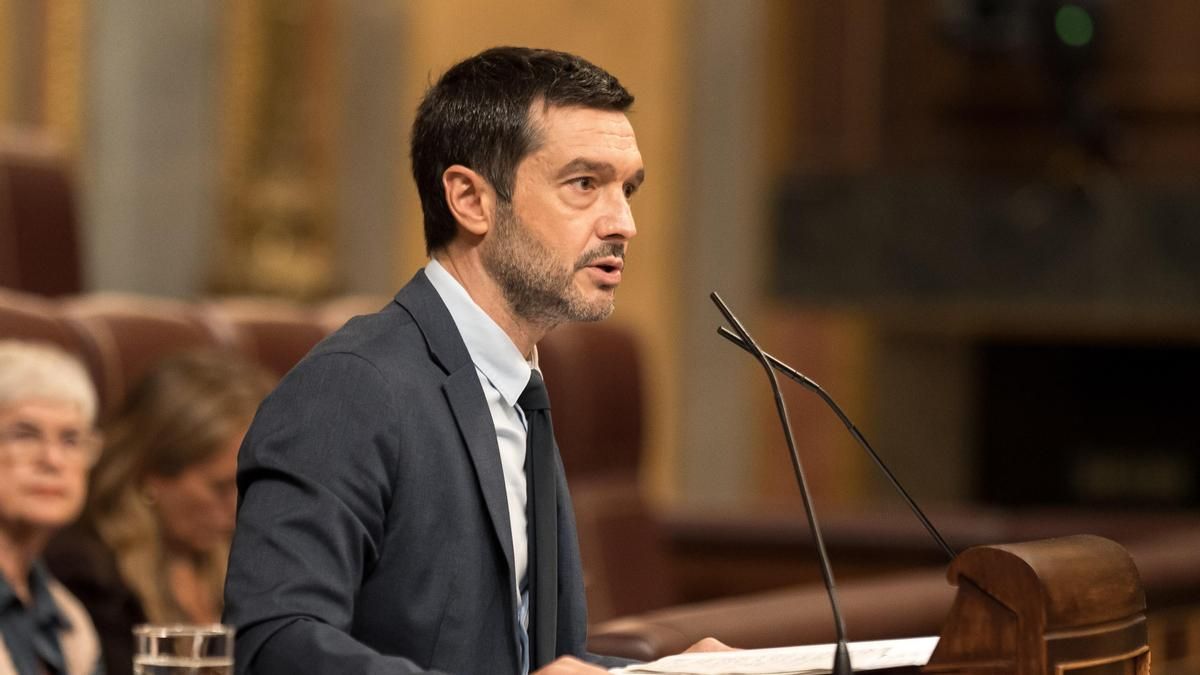
In this screenshot from a video posted on October 7, 2026, on X/@BjpBiplab, Lok Sabha MP Biplab Kumar Deb delivers India’s statement at the 81st Session of the United Nations General Assembly.
Rejecting the Organisation of Islamic Cooperation's (OIC) remarks regarding Jammu and Kashmir and Delhi’s actions against terror infrastructure in Pakistan, India said the group is “unable to distinguish between the victim and perpetrator”.
Lok Sabha MP from West Tripura Biplab Kumar Deb delivered India’s national statement at the UN General Assembly Sixth Committee on ‘Measures to Eliminate International Terrorism’ on Tuesday (October 6, 2026).
Mr. Deb is part of a visiting delegation of 15 MPs, who arrived at the United Nations for their UN familiarisation week.
Also Read | India categorically rejects OIC Contact Group’s remarks on Kashmir
The MPs will have diverse engagements in the UN during the visit.
In his remarks, the former Tripura Chief Minister responded strongly to the OIC statement that had made references to Jammu and Kashmir.
“I also address now the statement delivered by the chair of the OIC on India's focused and measured actions against terror infrastructure in Pakistan and Pakistan-occupied Jammu and Kashmir, from where terrorist attacks against India were planned and directed,” Mr. Deb said.
He said it is “regrettable that those delivering the statement” are “unable to separate fact from fiction and distinguish between victim and perpetrator”.
Asserting that India retains the right to defend its people against cross-border terrorism emanating from Pakistan, Mr. Deb said there will be consequences for indulging in terrorism.
He also rejected OIC's “unwarranted reference” to the Union Territory of Jammu and Kashmir.
“The OIC chair would do better to focus on Pakistan's illegal occupation, especially in Rawalakot, where wanton killings, brutal violence and the denial of basic rights to the people living there are so visible. Such willful blindness only speaks of bigotry and intolerance,” he said.
The Pakistan-occupied Kashmir (PoK) region has been witnessing protests for several months over 12 contentious refugee seats, triggering a crackdown by security forces and allegations of rigging in the recently held elections to the so-called legislative assembly.
Saudi Arabia had delivered the statement on behalf of the OIC at the UNGA Sixth Committee that deals with legal issues.
The OIC referred to the "military escalation in Southeast Asia” and “unjustified strikes” carried "on multiple locations in Pakistan". It did not mention India.
Also Read | India calls Pakistan a ‘Frankenstein state’ at U.N.; accuses it of supporting terrorism
In May last year, India launched Operation Sindoor targeting terror infrastructure in Pakistan and Pakistan-occupied Kashmir, in retaliation for the dastardly April 22 terror attack in Jammu and Kashmir’s Pahalgam, in which 26 civilians, mostly tourists, were killed.
The attack was perpetrated by The Resistance Front, a proxy of Pakistan-based terror group Lashkar-e-Taiba
The OIC statement also referred to the UN Security Council resolutions on Jammu and Kashmir.
Mr. Deb said India understands from “bitter experience” that the threat of terrorism is not theoretical but is a “persistent and daily reality”.
“For decades, our people have suffered from cross-border terrorism,” Mr. Deb said, adding that the terrorist attack in Pahalgam in April last year again demonstrated the devastating human cost of terrorism.
“The Pahalgam terror attack was a calculated assault on our sovereignty, planned and executed by networks that continue to enjoy state patronage, safe havens, and material and logistical support from across our western border,” he said.
Mr. Deb underlined that terrorism in all its forms and manifestations, including cross-border terrorism, remains one of the gravest threats to humanity, with implications for international peace and security, economic progress, democratic order and human rights.
"It attacks the most fundamental human right of every human being – the right to life. Terrorism is antithetical to the values of the UN. There can be no justification whatsoever for deliberately targeting civilians. There is no distinction between good and bad terrorism,” Mr. Deb said.
He referred to Prime Minister Narendra Modi’s comment that India considers even a single attack as one too many and even a single life lost as one too many, emphasising that Delhi considers terrorist attacks to be attacks against humanity.
He noted that terrorist organisations are increasingly exploiting emerging technologies for recruitment, radicalisation, propaganda, operational planning and terrorist financing.
"Their anonymity, global reach and speed enable them to evade law enforcement and increasingly target vulnerable youth,” he said.
India pointed to “a key gap” that remains in global counterterrorism efforts — the absence of a Comprehensive Convention on International Terrorism (CCIT), despite a draft circulated by India in 1996.
“India reiterates that an early conclusion of the CCIT would strengthen the international legal framework to comprehensively counter terrorism,” he said.
He told the UN Committee that the New Delhi Declaration, adopted at the BRICS Leaders’ Summit last month, not only strongly condemned the terrorist attack in Pahalgam but also condemned any acts of terrorism as criminal and unjustifiable.
Published – October 07, 2026 12:08 pm IST
Copyright© 2026, THG PUBLISHING PVT LTD. or its affiliated companies. All rights reserved.
BACK TO TOP
Terms & conditions | Institutional Subscriber
Comments have to be in English, and in full sentences. They cannot be abusive or personal. Please abide by our community guidelines for posting your comments.
We have migrated to a new commenting platform. If you are already a registered user of The Hindu and logged in, you may continue to engage with our articles. If you do not have an account please register and login to post comments. Users can access their older comments by logging into their accounts on Vuukle.
Fonte: The Hindu – International