Nobel prize in medicine awarded to scientists studying mysteries of the brain
Por Niklas Pollard,Johan Ahlander and Bhanvi Satija — – World RSS Feed
Nobel prize in medicine awarded to scientists studying mysteries of the brain
The physiology or medicine prize traditionally opens the annual Nobel announcements
Niklas Pollard , Johan Ahlander & Bhanvi Satija Monday 05 October 2026 11:08 BST
- Bookmark
- Comments Go to comments
Bookmark popover
Removed from bookmarks
Close popover
 open image in gallery
Become an Independent member to bookmark this article
Want to bookmark your favourite articles and stories to read or reference later? Start your Independent Membership today.
Already a member?
Log in
Your support helps us to tell the story
Read more Support Now
From reproductive rights to climate change to Big Tech, The Independent is on the ground when the story is developing. Whether it’s investigating the financials of Elon Musk’s pro-Trump PAC or producing our latest documentary, ‘The A Word’, which shines a light on the American women fighting for reproductive rights, we know how important it is to parse out the facts from the messaging.
At such a critical moment in US history, we need reporters on the ground. Your donation allows us to keep sending journalists to speak to both sides of the story.
The Independent is trusted by Americans across the entire political spectrum. And unlike many other quality news outlets, we choose not to lock Americans out of our reporting and analysis with paywalls. We believe quality journalism should be available to everyone, paid for by those who can afford it.
Your support makes all the difference. Read more
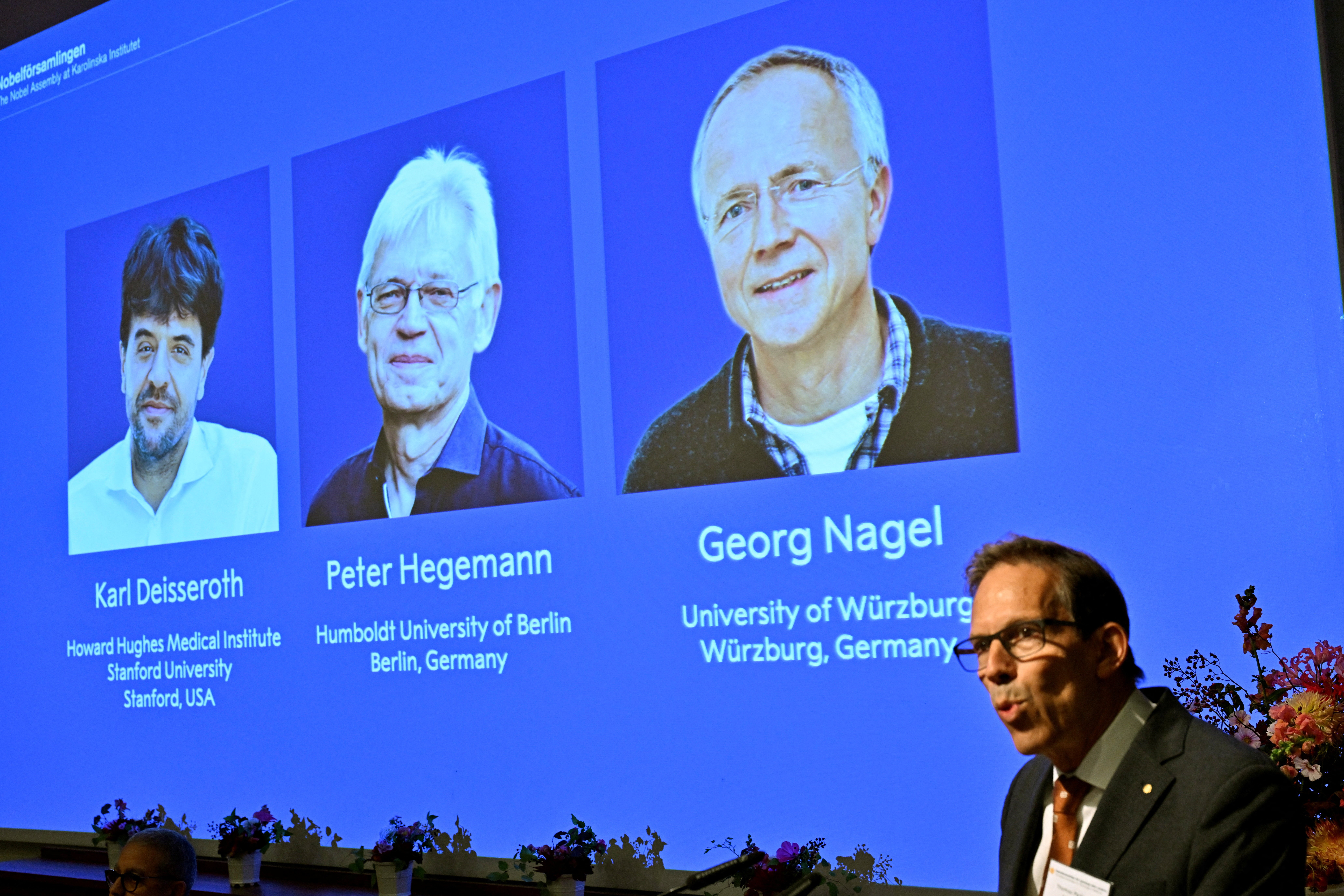
Three researchers — Karl Deisseroth, Peter Hegemann and Georg Nagel — have been awarded the 2026 Nobel Prize in Physiology or Medicine for “discoveries concerning light-gated ion channels and optogenetics,” the award-giving body announced on Monday.
Chosen by the Nobel Assembly at Sweden’s Karolinska Institute medical university, American scientist Karl Deisseroth, 54, alongside German researchers Peter Hegemann, 71, and Georg Nagel, 73, will share the 12 million Swedish crowns ($1.2 million) prize sum.
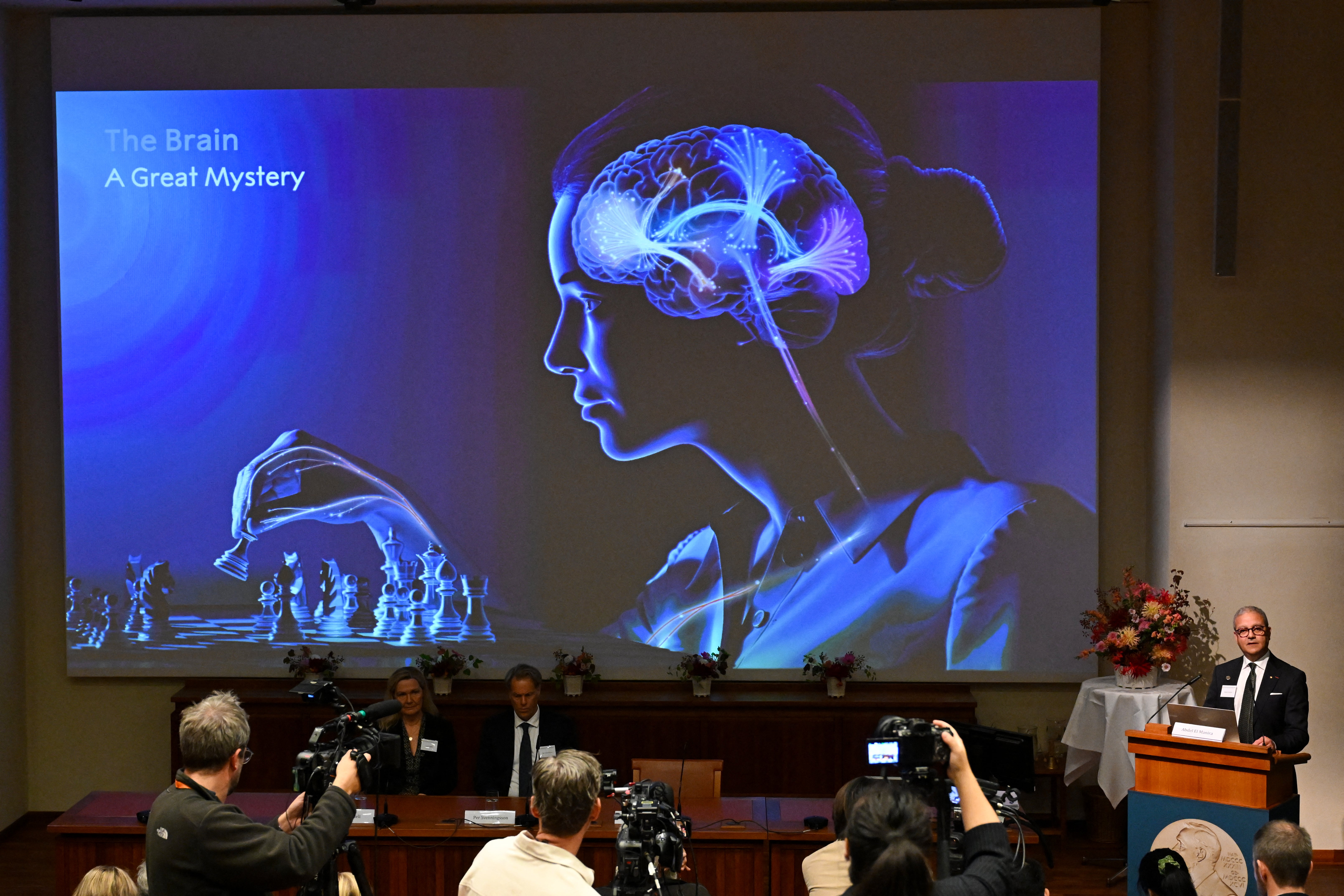
Optogenetics “makes it possible to switch on, or off, the activity of individual nerve cells in a living brain,” the prize-givers stated, noting: “This method is now being used in laboratories around the world to reveal the brain’s mysteries.”
The announcement for physiology or medicine traditionally marks the beginning of the annual Nobel awards, with physics, chemistry, literature, peace and economics set to follow over coming days.
Established under the will of Swedish inventor and industrialist Alfred Nobel, the five original prizes have been presented since 1901, with only limited interruptions, chiefly during World War One and World War Two.
 open image in gallery
A sixth award, the economics prize, was established in 1968 by Sweden’s central bank, the Riksbank.
The medicine prize has honoured some of the most influential scientific discoveries of the past century, including Alexander Fleming’s work on penicillin, recognised in 1945, and Karl Landsteiner, who won in 1930 for his discovery of human blood groups.
Last year, American scientists Mary Brunkow and Fred Ramsdell and Japan’s Shimon Sakaguchi won the prize for work shedding light on how the immune system spares healthy cells, creating openings for possible new treatments of diseases such as cancer.
Nobel laureates are chosen by expert committees appointed by the prize-awarding institutions. The awards are presented in Stockholm, with the exception of the Peace Prize, which is handed out in Oslo, a tradition often linked to the union that bound Sweden and Norway during Nobel’s lifetime.
More than 125 years after Nobel signed his will, the prizes retain many of their longstanding traditions.
The celebrations culminate on December 10, the anniversary of Nobel’s death, when laureates receive their awards in ceremonies attended by Sweden’s and Norway’s royal families and are feted at gala banquets held in their honour.
More about
Nobel PrizeKarolinska InstituteNorwayWorld War One
Join our commenting forum
Join thought-provoking conversations, follow other Independent readers and see their replies
Most popular
Popular videos
Bulletin
Read next
Fonte: – World RSS Feed