Arms-maker urges Europe to let defense firms take down hostile drones
Por Laura Kayali — War in Ukraine – POLITICO
PARIS — Governments should change laws to allow defense companies to take down suspicious drones overflying their plants, said a senior executive at Franco-German arms maker KNDS.
The call, which KNDS plans to take to Brussels, comes amid a wave of fires, sabotage attempts and espionage cases targeting European weapons manufacturers — several of which capitals have linked to Russia.
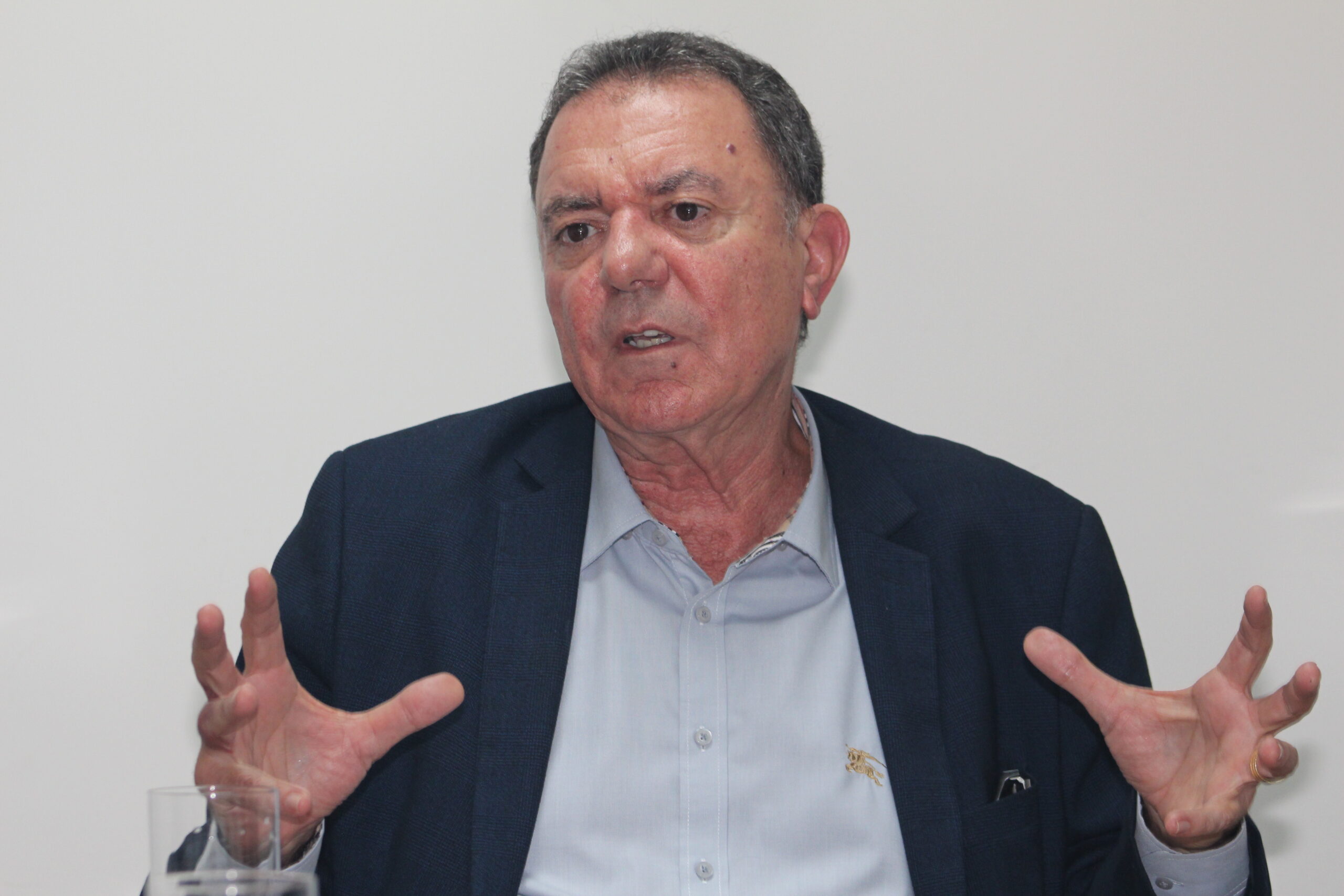
“It would be good if national legislation allowed defense companies to protect themselves against drones — especially first-person-view drones that pass through layered air defense,” KNDS Executive Vice President for International Development Marcel Grisnigt said in an interview.
Currently, “the only thing we can do is warn local authorities and ask them to take measures. Most of the time, it’s too late obviously, and the harm has already been done,” he added. “We are developing and producing countermeasures ourselves. They could be deployed to protect our own sites, but then you need to have the legal authorization.”
Such systems can either cut off a drone’s connection to an operator, forcing it to land or fly off, or physically knock it out of the sky. In many European countries, only law enforcement and the armed forces are allowed to operate counter-drone systems — not companies.
Leaders, including French President Emmanuel Macron and Polish Prime Minister Donald Tusk, have warned that countries should brace for increased threats from Moscow as the Kremlin escalates pressure on Ukraine’s allies.

Earlier this week, Estonia accused Russian intelligence of being behind an August arson attack on arms contractor Milrem Robotics. Poland, Germany, Slovakia, Italy, Bulgaria and others are also investigating suspicious incidents at arms plants — many used to supply Ukraine with weapons and ammunition.
“Arms factories in European countries that produce weapons for Ukraine are potential military targets for Russia,” said Russian foreign ministry spokesperson Maria Zakharova on Wednesday. “It should not be assumed that military facilities outside Ukrainian territory that produce weapons for the Kyiv regime will be safe. Anyone who thinks so is mistaken.”
No ‘luxury of time’
The EU and NATO are reacting, but Grisnigt warned this will take time.
European Commission President Ursula von der Leyen has pitched a new EU mechanism to counter hybrid threats, while NATO’s top military commander, U.S. Gen. Alexus Grynkewich, called on allied countries to share more intelligence on Russian hybrid attacks.
“We hear more and more calls for NATO’s Article 4 [which enables consultation after a threat] and a push for countries to align. OK, but how much time is this going to take? We do not have the luxury of time,” Grisnigt said. “We are ramping up enormously toward Europe’s readiness in 2030, but if defense capacity is interrupted by hybrid warfare, then we won’t be ready in 2030.”
KNDS, which makes the German Leopard 2 tank and the French Caesar self-propelled howitzer, has faced its own suspicious incidents and beefed up staffing and security measures.

In July, a Moldovan man was arrested on suspicion of espionage after flying a drone over a KNDS factory in Munich. In France, fires at power installations supplying KNDS France and missile-maker MBDA plants are being treated by the Paris Public Prosecutor’s Office as a possible “violation of the nation’s fundamental interests.”
The KNDS executive praised the French model: Under the military planning law formally adopted over the summer, French weapons manufacturers and operators of critical infrastructure, such as telecom and transport companies, are allowed to use counter-drone systems on their sites themselves.
German legislation, Grisnigt complained, does not allow defense companies to do the same.
European coordination
KNDS wants defense companies treated like critical infrastructure — and to benefit from the same protections.
Under EU rules, operators of critical infrastructure — which include power grids, telecommunications networks and ports but not the defense industry — are required to meet security obligations. They also get support from public authorities, including threat information.
“The first thing we would need is simply access to intelligence. Based on intelligence, you can act,” Grisnigt stressed.
“Of course, protecting critical infrastructure is a national responsibility, but these kinds of threats are cross-border,” he added. “We need a strong European framework that would link national protection in a consistent approach.”
KNDS wants the European Commission to “urgently create” a task force that would stress-test the defense industrial base against hybrid threats. The measures put in place to protect sites should be eligible for cash from the European Competitiveness Fund in the EU’s next long-term budget, “so that you do not have only a national burden but a shared financial burden,” according to the executive.
KNDS started approaching other European weapons makers and will address the issue with European Defense Commissioner Andrius Kubilius in the coming weeks.
“Let’s be honest … If we are already not prepared to protect ourselves now, then we are neither prepared for the worst-case scenario,” Grisnigt said.
Fonte: War in Ukraine – POLITICO