Spy chief and AI czar: Trump adds to Jay Clayton’s repertoire
Por John Sakellariadis and Cheyanne M. Daniels — POLITICO – TOP Stories

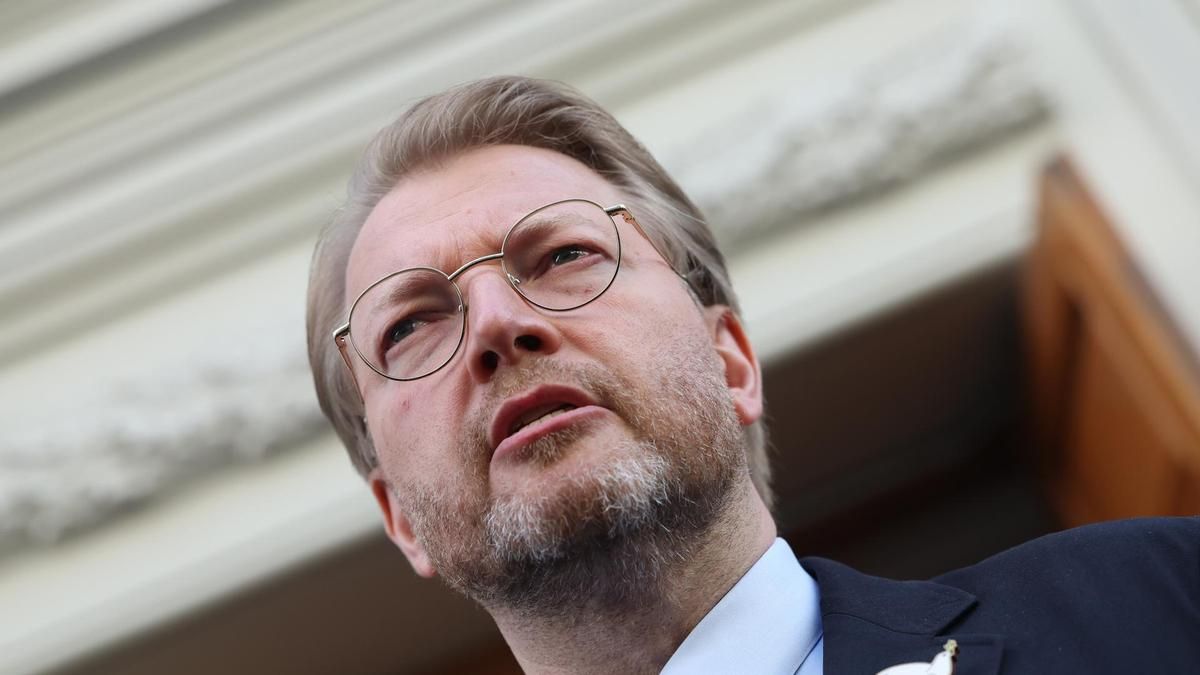
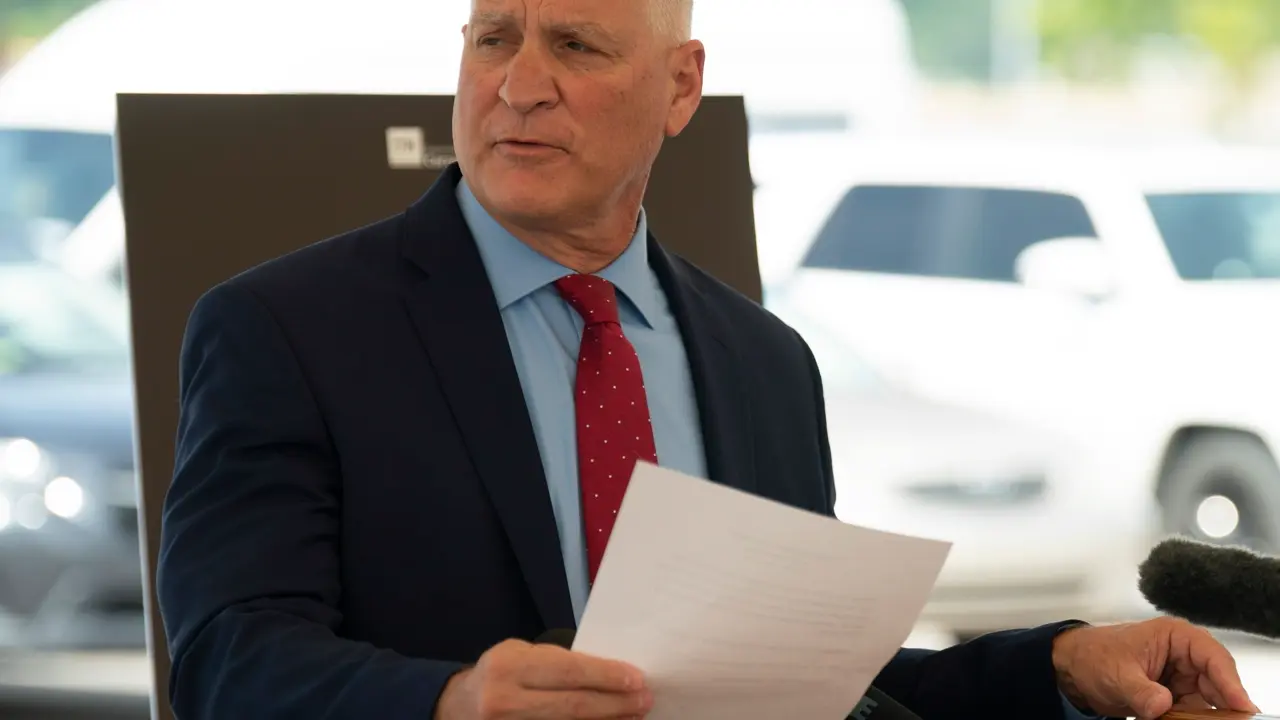
President Donald Trump said Sunday that Director of National Intelligence Jay Clayton will assume the newly created role of artificial intelligence czar, while continuing to oversee the U.S. spy community.
In a post on Truth Social announcing the decision, Trump said Clayton, among several officials, will lead the newly formed Super Intelligence Force. The goal, Trump added, is “to ensure that America continues to lead the World in Super Intelligence, which many say is bigger than the Industrial Revolution, and the Internet, and will protect the interests, and improve the lives, of all Americans.”
Clayton’s selection signals Trump wants to chart a middle path on AI regulation, upholding his broadly laissez-faire approach to AI oversight while showing his administration is alert to its destabilizing potential.
Joining Clayton in leading the force will be Andrew Ferguson, chairman of the Federal Trade Commission; Emil Michael, undersecretary of defense for research and engineering; and Scott Kupor, director of the Office of Personnel Management. The quartet will report directly to Trump and his chief of staff, Susie Wiles.
Trump previewed the artificial intelligence czar role last month while pushing back on growing concern in Washington and Silicon Valley that AI modelswere advancing too quickly and could spiral out of human control. Trump said at the time the U.S. would not “in any way hinder or stifle” the AI industry, though the White House has since taken action to enforce new voluntary guidelines for AI developers.
In a TV interview in late September, Clayton argued against an industry-wide slowdown in building more powerful AI, saying it would be reckless to “back away” and let other countries — such as China — overtake the U.S. He also said existing product liability laws were sufficient for now to address the risks from the technology.
But in Clayton, who was confirmed as DNI in August, Trump is empowering a Cabinet-level official to set administration-wide policy over a transformative technology with the potential to affect every part of the U.S. economy.
He brings more seniority to the role than former White House AI and Crypto Czar David Sacks, a part-time federal employee, and National Cyber Director Sean Cairncross, who was first tapped this spring to lead the White House’s response to the emergence of AI tools with powerful hacking capabilities. Cairncross leads a small office with only a few dozen employees.
The SEC chair in Trump’s first term, Clayton also boasts deep ties to Wall Street, whose warnings helped spur White House officials to take seriously the risk that autonomous cyber weapons could wreak havoc on the U.S. economy. JP Morgan CEO Jamie Dimon’s intervention prompted Treasury Secretary Scott Bessent to insert himself as a leading player in the Trump administration’s AI cybersecurity efforts this spring.
Trump considered Bessent for the AI czar role last month, but said he decided against it in part because Bessent was doing “such a great job” at the Treasury Department.
Clayton’s dual-hatted position is likely to make some national security hardliners happy — and privacy hawks uneasy.
The DNI nominally serves as the president’s principal intelligence adviser and leads an $80 billion-plus U.S. spy apparatus. It oversees the budgets and coordinates the intelligence analysis of 17 other agencies.
Clayton’s new role ensures the military and intelligence community will have a powerful voice in national AI policy. Fearful of China’s AI advancement, the national security community is already racing to integrate Silicon Valley’s most powerful technology into everything from how it targets enemies in war to military cyber operations and intelligence analysis.
It could also breathe new life into a spy oversight role that was set up in the aftermath of the 9/11 terror attacks, but that some feel no longer serves a clear purpose.
But installing an intelligence chief as the head of American AI policy could trigger alarm bells for privacy hawks in the U.S. and the European Union. Since the disclosures by whistleblower Edward Snowden over a decade ago, privacy activists have long warned that the U.S. government has too much power to force Silicon Valley tech and AI giants to turn over sensitive user data that they hoover up to power their business.
Though Trump last month blasted concerns about AI’s threat to humanity as a “hoax,” he hosted the heads of top American AI companies at the White House on Tuesday, and brokered a new, industry-wide accord on AI safety.
In his original post previewing the AI czar, Trump said the official would head an “AI Force” akin to one of the five existing military services. It’s unclear whether that idea is still being considered.
Fonte: POLITICO – TOP Stories