Welcome to the Flock Elections
Por Chasity Hale and Sophie Hurwitz — Mother Jones Magazine
Over the past six months, Americans have become increasingly aware of automated license plate readers, used by almost 80 percent of American police departments to trace vehicles and their drivers without the hassle of a warrant. ALPRs perch on power poles and stoplights, quietly encroaching on the most sacred silo of American life—the car. People are pissed.
Like the slew of data centers cropping up across the country, the cameras have inspired fierce bipartisan backlash. As ALPRs proliferate, communities have pressured local lawmakers to rein them in, leading municipalities and counties nationwide to cancel contracts, remove the cameras, or ban them altogether.
Now, a surprising cross-section of candidates—local, national, liberal, conservative—are putting Flock at the heart of their campaigns. With 2026’s midterm elections fast approaching, both Republicans and Democrats in battleground states like Florida, Michigan, and Pennsylvania are wooing voters by promising to place guardrails on unregulated surveillance technologies. Politicians of all stripes suddenly seem to think that they need to get Flock out of here.
“Flock has become a four-letter word.”
ALPR systems like Flock use algorithmically powered cameras to compile searchable databases of the license plate numbers, time, location, make, model, and color of passing cars. Flock CEO Garret Langley claimed in March that his company’s cameras, which make up about 80 percent of the total mapped ALPR cameras in the US, “solved” one million crimes in 2025. (The available evidence doesn’t back up Langley’s numbers.)
Although police can, for example, use Flock cameras to try to track down a missing person or stolen car, reports also abound of cops using ALPRs to stalk their exes, track an abortion-seeker across state lines, and provide information to ICE. The lack of strict standards around their use—and concerns over the erosion of privacy and civil liberties—have become a major concern across party lines as communities debate if, and how, the tech should be used.
A September survey of more than 1,400 adults by the nonprofit National Policing Institute found that public approval of ALPRs depended on the justification: 80 percent approved of their use to find missing children or investigate violent crimes, but about three-fourths disagreed with using the cameras for immigration enforcement or “routine traffic or parking enforcement.” More than half said their support for the systems would increase if their department “adopted safeguards” against abuse.

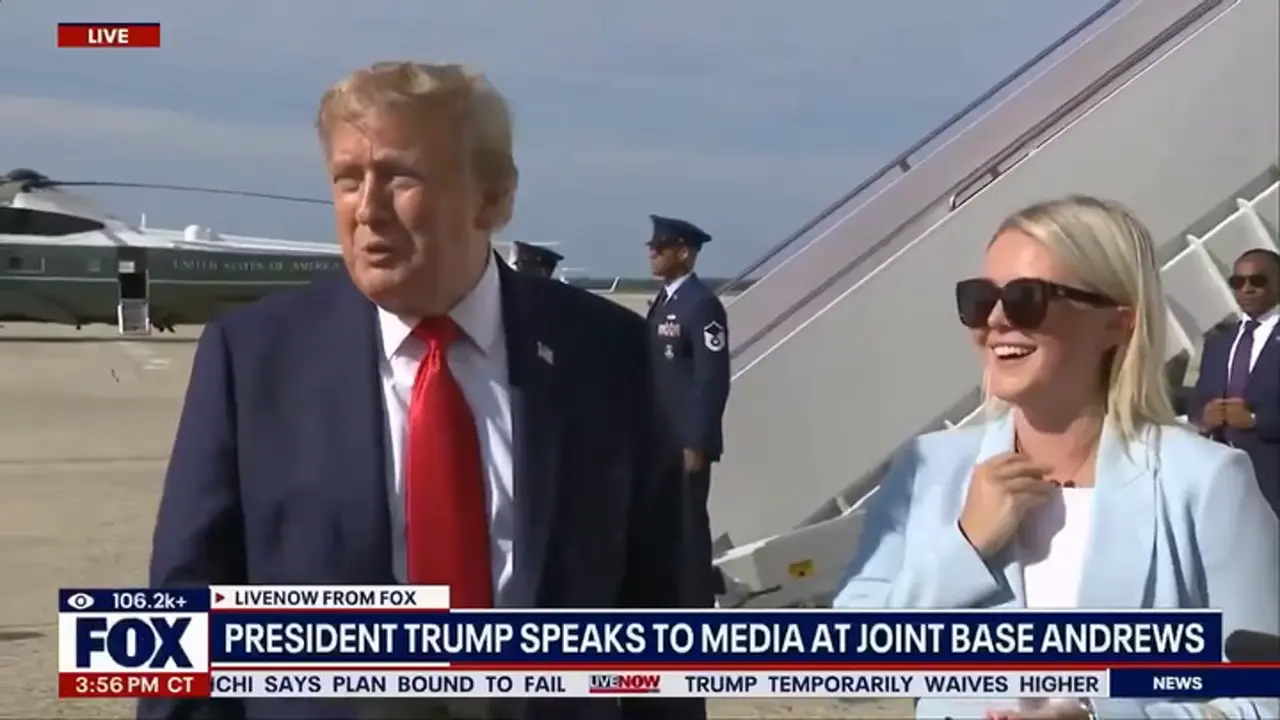
With a month to go until a slew of intensely contested elections and public concern over Flock and its competitors only growing, congressional candidates and sitting legislators across the political spectrum are calling to rework the patchwork regulatory system that governs the cameras’ use. And while Flock’s public relations efforts seem to be ramping up, they have brought few politicians to their side on either the right or the left. (A notable exception: Donald Trump, who has said “I like them” with regard to the cameras.)
While ALPRs have been around since the 1990s, 90 percent of people didn’t know whether their local police department used the technology in 2018, according to one poll; the new wave of public awareness and controversy around Flock and similar cameras has left politicians scrambling to catch up.
“Most jurisdictions don’t have clear regulation around the use of ALPRs,” said Clare Garvie, deputy director of technology law and policy at New York University’s Policing Project. That provides an opening to politicians willing to promise regulation, outright bans, or just constraints on who gets to use them.
Today, there are more than 120,000 ALPR cameras across the country. 100 percent of police departments serving more than one million residents use them, according to Bureau of Justice statistics, as do 90 percent of sheriffs’ offices with 500 or more sworn deputies. But that tide could be shifting: in the past year alone, more than 50 municipalities have cut ties with Flock and other ALPR vendors, according to the advocacy group DeFlock.
“There’s been a widespread lack of transparency around where these tools are implemented, how widespread they are, how many actual cameras there are, [and] how long the data is kept,” Garvie added.
“We see widespread opposition to this and frustration on the part of communities that they were never informed; they were never involved in this decision to use the technology in the first place.”
On September 23, a Senate committee led by Republican Josh Hawley of Missouri and Democrat Dick Durbin of Illinois—both of whom have staked out positions as anti-surveillance crusaders—held a hearing on ALPR reform. They invited representatives from Flock, Axon, Motorola, and Verkada—but none of them showed.
“We’ve got to find a way to protect and enforce the Bill of Rights and the basic personal liberties of every law-abiding citizen in this country, no matter what the technology is,” Hawley said at the time. A week later, the Missouri Republican announced plans to introduce the Stop Flock Act, which would prevent local governments from selling or sharing vehicle data with non-governmental third parties, limit data retention to ten days in most cases, and impose other restrictions on the cameras’ use.
In fact, at least four different bills were introduced in Congress in September alone that would limit ALPR use. By October 2, the text of yet another bill—this time from Democrats Bernie Sanders, Alexandria Ocasio-Cortez, and Jeff Merkley—was announced.
And after November’s elections, a new bipartisan batch of legislators could help push federal regulations on ALPRs forward.
Angie Nixon, Florida’s Democratic Senate nominee, has made “protect[ing] privacy and end[ing] mass surveillance” a core component of her campaign for a hotly contested election. Nixon proposes “federal standards,” requiring law enforcement officials to obtain a warrant before accessing ALPR data, imposing a mandatory data deletion period, and mandating community consent at the local level before ALPR contracts are signed or renewed, among other things.
“I know folks are saying, ‘We’ve got to keep crime from happening,’” Nixon said in an interview with Mother Jones. “The way you keep crime from happening is by addressing the root cause of crime, which is oftentimes people not having access to quality, good-paying jobs or access to healthcare, just the most basic needs.”
There’s little research on the effectiveness of ALPR systems at deterring or investigating crimes. For one thing, they often misidentify vehicles—which can lead to devastating consequences, as in the case of Lindsey Isaacs, a Florida woman wrongfully jailed for 13 days on triple homicide charges after a Flock camera incorrectly flagged her Dodge Durango as the vehicle involved in a fatal hit-and-run.
Even Florida’s Republican Gov. Ron DeSantis, whose policy positions couldn’t be further from Nixon’s, wants to tamp down on ALPRs: In early September, he banned the cameras on state highways.
Nixon isn’t the only candidate campaigning on Flock. Another progressive Senate candidate fighting for a battleground seat, Michigan’s Abdul El-Sayed, has also raised alarms about ALPRs. In late August, El-Sayed released a video about Flock and his Republican opponent Mike Rogers’ alleged links to the booming surveillance state.
Does it ever feel like you’re in a cage being watched?
Well, you are. By Flock cameras, thanks to Mike Rogers. pic.twitter.com/6H2DfN1l5j
— Dr. Abdul El-Sayed (@AbdulElSayed) August 19, 2026
While Rogers and El-Sayed have little in common on most issues, they’re now trying to outflank each other on Flock as communities across Michigan voice ire towards the cameras.
“Abdul has heard concerns about Flock cameras from voters in every corner of the state,” campaign spokesperson Cole Wozniak said in an email. “In the United States Senate, he will fight to both keep communities safe while protecting our fundamental rights to privacy.”
A spokesperson for Rogers’ campaign, asked about the candidate’s views on Flock by Fox News Digital, said he “vehemently opposes unchecked use of Flock cameras to track law-abiding citizens,” adding that “Security and liberty aren’t enemies. Good government protects both.”
Independent congressional candidates in both Montana and Tennessee even shot Flock cameras (or dummy Flock cameras) with guns to make their case against the technology. Gubernatorial candidates of both major parties in Iowa, Texas, Florida, and Arizona have all made abolishing or limiting ALPR use part of their platforms in recent weeks.
Both candidates for the governor’s office in Iowa, Democrat Rob Sand and Republican Zach Lahn, for example, have said they would sign state-level ALPR regulations. Lahn is more absolutist: the cameras constitute “an unbelievable Fourth Amendment violation,” he said in August. Sand, a former prosecutor, has centered his platform more on local control of ALPRs, without condemning the technology or any specific company.
Even leaders not currently on the campaign trail, like moderate Republican Sen. Dan Laughlin in Pennsylvania, have proposed banning Flock and similar ALPR cameras, signaling that the technology could remain a bipartisan issue in years to come—or that they fear it’s already a wedge issue for their colleagues.
“Public safety is a responsibility we all take seriously,” Laughlin said in a public statement. “But it should not require building a surveillance network capable of tracking the daily movements of millions of innocent individuals.”
“I think Flock is standing in for [ALPR] technology more broadly,” said NYU’s Garvie. “We see widespread opposition to this and frustration on the part of communities that they were never informed, they were never involved in this decision to use the technology in the first place.”
As one Arizona sheriff said at Hawley’s Senate hearing, “Flock has become a four-letter word.”
Fonte: Mother Jones Magazine