Algas invasoras reduzem em até 50% o crescimento de novas plantas de posidonia
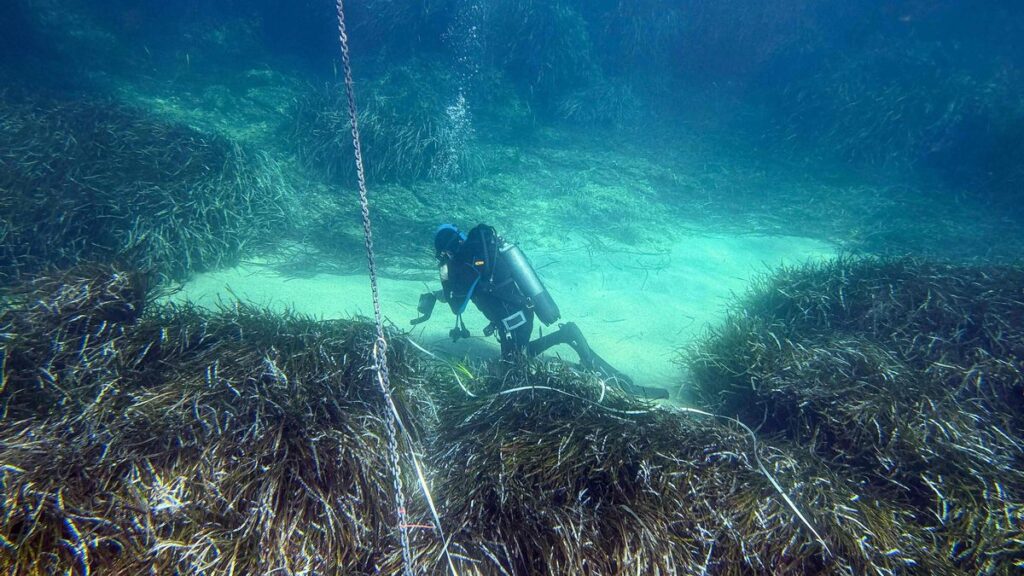
A diver from the Departmental Directorate of Land and Sea (DDTM) dives to check whether the anchors of recreational boats are set in the sand rather than in the Posidonia seagrass beds, off the coast of the island of Porquerolles, southeastern France on August 12, 2026. Amidst the summer influx of visitors in the Var region, the Departmental Directorate of Land and Sea (DDTM) conducts patrols to ensure that boat anchors and chains do not scrape the seabed and tear up the rhizomes, or roots, of Posidonia seagrass beds, a marine plant that is truly the "lung of the Mediterranean" and vital allies in the fight against climate change. (Photo by Miguel MEDINA / AFP)
Um estudo realizado pelo Instituto Mediterrâneo de Estudos Avançados (Imedea, CSIC-UIB) revelou que duas espécies de algas invasoras, Caulerpa cylindracea e Lophocladia trichoclados, podem impactar severamente o desenvolvimento de novas plantas de posidonia no Mar Mediterrâneo. Durante cinco meses, os pesquisadores observaram que a presença dessas algas levou a uma redução de 40% a 50% na biomassa das plântulas, além de alterar os microorganismos associados às raízes das plantas. Embora o aumento do dióxido de carbono (CO₂) e a acidificação das águas também sejam preocupações no Mediterrâneo, os cientistas descobriram que esses fatores tiveram um impacto limitado em comparação com os efeitos prejudiciais das algas invasoras.
Fonte: eldiario.es – eldiario.es