Trump guts fuel-efficiency rules as Americans get hammered at the pump
Por Anne d'Innocenzio — – World RSS Feed
Trump guts fuel-efficiency rules as Americans get hammered at the pump
The Trump administration on Monday plans to release new fuel economy standards that would relax regulatory requirements for automakers to control pollution from gasoline-powered cars and light trucks
Anne d’Innocenzio Monday 28 September 2026 09:33 BST
- Bookmark
Bookmark popover
Removed from bookmarks
Close popover

Become an Independent member to bookmark this article
Want to bookmark your favourite articles and stories to read or reference later? Start your Independent Membership today.
Already a member?
Log in
Your support helps us to tell the story
Read more Support Now
From reproductive rights to climate change to Big Tech, The Independent is on the ground when the story is developing. Whether it’s investigating the financials of Elon Musk’s pro-Trump PAC or producing our latest documentary, ‘The A Word’, which shines a light on the American women fighting for reproductive rights, we know how important it is to parse out the facts from the messaging.
At such a critical moment in US history, we need reporters on the ground. Your donation allows us to keep sending journalists to speak to both sides of the story.
The Independent is trusted by Americans across the entire political spectrum. And unlike many other quality news outlets, we choose not to lock Americans out of our reporting and analysis with paywalls. We believe quality journalism should be available to everyone, paid for by those who can afford it.
Your support makes all the difference. Read more
The Trump administration is set to unveil rollbacks to federal fuel economy standards on Monday, easing environmental obligations for car manufacturers regarding emissions from gas-fueled vehicles and light trucks.
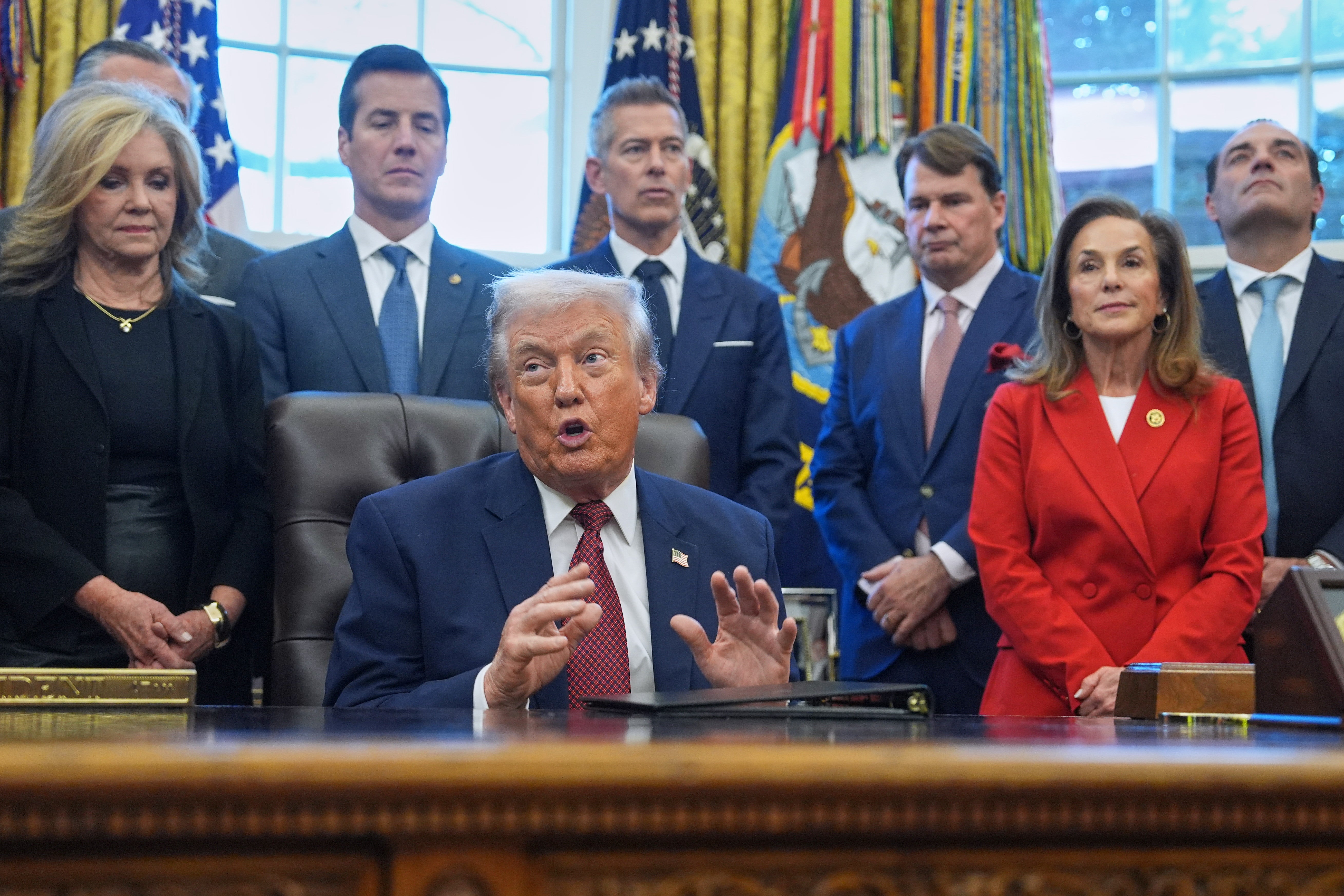
Writing on Truth Social on Saturday, President Donald Trump claimed the reduced mileage criteria would “take the waste out of building cars in America,” save households “thousands on a new, beautiful and safe car,” and stimulate domestic automotive manufacturing.
Forecasts published last December by the National Highway Traffic Safety Administration indicated the revised benchmarks would lower the fleetwide baseline for light-duty cars to about 34.5 miles per gallon by model year 2031. This marks a sharp decline from the 50.4 miles per gallon target previously established under the Biden administration.
 open image in gallery
Fuel efficiency benchmarks establish the minimum distance a vehicle must cover per gallon of fuel. The impending policy shift fulfills another component of Trump’s commitment to undo measures designed to promote or subsidize electric vehicle manufacturing.
Earlier actions by Trump include weakening vehicle tailpipe-output rules, scrapping financial penalties for manufacturers that fail to meet fuel-economy benchmarks, and eliminating consumer tax incentives worth up to $7,500 for electric-vehicle buyers.
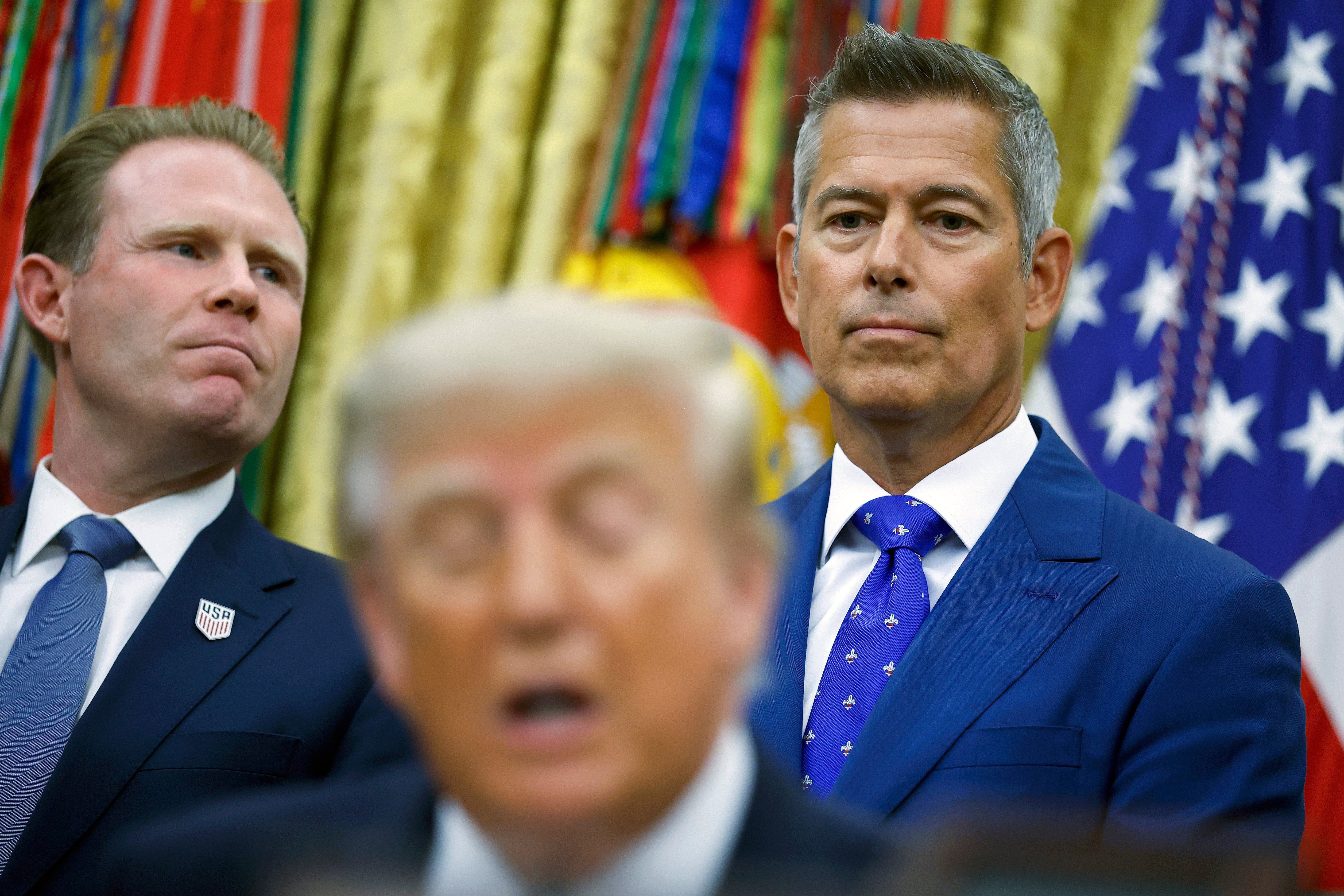
Secretary of Transportation Sean Duffy confirmed the Monday announcement on X on Saturday. Representatives for the White House, the Department of Transportation, and NHTSA were not immediately available to provide specific details regarding the new regulatory framework.
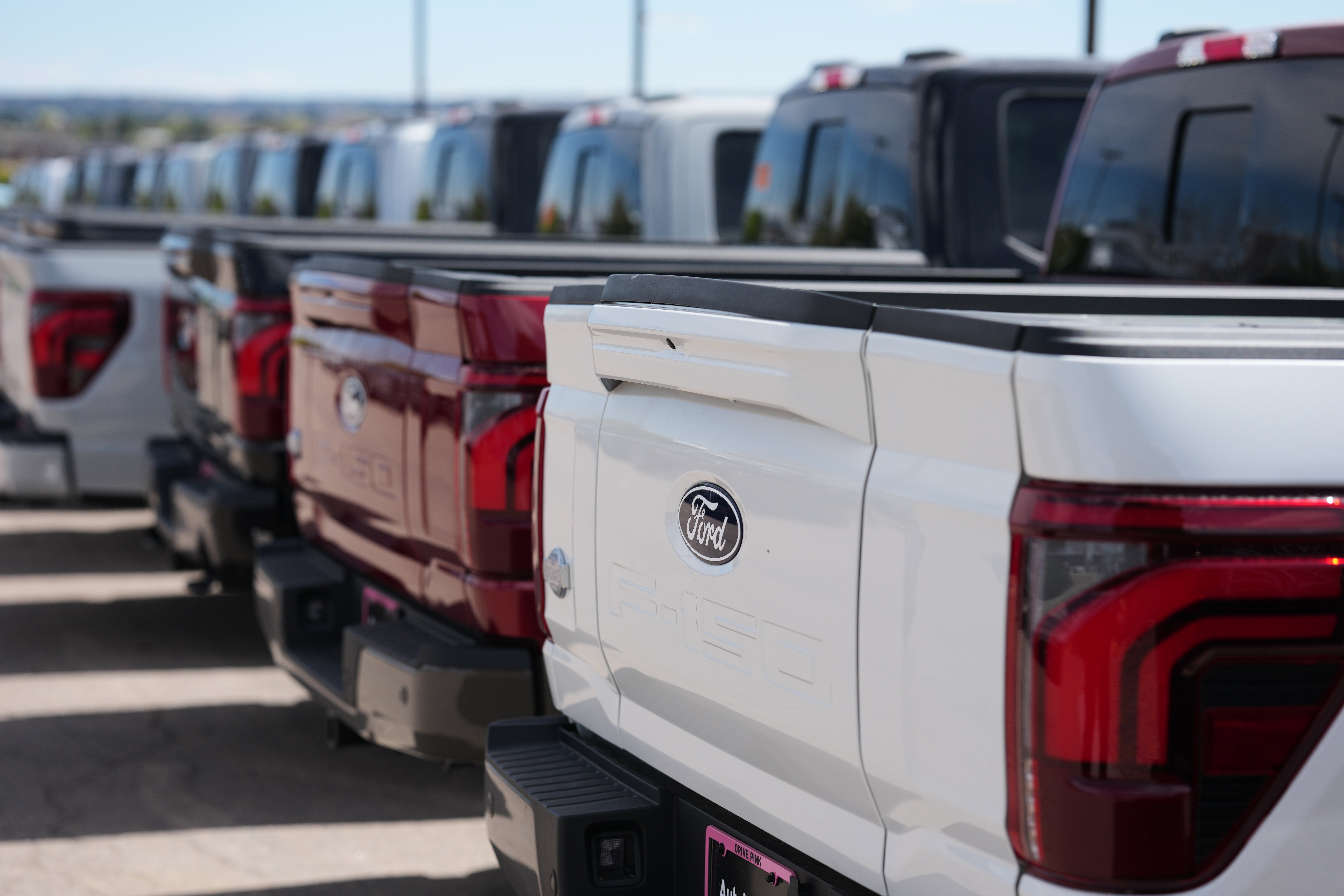
Reached for comment, major carmakers including General Motors, Stellantis, and F-150 manufacturer Ford Motor did not immediately respond. Government officials and industry leaders maintain that easing restrictions expands consumer access to practical, budget-friendly gasoline-powered options.
 open image in gallery
Figures from Kelley Blue Book reveal the average price for a new vehicle topped $50,000 in August for the first time since December, reaching $50,089.
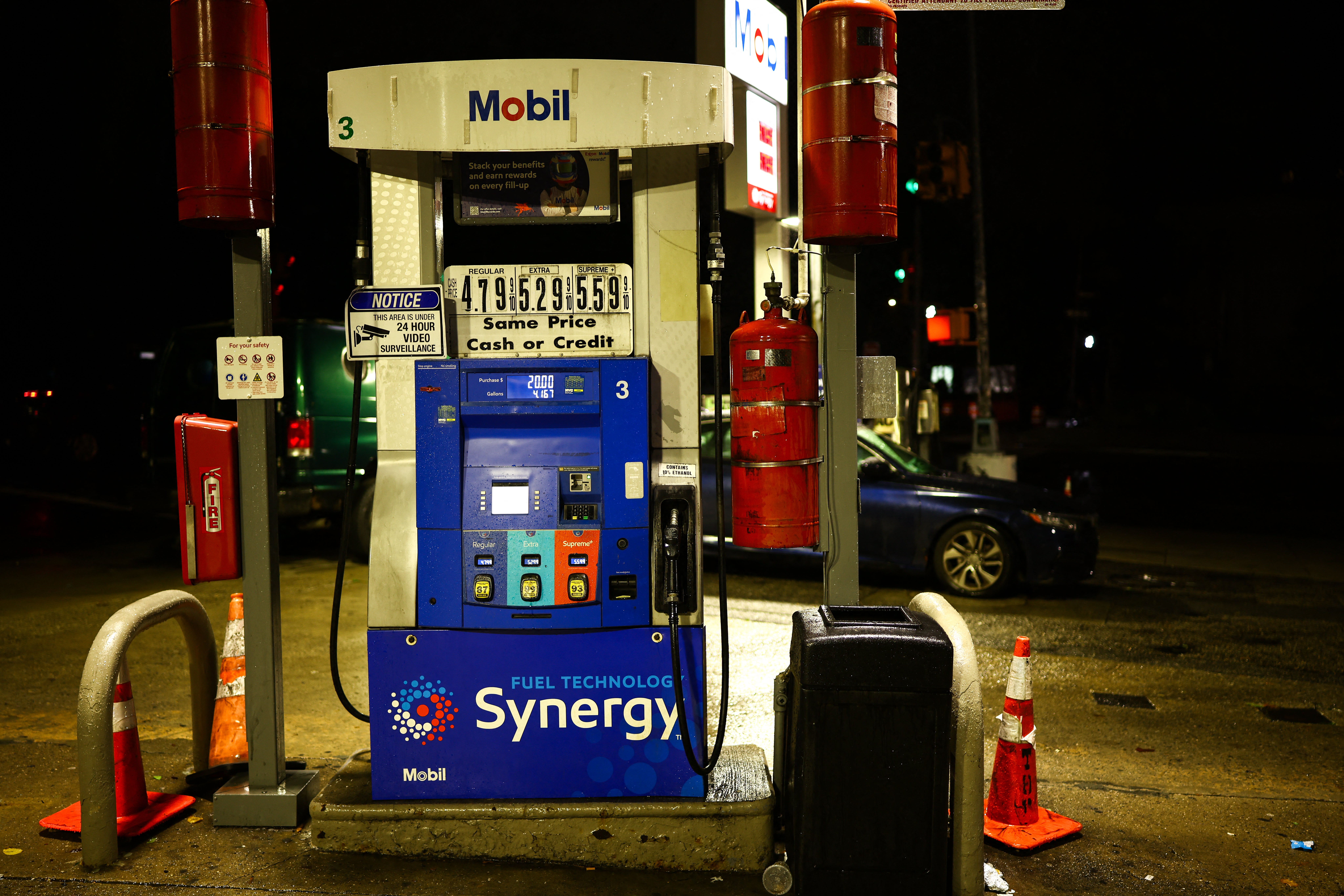
Meanwhile, pump prices have surged amid global supply tensions stemming from Washington’s conflict with Iran; AAA reports the average national cost per gallon climbed to $4.47 on Sunday, up from $4.09 last month.
Throughout his campaign and tenure, Trump has vowed to dismantle what he characterizes as an EV “mandate”—mislabeling President Joe Biden’s non-binding target for electric models to represent 50 percent of new sales by 2030. In reality, no federal mandate requires automakers to sell electric cars.
Automotive market data from Edmunds shows electric vehicles represented 6.5% of new vehicle sales in February, a drop from the 7.4% market share recorded across 2025.
News of the revised standards immediately drew rebukes from environmentalists.
 open image in gallery
Dan Becker, director of the Center for Biological Diversity‘s Safe Climate Transport Campaign, stated that the final rule “ignores the feasibility of clean technology and the millions of fuel-efficient cars already on the road.”
“Trump is tanking sensible mile per gallon standards at the worst possible time for consumers, who are getting hit with sky-high prices at the pump,” Becker said in a statement. “Consumers will pay the price for these reckless rollbacks while Trump’s Big Oil and Big Auto buddies reap the short-term profits.”
Affirming that her organization plans to challenge the regulation, Katherine García, director of the Sierra Club‘s Clean Transportation for All campaign, warned that lowering requirements would “make driving more expensive too.”
“Less fuel-efficient cars mean more gas burned, spending more at the pump, and dirtier air in our communities,” Garcia wrote in a statement.
When NHTSA introduced the 2024 benchmarks, it calculated they would prevent the consumption of 14 billion gallons of gasoline through 2050. While cleaner models carry a higher initial purchase price, the agency noted that long-term fuel savings over the vehicle’s lifespan would comfortably offset the upfront cost.
Without these restrictions, annual carbon dioxide emissions from cars could rise by 22,111 tons by 2035 compared to projections under Biden-era policies.
 open image in gallery
Additionally, air quality metrics indicate an annual increase of 90 tons of dangerous particulate matter alongside 4,870 extra tons of smog-forming compounds, including volatile organic compounds and nitrogen oxides, emitted into the air in the coming years.
Originally established during the energy crisis of the 1970s, Corporate Average Fuel Economy (CAFE) requirements have systematically pushed motor manufacturers to gradually improve vehicle fuel efficiency over successive decades.
More about
Donald TrumpJoe BidenNew YorkAmericaGeneral MotorsIranWashingtonAAAWhite HouseDepartment of TransportationCenter for Biological DiversityConsumersSierra Club
Most popular
Popular videos
Bulletin
Read next
Fonte: – World RSS Feed