Gulf nations keep oil flowing despite Iran war as costs mount
Por David McHugh — – World RSS Feed
Gulf nations keep oil flowing despite Iran war as costs mount
At the start of the Iran war, many feared that Tehran’s closure of the Strait of Hormuz would send oil prices through the roof and throttle the global economy
David McHugh Thursday 24 September 2026 06:10 BST
- Bookmark
Bookmark popover
Removed from bookmarks
Close popover

Become an Independent member to bookmark this article
Want to bookmark your favourite articles and stories to read or reference later? Start your Independent Membership today.
Already a member?
Log in
Your support helps us to tell the story
Read more Support Now
From reproductive rights to climate change to Big Tech, The Independent is on the ground when the story is developing. Whether it’s investigating the financials of Elon Musk’s pro-Trump PAC or producing our latest documentary, ‘The A Word’, which shines a light on the American women fighting for reproductive rights, we know how important it is to parse out the facts from the messaging.
At such a critical moment in US history, we need reporters on the ground. Your donation allows us to keep sending journalists to speak to both sides of the story.
The Independent is trusted by Americans across the entire political spectrum. And unlike many other quality news outlets, we choose not to lock Americans out of our reporting and analysis with paywalls. We believe quality journalism should be available to everyone, paid for by those who can afford it.
Your support makes all the difference. Read more
When Iran shut down the Strait of Hormuz at the start of the war, choking off sea passage for some 15 million barrels of oil a day, many feared that prices would skyrocket, cratering the world economy.
Instead, nearly seven months on, oil is expensive but not exorbitant, and analysts say the supply is pretty much sufficient to meet current global needs, even as the higher prices cause political problems for U.S. President Donald Trump and others.
That’s because Saudi Arabia and other Gulf producers quickly found alternative routes and reached for unused pipeline capacity. When Iran and its militant allies targeted those, the oil exporters and the U.S. military found others — workarounds for the workarounds — in an often clandestine game of whack-a-mole.
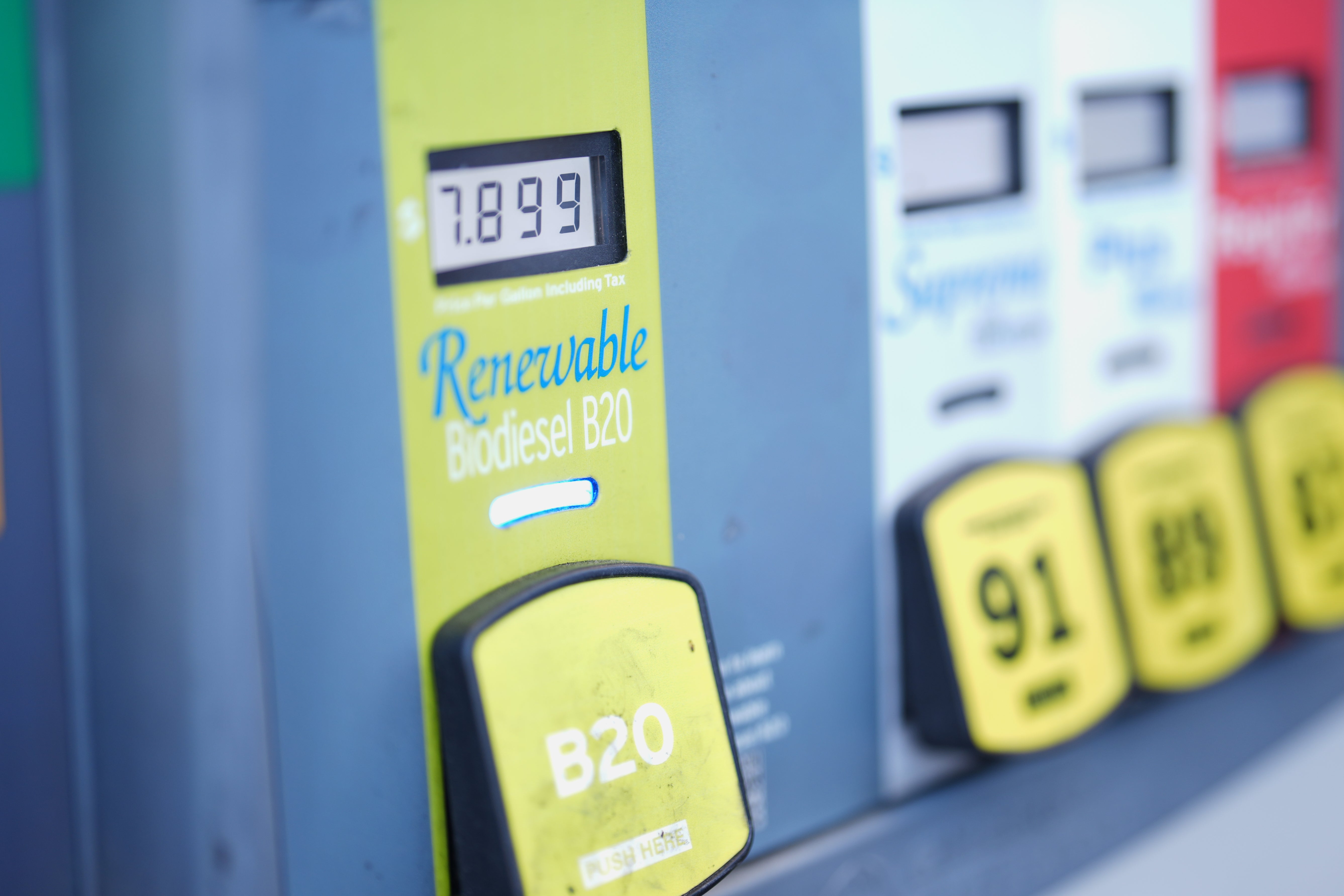
With oil now at around $100 a barrel — higher than before the war but not as bad as feared — Iran has diminished leverage, while a U.S. naval blockade and tightened sanctions smother its own economy.
But the workarounds are expensive and may not be sustainable. The drawing down of existing commercial oil stocks — especially by China — has also helped keep prices in check, but cannot continue indefinitely. And Iran could yet gain an edge with continued attacks on key oil facilities.
 open image in gallery
Pipeline backups were ready
Iran began attacking ships in the Strait of Hormuz in response to the U.S.-Israeli bombardment that started the war. In response, the Saudis turned to their East-West pipeline that carries oil to their Red Sea port of Yanbu.
From there, tankers headed out through the Bab el-Mandeb Strait toward Asia. Likewise, the United Arab Emirates used its pipeline cutting across neighboring Oman to Fujairah — a route that skirts the strait.
Both pipelines had spare capacity, and the UAE’s state oil company ADNOC and Saudi Aramco used it to keep exports from collapsing completely during the first weeks of the war.
Meanwhile, some oil leaked out of the Strait of Hormuz. In May, ship operators willing to risk Iranian attack started taking advantage of a U.S.-supervised route near Oman, defying Iran’s demands to use its own vetted route. They shuttled back and forth at night with location systems and mobile phones turned off, and offloaded to tankers waiting outside the strait. Flows from Kuwait, Iraq, and the UAE started to rise again.
But Iranian-backed Houthi rebels in Yemen disrupted the Yanbu workaround in July by declaring a blockade of Saudi oil shipments, threatening the Bab el-Mandeb — a repeat of the Hormuz disruption.
 open image in gallery
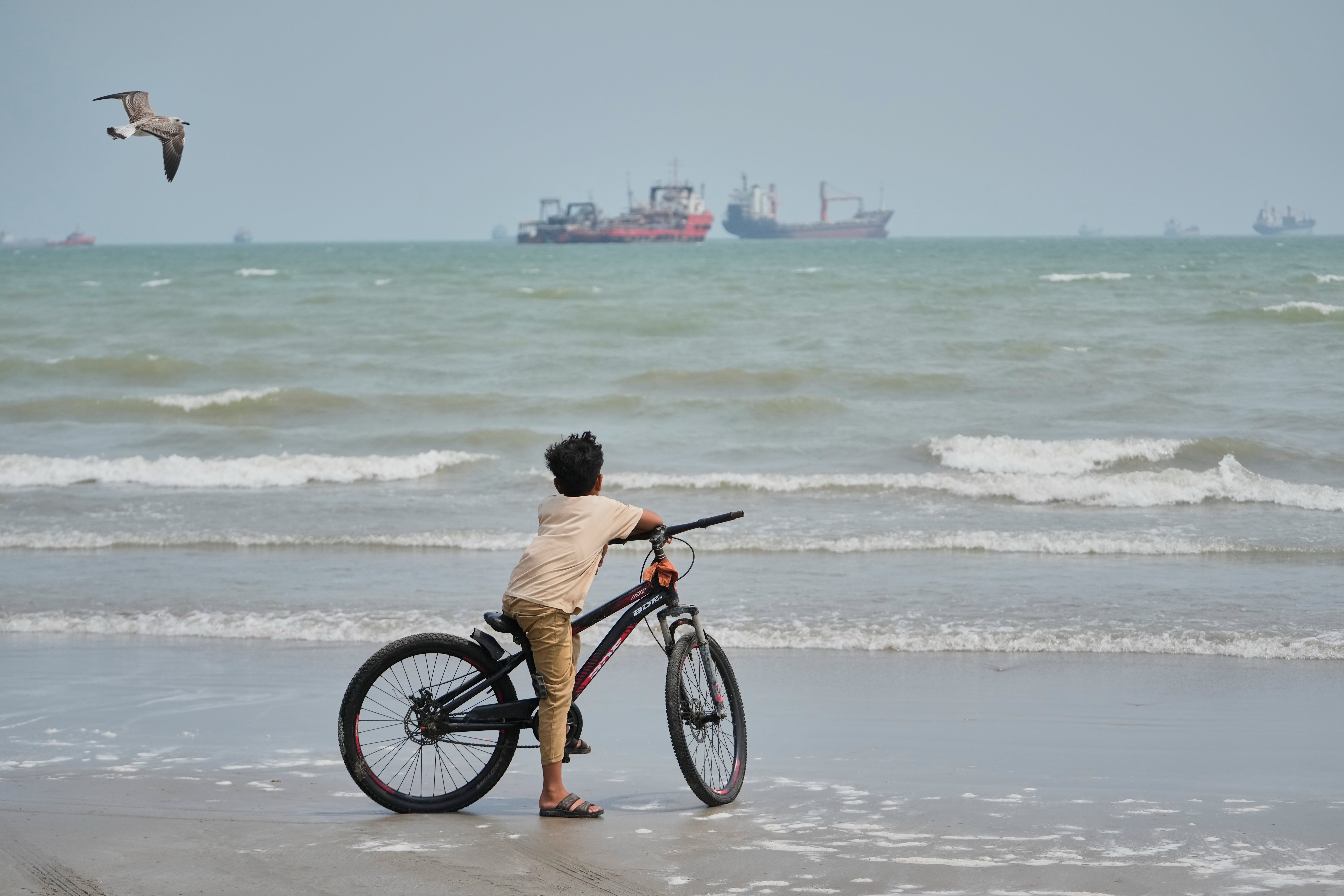
In response, the Saudis redirected Asia shipments northwest to the Mediterranean, either through the Suez Canal or — for tankers too big to use it — a pipeline across Egypt to another tanker. The oil then made a huge detour as it was shipped around Africa and back to Asia.
Then the East-West pipeline was attacked earlier this month and forced to shut down, potentially for weeks.
The Saudis shift to the US-protected dark shuttle through Hormuz
With oil loading halted at Yanbu from Sept. 11, the Saudis shifted again, joining other Gulf producers sending oil through the U.S.-guided corridor in the Strait of Hormuz. On Monday, six supertankers loaded 12 million barrels at Saudi terminals on the Persian Gulf, according to shipping data company Kpler.
U.S. officials have touted the role of the southern corridor in keeping energy flowing while their blockade increases pressure on Iran. Adm. Brad Cooper, head of U.S. Central Command, said in a video on social media Saturday that U.S. forces had assisted 2,000 commercial ship transits and the transport of more than 1 billion barrels of oil from Gulf partner nations over “the past couple of months.”
Analysts estimate some 6 million barrels of oil per day or more have been passing through the Strait of Hormuz on the dark shuttle route on average — some 40% or more of prewar flows.
The workarounds keep the economy supplied, for now
Rahul Choudhary, vice president of upstream research at energy data firm Rystad Energy, did the math as follows: with 6 million or 7 million barrels per day now flowing through the southern route, plus 2 million barrels through the pipeline to Fujairah, fully 8 million or so of the blocked 15 million barrels per day from before the war have been restored.
That still leaves roughly 7 million barrels per day missing from prewar flows.
But wait: about 3.5 million barrels per day are being drawn down from the globe’s abundant oil inventories. Meanwhile, demand has fallen by perhaps another 5 million barrels per day, due to the higher price and sluggish economic growth in key markets. Add in 500,000 to 700,000 barrels per day from other suppliers such as the U.S., and that pretty much evens out the global oil market.
“Our take is that the market is very tightly balanced,” Choudhary said. “That is why you are not seeing exceptionally high prices for crude; they are still in the $100 range, and they have not touched $140-$150 per barrel — which could have been the case if there was a deficit of 5-6 million barrels.”
In fact, Rystad foresees oil at $85-$90 per barrel in the last three months of the year, and falling to $80-$82 next year if Hormuz is reopened.
 open image in gallery
But the workarounds are costly — and not a permanent fix
The workarounds are time-consuming and expensive.
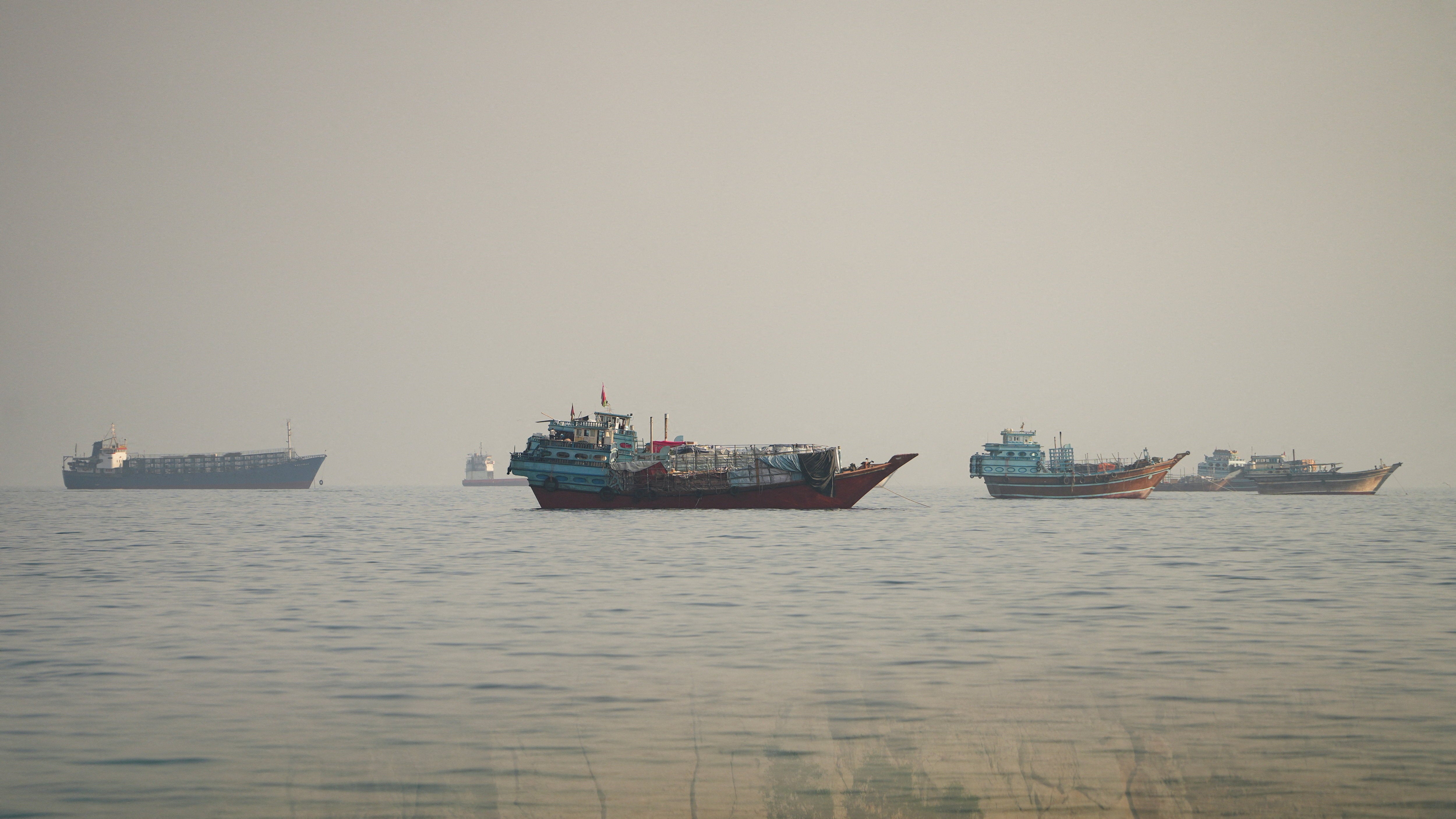
Sending oil to Asia through the Suez Canal instead of the Red Sea can add as much as a month to the voyage. Meanwhile the Hormuz shuttle trade involves expensive tankers waiting at least a day and a half in the Gulf of Oman for the ship-to-ship transfer.
The demand for supertankers has sent charter rates — normally $30,000 to $50,000 per day — through the roof. Spot charter rates for Hormuz transits reached $1 million per day on Sept. 11, according to maritime data company Windward, equivalent to roughly $26 per barrel. That means shipping is a quarter of the cost, instead of the usual 1% to 3%.
And markets are braced for further disruption. The attack on the East-West pipeline has shown pipelines can be vulnerable. Iran could try to disrupt the US route through the Strait of Hormuz or target areas near the Omani coast where the ship-to-ship transfers are taking place.
If that happens, the workaround would be to do the transfers farther away — taking more time and running up even bigger bills.
More about
Strait of HormuzIranDonald TrumpRed SeaSaudi ArabiaChinaOmanGulf of Oman
Most popular
Popular videos
Bulletin
Read next
Fonte: – World RSS Feed