Trump opens loophole allowing companies to kill endangered animals
Por Matthew Brown — – World RSS Feed
Trump opens loophole allowing companies to kill endangered animals
Inadvertently killing endangered animals while logging a forest or building a dam would no longer be considered illegal under a new interpretation of the Endangered Species Act
Matthew Brown Friday 18 September 2026 09:40 BST
- Bookmark
Bookmark popover
Removed from bookmarks
Close popover
Your support helps us to tell the story
Read more Support Now
From reproductive rights to climate change to Big Tech, The Independent is on the ground when the story is developing. Whether it’s investigating the financials of Elon Musk’s pro-Trump PAC or producing our latest documentary, ‘The A Word’, which shines a light on the American women fighting for reproductive rights, we know how important it is to parse out the facts from the messaging.
At such a critical moment in US history, we need reporters on the ground. Your donation allows us to keep sending journalists to speak to both sides of the story.
The Independent is trusted by Americans across the entire political spectrum. And unlike many other quality news outlets, we choose not to lock Americans out of our reporting and analysis with paywalls. We believe quality journalism should be available to everyone, paid for by those who can afford it.
Your support makes all the difference. Read more
Unintentionally killing protected animals during logging or dam construction will no longer be considered illegal under a revised federal interpretation of the Endangered Species Act, marking a major policy shift under President Donald Trump’s administration.
A directive sent to U.S. Fish and Wildlife Service employees this week establishes that imperiled plants or animals must be deliberately targeted for their killing to be considered unlawful.
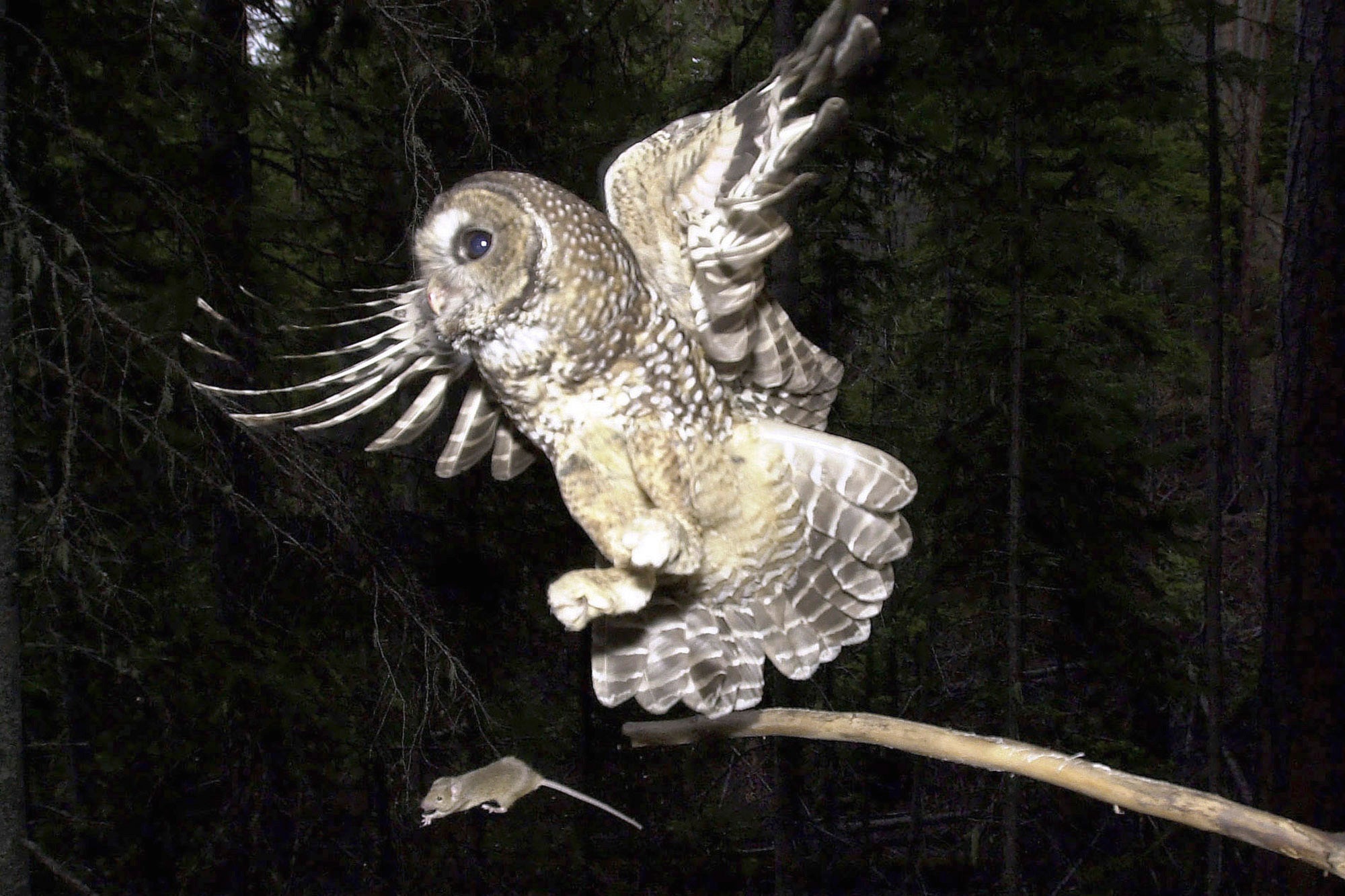
The policy represents a sharp departure from past agency practice, which held parties accountable for accidentally harming protected species such as grizzly bears, manatees, and spotted owls.
 open image in gallery
Experts warn the rule lets logging companies clear Pacific Northwest forests knowing imperiled birds will die, or developers build dams despite knowing salmon will be killed.
“This cuts against the entire history of the Endangered Species Act,” said Dan Ashe, who led the Fish and Wildlife Service under former President Barack Obama.
“It just creates a huge loophole,” added Ashe, who is now president of the Association of Zoos and Aquariums. “It completely relieves people of any responsibility for their actions, even consequences that can be easily predicted.”
Encouraged by Republican lawmakers and industry lobbyists, officials under Trump have moved to roll back key protections and exempt companies from regulations. Administration officials say they are returning the law to its original intent following a 2024 Supreme Court decision limiting agency authority to interpret congressional laws.
 open image in gallery
States and conservation groups have filed numerous lawsuits seeking to overturn the changes.
The updated interpretation of what constitutes illegal harm — or a “take” — was detailed in a Sept. 14 directive from Fish and Wildlife Service Director Brian Nesvik.
“Felling a tree is not a take of the bats roosting in it unless the tree is felled for the purpose of killing or capturing them,” Nesvik wrote, adding that the bats would only be impacted “indirectly and accidentally.”
The directive, reported earlier by The New York Times, leans on a dissenting opinion from former Justice Antonin Scalia in a 1995 Supreme Court case. It follows a July rule from the wildlife service that narrowed the definition of “harm” under the Endangered Species Act, or ESA.
 open image in gallery
Nesvik’s directive will guide how that rule is implemented, according to a Thursday statement from the Interior Department, which includes the Fish and Wildlife Service.
“Under the guidance, the ESA’s prohibition on ‘take’ continues to prohibit conduct including harassing, pursuing, hunting, shooting, wounding, killing, trapping, capturing or collecting protected wildlife,” Interior Department officials said.
For decades, federal policy defined harm broadly to cover habitat destruction. Conservationists warn the changes will accelerate extinctions by permitting habitat loss and unpunished deaths of protected species.
“This is basically a free for all,” said Noah Greenwald with the Center for Biological Diversity, an environmental group. “It’s a radical reinterpretation that would put polluters and other industry before the natural world.”
The Endangered Species Act is credited with rescuing iconic animals — including the bald eagle, American alligator, and California condor — from the brink of extinction.
Republicans rolled back several provisions of the law during Trump’s first term, moves reversed under Democratic President Joe Biden, then revived during Trump’s second term.
More about
Donald TrumpInterior DepartmentExpertsBarack ObamaAntonin ScaliaJoe BidenPacific NorthwestSupreme CourtCongressRepublicanThe New York TimesCenter for Biological DiversityAmericanCaliforniaDemocraticESA
Most popular
Popular videos
Bulletin
Read next
Fonte: – World RSS Feed
