Data shows who 4.5 million migrants were and where they went as border surge reshaped America
Por Will Jarrett,Aaron Kessler,Humera Lodhi and Elliot Spagat — – World RSS Feed
Data shows who 4.5 million migrants were and where they went as border surge reshaped America
Some went to cities that have long been magnets for immigrants but increasingly, others found their way to smaller cities with less developed immigrant footholds
Will Jarrett , Aaron Kessler , Humera Lodhi & Elliot Spagat Thursday 17 September 2026 17:18 BST
- Bookmark
Bookmark popover
Removed from bookmarks
Close popover
 open image in gallery
Your support helps us to tell the story
Read more Support Now
From reproductive rights to climate change to Big Tech, The Independent is on the ground when the story is developing. Whether it’s investigating the financials of Elon Musk’s pro-Trump PAC or producing our latest documentary, ‘The A Word’, which shines a light on the American women fighting for reproductive rights, we know how important it is to parse out the facts from the messaging.
At such a critical moment in US history, we need reporters on the ground. Your donation allows us to keep sending journalists to speak to both sides of the story.
The Independent is trusted by Americans across the entire political spectrum. And unlike many other quality news outlets, we choose not to lock Americans out of our reporting and analysis with paywalls. We believe quality journalism should be available to everyone, paid for by those who can afford it.
Your support makes all the difference. Read more
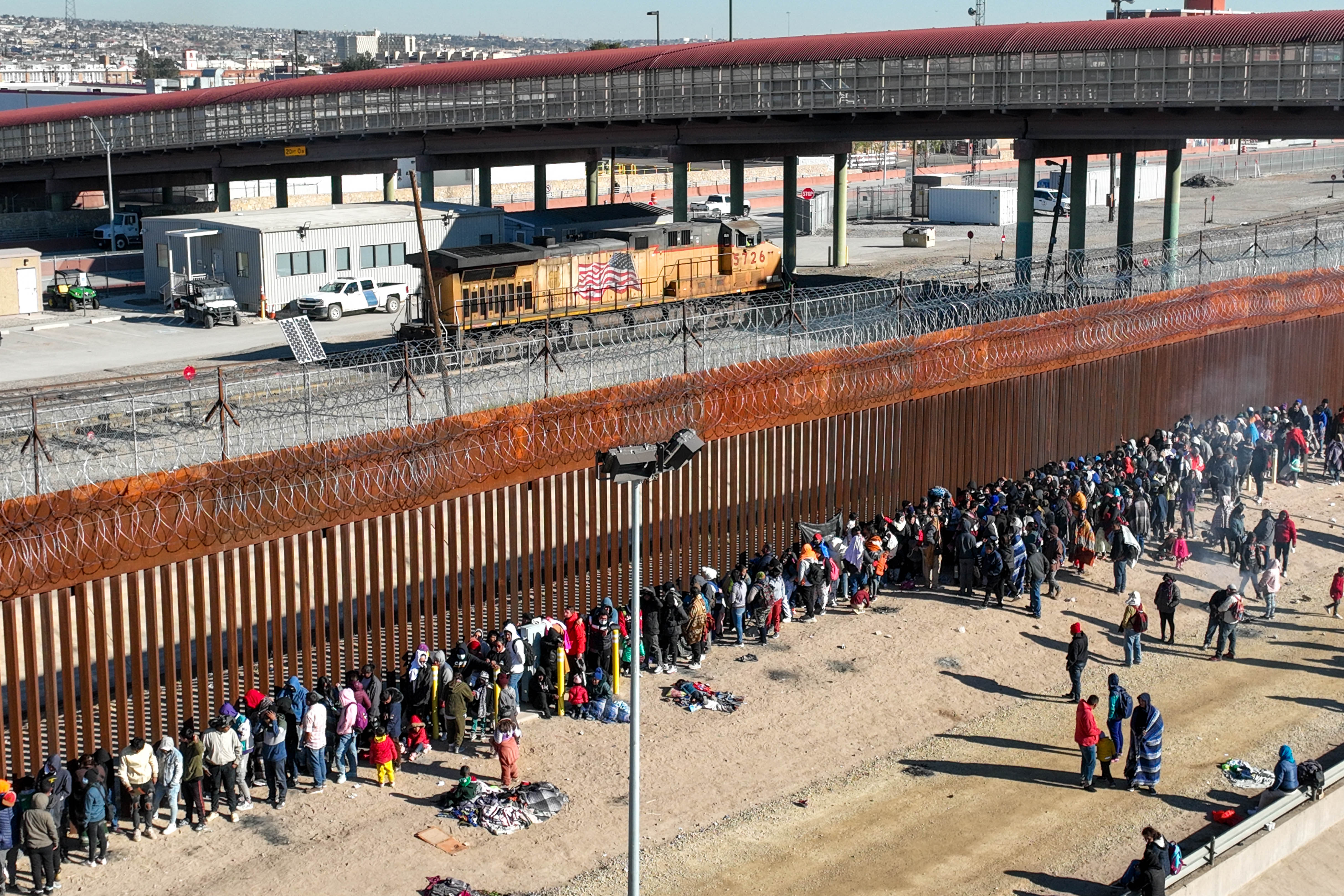
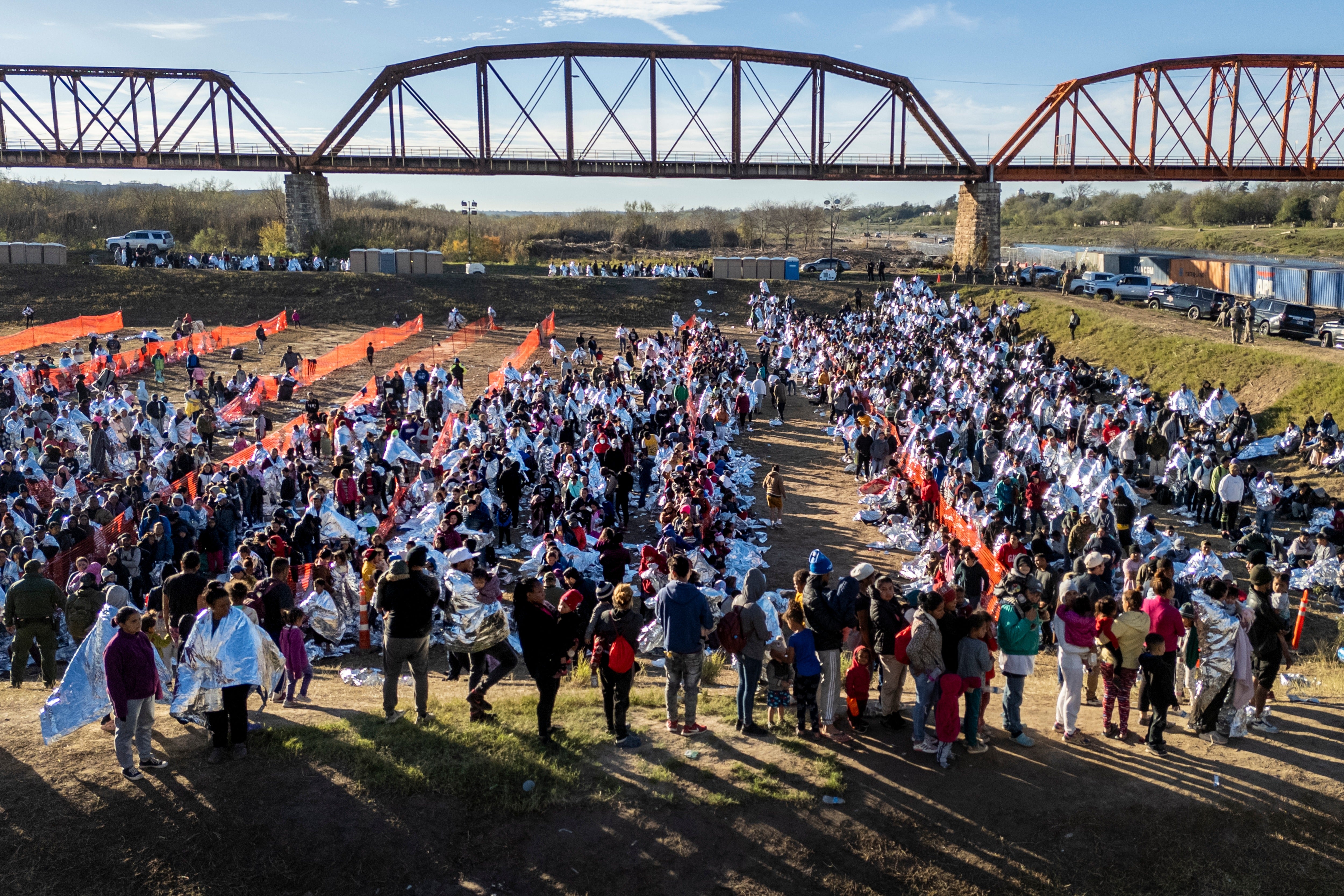
An unprecedented surge in border crossings over the past decade reshaped America: Millions of people from more than 150 countries arrived, bringing the U.S. immigrant population to its highest levels ever.
Now, data obtained exclusively by The Associated Press paints a picture of who these migrants are, where they went, and what happened after the border.
Some went to cities that have long been magnets for immigrants — New York, Miami — but increasingly, others found their way to smaller cities with less developed immigrant footholds. Blocks, neighborhoods and entire cities were remade in places like Elkhart, Indiana; Knoxville, Tennessee; and Dodge City, Kansas.
And while the vast majority of migrants traditionally were from Mexico, this surge saw people from an astonishing number and diversity of countries: India, Ecuador, Ghana.
Via a Freedom of Information Act request, AP obtained federal records on the self-reported destinations of 4.5 million migrants released in the United States after crossing the Mexican border — both legally and illegally — between October 2018 and July 2025.
 open image in gallery
Migrants must provide U.S. Customs and Border Protection with a street address. AP obtained their destination ZIP codes, citizenship by country, ages, genders, and the dates and border regions where they encountered authorities.
Some probably never arrived at the addresses they gave. Authorities lacked resources to check, though migrants must report truthfully to pursue their cases in court and get work permits. Some have moved elsewhere in the United States or left the countr y, voluntarily or involuntarily. But many have stayed put.
Data on their initial destinations after the southern border provides both a sweeping and an unusually granular look at how the immigration surge — one that peaked during President Joe Biden‘s administration and was a major reason voters returned his predecessor, Donald Trump, to the White House — is playing out today.
Here are some key takeaways from the data.
Philadelphia, Cincinnati and other cities drew migrants from several continents
The Border Patrol encountered migrants from 174 countries in one year alone, a sharp departure from earlier periods when they were nearly all Mexican and Central American. The growth of social media and new migration routes was key in bringing people from around the world. Cincinnati, for example, saw a large number of arrivals from West Africa, Uzbekistan and India.
Some cities — ones that for generations have had robust international communities — were further diversified by the range of countries from which people arrived.
New York City’s Queens borough registered at least 25 nationalities with significant arrivals, including five countries that each sent more than 7,000 people: Ecuador, China, Colombia, Venezuela and India.
 open image in gallery
Philadelphia had 11 nationalities with at least 1,000 new arrivals, led by Brazil, Haiti and the Dominican Republic but also including Russia and Venezuela. The city’s metro area also saw more than 1,000 migrants from Georgia.
Florida remained No. 1, but many people looked elsewhere
While Florida was the most popular state overall, Latin American immigrants increasingly looked elsewhere for more promising job prospects and better quality of life. Many turned to places with small but established communities of immigrants from their homelands.
For Cubans, nine of the top 10 destination ZIP codes were in Florida, but people of the Caribbean nation also flocked to Louisville, Kentucky; Grand Island, Nebraska; and Odessa, Texas. Colombians went to the Denver suburb of Aurora. Paterson, New Jersey, was the top pick among Peruvians. Some Venezuelans headed to the growing suburbs south of Salt Lake City; others to pockets of Atlanta, Chicago and Denver.
More women and children than men came to the U.S.
Nearly six of every 10 migrants released at the border were women and children, a dramatic shift from a few years earlier when migrants were predominantly men.
The change is visible in many places and across nationalities, but some stand out. Tulsa, Oklahoma, attracted Mexican women and children. Ecuadorian women and children went to Spring Valley, New York. Guatemalan women were drawn to Chattanooga, Tennessee.
Those who came from China headed primarily to two places
Chinese migrants, who trekked by hundreds nightly in California’s mountainous border with Mexico, largely gravitated to two places: New York City, especially the Queens and Brooklyn boroughs, and a cluster of neighborhoods in the Los Angeles area.
Trump’s deportation machine hit some migrant magnets and overlooked others
Immigration arrests have hit some areas that ranked among the most popular destinations for migrants in recent years, including Miami and New York. Others that saw a large migrant influx have gotten less attention from authorities, including California’s Silicon Valley; Madison, Wisconsin; and Stamford, Connecticut.
More about
ImmigrationUnited StatesMexicoJoe Biden
Most popular
Popular videos
Bulletin
Read next
Fonte: – World RSS Feed