A Tiny 3% Tax on Global Billionaires Could Save 30 Million Lives by 2030: Lancet Study
Por Brad Reed — Common Dreams
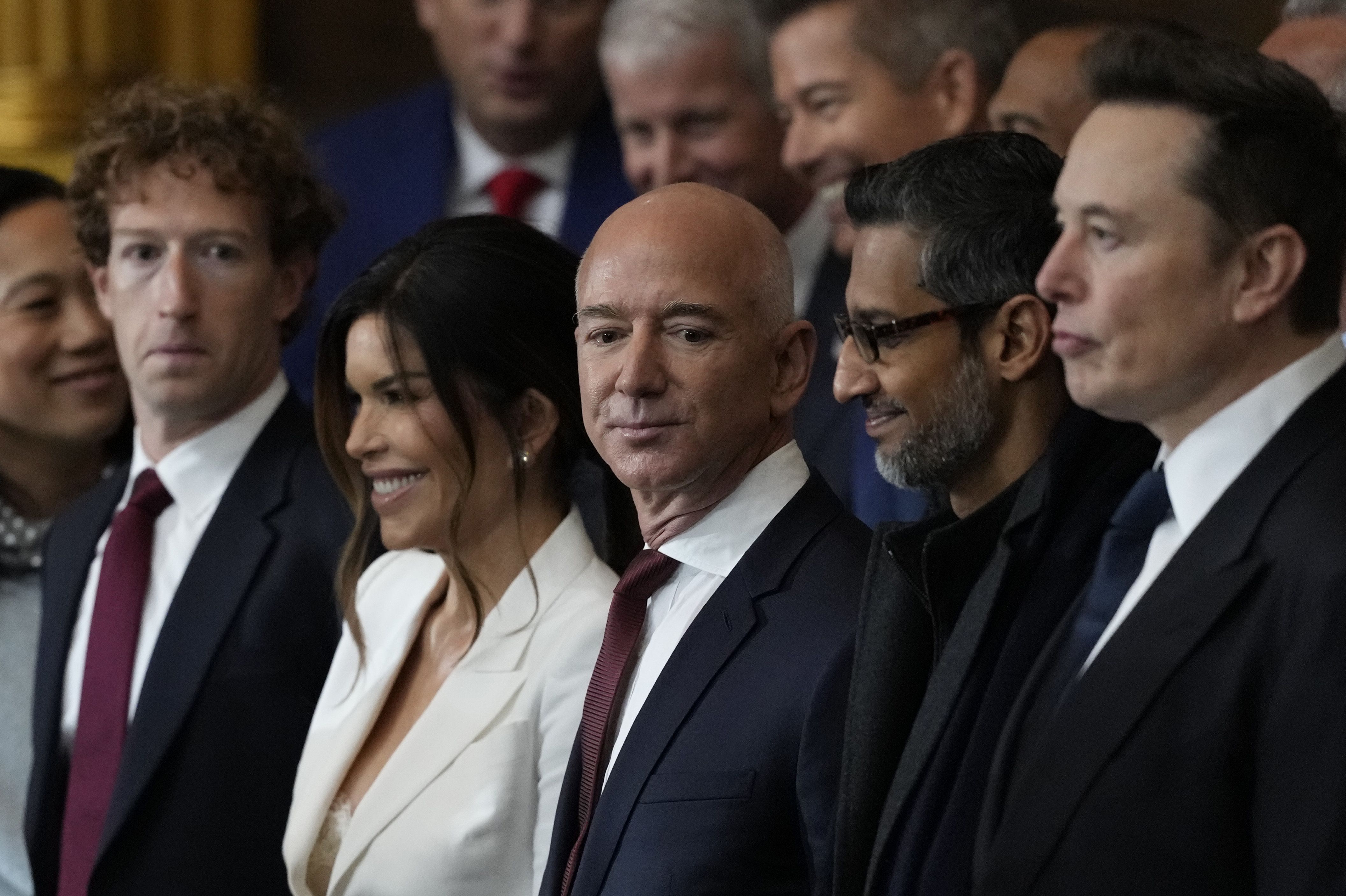
With international aid programs facing an unprecedented cash crunch thanks in large part to foreign aid cuts ordered by US President Donald Trump, a recent study published The Lancet suggests that taxing the ultrarich would be the simplest way to plug funding gaps faced by crucial life-saving programs.
Specifically, the peer-reviewed study found that a hitting the world’s billionaires with a 3% wealth tax would raise enough money to save up to 29.5 million lives in the world’s most vulnerable populations over the next four years leading into 2030.
Lucio Exposito, senior economist of the study and researcher at the ICESI School of Economics and University of East Anglia School of Global Development, told Euronews that a global wealth tax was the most plausible way to undo the damage done by international aid cuts, many of which were caused by billionaire SpaceX CEO Elon Musk’s dismantling of the United States Agency for International Development (USAID) in 2025 under the direct orders of Trump.
“With donor countries facing growing indebtedness and increasingly reallocating resources towards military spending,” Exposito explained, “funding humanitarian assistance via the taxation of large fortunes was one of the most viable strategies.”
The study’s introduction notes that wealth inequality has reached unprecedented heights in recent years, growing especially acute in the wake of the Covid-19 pandemic.
“Today, the top 10% of the global population owns approximately 75% of global wealth, while the bottom 50% holds only 2%, with absolute income inequality steadily increasing over the past three decades,” the study explains. “Moreover, the wealthiest 0.002% of the global population… controls an estimated $37.1 trillion in global wealth, surpassing the gross domestic product of the world’s largest economy—the USA.”
Even as the world’s richest people have seen their wealth grow by bounds, official development assistance (ODA) to the Global South has been slashed significantly.
According to a study from the Organization for Economic Cooperation and Development (OECD) released earlier this year, ODA spending in 2025 fell by 23% compared to 2024, with the US responsible for 75% of the global decline.
A 2025 study published by The Lancet estimated that the elimination of USAID would lead to 14 million additional deaths worldwide by 2030.
Fonte: Common Dreams

