Battery-powered apartment complex in New York aims to solve three issues – and save residents cash
Por Jennifer McDermott — – World RSS Feed
Battery-powered apartment complex in New York aims to solve three issues – and save residents cash
A medical research building in the city is using the battery system, too
Jennifer McDermott Tuesday 20 October 2026 16:18 BST
- Bookmark
Bookmark popover
Removed from bookmarks
Close popover
 open image in gallery

Become an Independent member to bookmark this article
Want to bookmark your favourite articles and stories to read or reference later? Start your Independent Membership today.
Already a member?
Log in
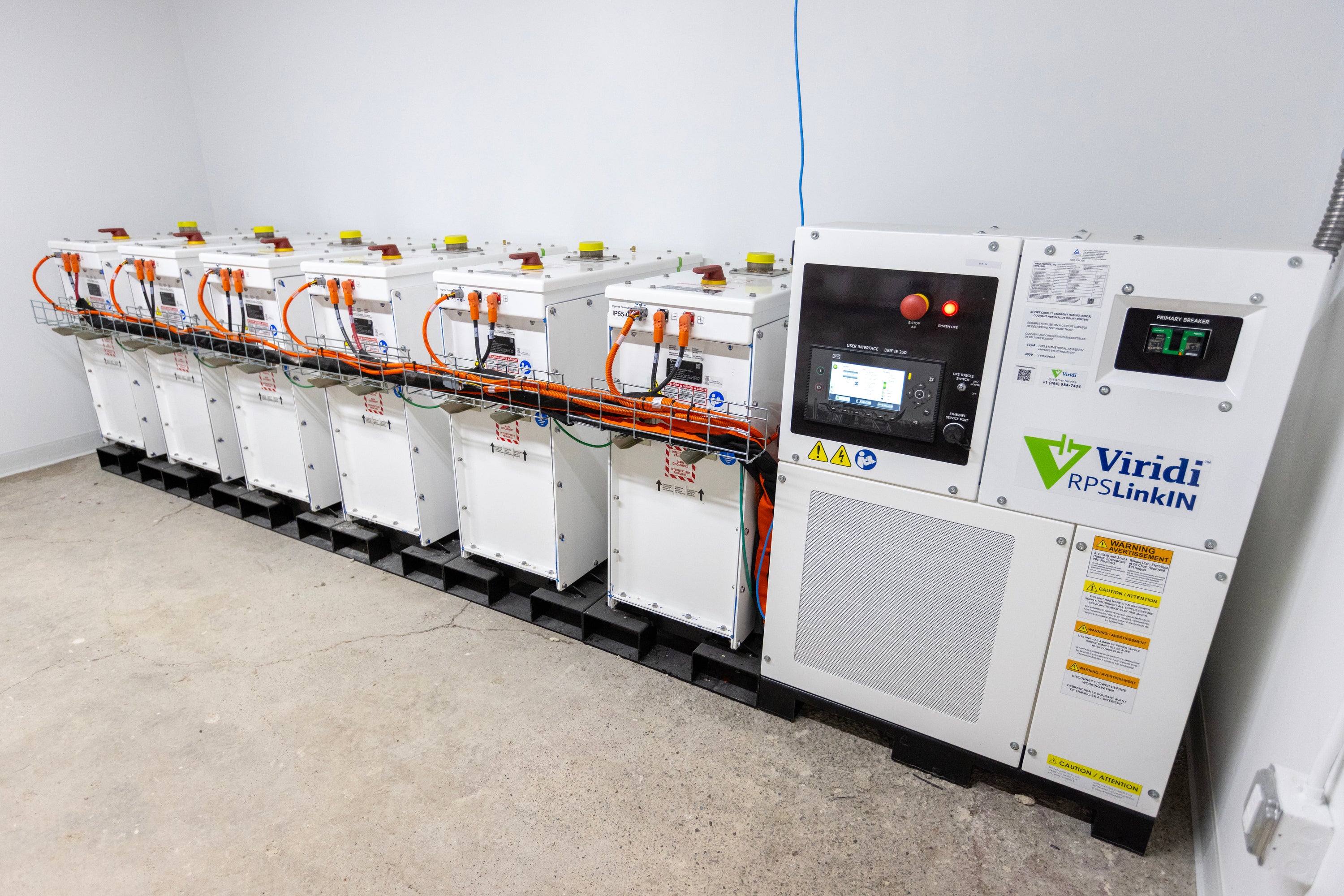
A residential complex in Buffalo, New York, features a battery system designed to store excess energy when supplies are high, and supply power during times of grid stress or elevated electricity costs.
Clean energy manufacturers and state officials view the project as a key demonstration that substantial battery installations can operate safely inside environments where people live and work.
The 3.75 megawatt-hour lithium-ion system at the Peace Bridge Place affordable housing complex ranks among the largest battery setups in a U.S. residential building, according to manufacturer Viridi and developer Good Carbon Co.
“We want our electric power to be resilient, affordable and available. Distributed battery storage accomplishes all three,” Viridi CEO Jon M. Williams said. “The only thing that has been holding up installations at scale is safety; a lot of the products on the market over the last 10 years have burned things down.”
 open image in gallery
While larger battery arrays are routinely paired with utility-scale wind and solar installations, and homeowners often use smaller units to store energy from rooftop solar, placing large systems in residential buildings remains uncommon due to high upfront costs and concerns over fire risks. However, experts say deploying large-scale batteries to safely power apartment buildings is a crucial step in replacing fossil fuels with clean energy sources.
Batteries help keep electricity flow steady
Batteries help maintain a steady flow of electricity by charging when solar or wind resources are actively generating power. That stored energy can then be dispatched when demand spikes.
They can also store surplus power generated from hydroelectricity. New York is among the nation’s leading producers of hydropower, with Buffalo located near Niagara Falls, where the majority of the state’s hydroelectric capacity is generated.
During periods of peak electricity demand, Peace Bridge Place will rely on its battery system. The complex will receive compensation from the utility for reducing its draw on the electrical grid and for feeding power back into the network when needed. This lowers the facility’s total electricity expenditures, delivering savings to residents. The battery also supplies backup power during blackouts.
Funding for the project was provided in part by the New York State Energy Research and Development Agency as part of its effort to ensure disadvantaged communities participate in the transition to clean energy.
“It goes a long way toward demonstrating the safety and viability of these types of projects,” said NYSERDA President and CEO Doreen Harris.
Viridi maintains production plants in Buffalo and Richmond, California, where state grant funding supported facility upgrades. California Energy Commission Chair David Hochschild commended the company’s efforts, noting that battery storage plays a key role in generating more than two-thirds of California’s electricity from clean energy. As power consumption increases, batteries assist in keeping the grid reliable, cutting emissions, and suppressing costs, he added.
“I believe the battery industry is the single most important energy industry for the next several decades,” said Hochschild, who co-founded the Electric Innovation Initiative to advance electrification across the U.S. economy.
Viridi’s system passed a ‘near impossible’ test
Concerns following high-profile battery fires have led some communities to oppose new installations. Even so, failure rates for batteries have dropped as deployment has expanded, according to the Electric Power Research Institute.
Viridi invested $10 million over six years to engineer a fireproof containment system for its units, devoting half of those funds to batteries destroyed in testing.
The system utilizes specialized plates, pouches, and physical spacing to isolate each battery cell. If a cell fails, the energy dissipates without triggering neighboring units, preventing gas, smoke, heat, or fire from escaping the container, Williams explained.
Jigar Shah, an expert in clean energy deployment and finance, described the Peace Bridge Place project as a major milestone in addressing safety concerns.
 open image in gallery
To verify that the equipment could be installed inside a residence without posing a fire hazard, Viridi’s system had to undergo a test where a battery cell was intentionally forced into failure while wrapped in cheesecloth. According to the test report, the cheesecloth did not ignite or char.
Viridi announced in April that it had satisfied stringent Underwriters Laboratories safety standards, clearing the system for indoor installation without requiring extra fire suppression systems in the building.
Shah, who served as director of the Department of Energy’s Loan Programs Office during the Biden administration, noted that Viridi is the only manufacturer to consistently pass this “near impossible” test.
Shah expects widespread adoption of home backup batteries by 2030, adding that strategic battery placement will allow the U.S. to accommodate growing power needs while avoiding expensive upgrades to grid infrastructure.
New York and California officials want forward-thinking energy solutions
Peace Bridge Place was selected by Viridi and Good Carbon Co. because the all-electric complex uses a geothermal heating and cooling system instead of natural gas and required resilient power support. Because local electricity demand can exceed available grid supply, local utility National Grid backed the installation, Williams said.
Residents at Peace Bridge Place earn no more than 80% of the area’s median income, qualifying it as affordable housing, according to Good Carbon Co. The developer noted that energy storage will play a central role in upcoming multifamily housing developments.
Viridi has manufactured systems in Buffalo since 2018, supplying equipment to a local medical research facility as well. Williams noted that the company’s factory capacity can produce enough battery packs in a year to power roughly 14,000 typical U.S. households for 24 hours.
Harris, of NYSERDA, said New York requires more solutions of this kind to maintain grid reliability and manage energy costs, a key priority for Gov. Kathy Hochul.
“If we don’t need to build generation, we can utilize the grid that we have more effectively, that’s extremely valuable to us,” she said.
In California, about 2,000 battery storage systems are being installed weekly, and construction is underway on the world’s largest system in Fresno County, Hochschild noted. He expects the battery sector to expand rapidly.
He said, “We’re just getting started.”
More about
New YorkDepartment of EnergyBuffaloKathy Hochul
Most popular
Popular videos
Bulletin
Read next
Fonte: – World RSS Feed